Life Is A Funny

little things 3

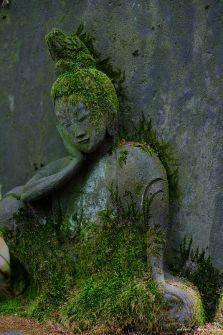
This is not my aunt: she would have had at least three blankets.

Life is a funny.

I’ve used this phrase as a tag in a few posts before, but never explained exactly where it came from. So sit back, relax, and I’ll tell you the tale.

Many years ago, my aunt attended a course on Taoism.  She and a group of other students, eager to unravel the mysteries of The Way (or maybe the universe, or human consciousness, or life, or all or any of the above), gathered weekly to hear the words of their teacher — who in my mind’s eye I have always pictured as a wizened and possibly sparsely bearded old man of Asian origin, seated serenely above his students, imparting his esoteric knowledge.

I don’t know if that’s what he really looked like. All I can really remember with any veracity about the story of my aunt’s Tao lessons was that the room in which they were held in was completely and utterly freezing. Positively Arctic. I can’t quite recall if there was a small and ineffective electric radiator involved, but I do know that my aunt would sit with her fellow truth-seekers, shivering beneath a blanket, listening to her Tao teacher speak.

And one day, when that Tao teacher was asked a particularly difficult question — I’m not certain exactly what that question was, but it may have had something to do with the nature of suffering, or whether there is life after death, or what the surest path to enlightenment might be, or perhaps even why the room was so ridiculously cold — the old man paused, and for a few moments he said nothing at all.

But when he spoke again, he answered with this phrase:

Life is a funny.

Just like that.

little things

Life is a funny…and it’s the little things that sometimes count for the most.

He didn’t say, “Life is funny”, nor did he suggest that “Life is a funny thing“.  Rather, he said that “Life is a funny”.

And ever since then, when anyone in our family has encountered something mystical, or unexpected, or insurmountable, or baffling, we have returned to my aunt’s Tao teacher’s simple (though admittedly unusual) phrase:

Life is a funny.

Because, when you think about it, life really is a funny. There are many things we can’t explain or begin to comprehend during our time on this Earth: from uncanny coincidences, to sudden and unspeakable tragedies, to moments of transcendent and miraculous grace, and to each and every instance of serendipity.

I have been thinking about this quite a bit lately, not least because our family is setting out on a journey into the unknown with my dear Dad, who is experiencing some significant health issues at the moment. We don’t know what the future will hold — we never do, never can and never will. The only certainty, as always and for all of us, is that the journey will end with the final step every human being must take.

I’m not intending to be at all fatalistic, here — far from it. If anything, discovering that my father is ill has brought life and all that is important to me into sharp focus, and I’m grateful for that clarity, harsh though its light might be. Because despite the ultimate inevitability of death, I think the essential thing to remember is that we can embrace life, with all its weirdness and wonder and pain and joy.  To recognise that despite the monotony or banality we occasionally ascribe to our existences, our lives are perhaps much more eventful (and delightfully so) than we think they are. To know that it doesn’t hurt to keep hoping for the best of the unexpected, even if we don’t always get it.

little things 2

This little, ephemeral, life…

Life is transient, and it is also far more ephemeral and fragile than we sometimes allow ourselves remember. But accepting and absorbing this unadorned truth somehow enables us to strip away the superfluous and to focus on what really matters, what makes us who we are at the very core of our beings.

I don’t believe the response to life demanded by such an acceptance to be as simple as “it is what it is”, though I have been known to use that phrase often — sometimes ridiculously so. I have come to realise that these words only indicate a level of understanding, but they fail to communicate a sense of engagement.

I do believe, however, that living life fully requires making considered choices about how we spend our time.  I’ve written before about the challenge of living creatively, of becoming human beings rather than humans doing, and I suspect facing up to the inevitability of our mortality demands a direct and deliberate response from each of us — a response that is as fiercely positive as we can muster.

Please don’t misunderstand me: I’m not trying to turn everyone in my acquaintance into a parade of Pollyannas singing Que Sera, Sera in the face of the slightest adversity. All I’m suggesting is that we use this fleeting time we have together to the best of our abilities, to live in alignment with whatever First Principles guide us, to be our best selves.

Much of life is unpredictable. Parts of it are downright incomprehensible. But it is also, sometimes, miraculous. And it is always — always — mutable.

And that’s why, in the face of ever-changing circumstances, I choose to draw comfort from the curious words of an old Taoist:

Life is a funny.

At the Going Down of the Sun…

ANZAC

There was once a man who loved to sail…

It’s Anzac Day here in Australia today — the day we commemorate the continued service and sacrifice of our armed forces, the day we remember those who gave their lives to make this country the safe haven it is today.

For me, Anzac Day is a solemn occasion. It brings to mind of the sharp scent of rosemary, the sound of harbourbound fighter planes overhead, and the comforting feel and weight of the two brass buttons from my grandfather’s naval dress uniform that I took into every exam at the end of high school and throughout university.

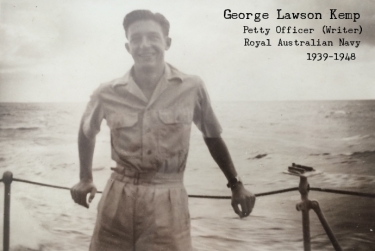
I have no memories of my grandfather speaking to me of his war service: not of surviving the bombing of Darwin, not of the time he spent at sea during the war in the Pacific, not of being one of the first Australians to set foot on Japanese soil after the signing of the surrender in Toyko Bay. And yet, the photograph I have of him on top of my piano is one that was taken at sea during that awful time, and it is of a slim young man leaning casually against the ship’s rail, immaculately dressed (as always) and smiling — and reminding me of my younger brother more than I’d like to admit.

nkjdzi1447190740

…he was my Grandfather…

Somehow, the sight of that photograph often prompts me to imagine what he and his mates went through — a bunch of blokes thrown together as the crew of a small ship on a vast ocean, facing a determined enemy. In all honesty, however, I know I can’t really imagine what it was like. Not the exhaustion. Or the feeling of being constantly threatened. Or the battles at sea. Or the kamikazes. And even though I will always be proud of his service, my overwhelmingly emotion is one of relief that he came home.

That he had a family.

That I got to know him and love him.

And as I write this, I am acutely aware that in a matter of days it will be the 25th anniversary of my grandfather’s death.

Anniversaries are strange things. At first they often feel so raw we wonder whether we will make it through them, and worry that the sorrow and anguish will never go away. Because loss literally makes our hearts ache — and I suspect Queen Elizabeth II was absolutely right when she once told her young grandsons, “Grief is the price we pay for love.”

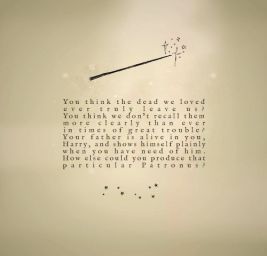
But even as time goes on, anniversaries can fill us with a welter of conflicting emotions, and can sometimes surprise us with the  intensity of our residual grief. Only two years ago, I used this space to write about my grandfather when those feelings crept up on me once again. And, perhaps because I am at heart a reader and writer, then as now I tend to draw comfort from the words of fictional characters whenever grief rears its shaggy head. In the Harry Potter series, for example, Albus Dumbledore offers these comforting words:

Ddore dead do not

…and he’s never really left me….

To have been loved deeply, even though the person who loved us is gone, will give us some protection forever.

Elsewhere, Dumbledore also reminds us that the ones who love us never truly leave us, and that even when they have the continue to influence us in our everyday lives — in the thoughts we think, the decisions we make, even in the turns of phrase we use.

I try to pass those funny little things that my grandparents said on to my own children.  My Welsh grandmother, for example, used to say “Golly Gosh!”, which my kids, for reasons known only to them, find utterly delightful. My globetrotting gypsy grandmother was famous for asking, “Where’s Beulah?” every time she hosted a dinner party — referring to an imaginary kitchen maid who supposedly shot through every time guests arrived, leaving Grandma with all the work. And my grandfather? Well, any success, no matter how big or small, was always celebrated by him as being a “true triumph”.

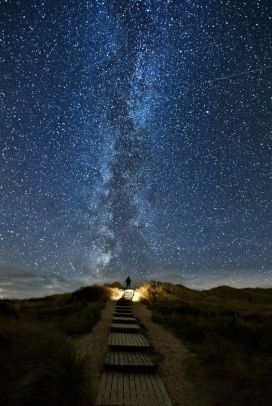
I am grateful I can refer my children to the words of their ancestors as well as those of Albus Dumbledore when they are in need of comfort, though there is one other thing I told them when they were small that they have latched onto: that when someone we love dies, we see them again every night because they are up with the twinkling stars. They reminded me of this only recently when, after we finished reading The Hobbit together, we sat down as a family and watched all three Hobbit movies. Not surprisingly, both my girls have become particularly fond of Tauriel, the Sylvan Elf who does not appear in the book, but who has a minor role in the movies.

starlight

…and he never ever will.

When Thorin Oakenshield and his company of dwarves have been imprisoned by Thranduil, The Elvenking of Mirkwood, Tauriel has a discussion with Kili, one of the younger dwarves about Mereth Nuin Giliath, the Feast of Starlight.

“All light is sacred to the Eldar, but the Wood Elves love best the light of the stars,” Tauriel tells Kili, who says he always thought starlight was cold, remote and far away.

But Tauriel, it seems, has a similar view of the stars to mine:

It is memory, precious and pure…I have walked there sometimes, beyond the forest and out into the night. I have seen the world fall away and the white light of forever fill the air.

At the going down of the sun, and in the morning, we will remember them.

At the going down of the sun, the twinkling stars shine.

Six Stack of Sunshine

Car ENVY

So The Bloke has new wheels…

So as I said in my last post, I started a new job not so long ago — and that has meant I have been spending more time in my car than I have in recent years. My car is silver, but is by no means flash. It’s safe and serviceable. It definitely has a lot more bells and whistles than other cars I’ve owned, though if you’d seen any of those, you’d know that wouldn’t be too hard.

The Bloke, on the other hand, acquired a new car late last year, a great white BEAST of a car. (Not quite a Beluga on wheels, but close enough.)

I can say, with certainty, that it’s the first brand new vehicle either of us has ever owned.  And I can also say that since he acquired it, my position on his Totem Pole of Great Loves may have slipped slightly…not to say that I’m out of the top spot, but…well, I’m watching this space.

I’m not jealous.  Not a bit.

Well…that may not be entirely true: I am a tiny bit green-eyed, but it’s not over the car itself.

Car STEREO

The Bloke’s old car stereo looked a bit like this…

What I will admit being ever-so-slightly covetous of is the sound system, with its touch-screen technology, its Bluetooth connectivity, its up to the minute compatibility with just about any other device that’s been invented already.

Now, I am well aware that I should not begrudge The Bloke his newfound sonic bliss — his last chariot (it wasn’t quite horse-drawn, but I’ll let you extrapolate from there) was so woefully ill-equipped in the musical department that when we headed off on holidays I resorted to taking our BOSE Bluetooth speaker, plonking it on the dashboard, and playing Spotify via my iPhone for as long as we were in range, then switching to whatever I had downloaded from iTunes. We may have had decent music for as long as the battery lasted, but clearly, the setup wasn’t ideal.

Even so, it was not without a twinge of envy that I slid behind the wheel of my own car the other day.  I may even have looked a little folornly at the stereo, before recalling that just about every self-help guru that ever was suggests that in such cirumstances, a little gratitude does not go astray. Even Benjamin Franklin, it seems, was on the old gratitude bandwagon (though given the fact that he has been dead for nearly 227 years he might even have been the bandwagon’s original driver):

We can complain that rose bushes have thorns, or rejoice because thorn bushes have roses.

Thank you, Mr Franklin. Ever so ta.

My car stereo was already starting to look better.  In fact, I decided to have a good — and far more grateful — look at what I actually had: a fully functioning car stereo with six presets for radio stations, and capacity for not one, not two, but six CDs.

Bloody marvellous, really — though given I generally listen to indie rock-type radio stations most of the time I couldn’t remember for the life of me what half of the CDs I currently had in the car stereo were, despite strongly suspecting they were a rather, ummm….shall we say, eclectic mix? So I decided, on what turned into quite a slow commute work that morning, to find out exactly what I had on board.

Spolier alert…even I was surprised…

Car BONEY M

Boney M

CD 1, as it turned out, was none other than The Best of Boney M.

I kid you not.

But just in case your eyebrows have just shot skyhigh and you’re seriously concerned about whatever else I might have lurking in my car stereo, there is method to such madness — as this post I wrote about the Healing Power of Disco will reveal. Trust me: if you have a tendency to get a little cranky while in traffic, this might be just what you didn’t even know you needed.

Car SPEM IN ALIUM

Thomas Tallis

CD 2 was equally surprising: a compilation of medieval choral music that began with a sublime rendition of Thomas Tallis’ Spem In Alium, a 40 part Renaissance motet composed around 1570 for eight choirs of five voices each.

Some critics consider it to be the greatest piece of early English music. I just know it’s a piece of music that had a massively calming influence on my children (and, if I’m being totally honest, on me as well). Check it out on YouTube…you might be pleasantly surprised.

Car JAY KAY 2

Jay Kay of Jamiroquai

Not unexpectedly, having discovered music from the 1970s and the 1570s currently occupying two of the six slots in my car stereo, I appoached CD3 with some trepidation — and was relieved to find a bunch of funky tunes from Jamiroquai.

Hearing Jay Kay singing (not to mention imagining him dancing) immediately transports me to a happy, summery place in my head, full of golden light and good times. It’s great music to have in your car — particuarly given the unusual amount of grey skies and general downpour we’ve had in Sydneytown lately.

Car AWESOME MIX

Yeeha…mix tape!

Less perturbed now, I made my way to CD4 and discovered a mix tape (well, that should probably read mix disc?) of dance tracks I had thrown together at some point. Now, as everyone knows, the best bit about a mix tape is that you know — if you put it together — that you’re going to love ever last track on it.

This CD was about as far away from Thomas Tallis as you can get (it has songs from Sia, Robin Schulz, Watermät, The Weeknd, and all sorts of other stuff), but it was equally uplifting — and full of fun too.

Car SIGUR ROS 2

Jonsi of Sigur Rós

CD5 began quietly enough and built into the unmistakable wall of sound produced by Iceland’s Sigur Rós on their incredible Takk album.

I once read about how, while preparing for the final scenes in the 2007 movie Sunshine, Danny Boyle had Cillian Murphy listen to Sigur Rós at maximum volume, trying to create some sort of (obviously earthbound) impression of what it would be like to be in complete communion with the sun Murphy’s character was attempting to reignite.

I can readily understand the choice — the euphoria is clearly present in Sigur Rós’ music, along with positivity and a very real sense of power.

Car OK COMPUTER

Radiohead: OK Computer

And that brought me, finally, to CD6, which proved to be a rather battered and slightly skippy ripped copy of Radiohead’s OK Computer. Because it is a truth intergalactially acknowledged that no vehicle is roadworthy without a bit of Radiohead hanging around — I mean the first track is Airbag, so clearly no car is safe without a copy?

I’m not quite sure where I would be without songs like Let Down or No Surprises. And for me it is a strangely (OK, perhaps downright weirdly) comforting thought that cosmic forces aligned themselves in such a way that they not only produced life on this planet, but also contrived to bring the likes of Thom Yorke and Jonny Greenwood into existence in the same place at the same time, to form a once-in-a-generation band with such a distinctive sonic presence…but that, I suspect, is a whole other blogpost…

So anyway — that’s what was in my car stereo. A few surprises, even to myself, along with a few old faves. And while the sound system in The Bloke’s new car is very nice, I am quite content (for the moment) with my old school CDs and my six stack of sunshine.

Tout Pret

write it out

The sanity-saving act of putting fingers to keys…

It feels like forever since I’ve posted here, and it’s such a relief to have my fingers back on the keys, tapping away so I can make sense of it all.

A fair bit has changed for me in the past six weeks or so: I’ve started a new job and taken on a volunteering role in addition to the work I already do. And although I’ve managed to keep my employment within school hours (which as any working mother will tell you is about the closest thing you’ll get to a modern day miracle), I have missed being here, in my small patch of cyberspace, and have found myself yearning for just five more minutes than I actually had so I could bash out a blogpost.

And because I didn’t have those extra five minutes, the school uniforms got hurriedly ironed instead. Or I threw together some lunch for the next day at the office. Or I quickly sipped a life-saving cup of tea before I jumped back into the car to pick up whichever child from whatever sporting practice/birthday party/school event/playdate they happened to be at.

But I still wanted to be here, sharing the musings of the Daydream Believer.

I’ve often joked with my mates that I’m not a very pleasant person to be around if I haven’t been writing something — writing anything. And the more time I spent attempting to adjust myself and my (occasionally uncooperative) family members to the new set of circumstances I had brought to bear on our world, the less time I spent putting words on a page.

Any words. On any page.

I could feel myself starting to unravel a bit. To come unstuck. Maybe even a little unhinged…

And I knew that meant I had to prepare.

Preparation works for me. It’s why I make lists — on the backs of envelopes, in notebooks, on my phone, even on the back of my hand. It’s why I have a bullet journal (and by this I mean a battered book I lug everywhere and in which I scrawl utterly irreverently, not some sort of pristine Pinterest-worthy portfolio with natty colour coded tabs). It’s why I menu plan. It’s why I write out timetables for my kids. It’s why I have a small filing system in my kitchen to keep track of everything from permission forms to potential holiday plans. It’s why I mentally review my to do list in bed each night. It’s why I allocate time to thinking things through and planning them out.

think

I reckon there’s one in every family…

Preparation is also, perhaps, in my blood. The motto of the clan into which I was born is “Tout Pret” — which means, of course, “all ready”. And while I do realise that our family words probably have more to do with a well-honed Highland propensity to fight off (just about any) invading force rather than a simple willingness to get the domestic drudgery done, recent family history does seem to indicate that we still possess a tendency towards preparedness and — consequently — to getting things done.

And so here I am: back on the page, still trying to making sense of it all, but knowing that I I made the plans and made the time to be here, now — with my words.

As always, it’s doing what you have to do before you do what you want to do.

what you wanna do

It’s doing what you really want to do…

It’s being true to my self and to what I believe.

It’s coming home.

It’s in my blood.

Tout Pret.

Insanity…Uncovered

covered-ombre-linen

Ombre linen covers, anyone? Perhaps not me…

Here in this Great Southern Land — which, over the weekend turned into the Great Scorched Land when the fifteen hottest places ON THE PLANET were all on Australia’s Eastern Seaboard — our children have started a new school year.

Two weeks ago, all our gorgeous little munchkins trouped dutifully off for another year of educational learning and fun at primary and high schools around the country. For the record, it was not much cooler then: last Sunday night was the first time Sydney’s temperature dipped below 20˚C since January 20th. Seriously. That’s 23 days and nights of temperatures above 20˚C and, believe me, it got hideously hot during the day…

I mean, a lot happened in those twenty-three days. America, apparently, got itself a brand new President. Those crazy cats in North Korea tested another missile. Beyoncé took to Instagram sporting a veil to announce she’s having twins (though I should point out she was also wearing mismatched underwear, which as all mothers know is a dead giveaway that you’re already raising children). Over on Twitter, the hashtag #ShePersisted was born. In the Amazon, a butterfly flapped its wings.  (Disclaimer: this last event may not have been deemed newsworthy but I’m reasonably sure it did occur…though I’ll leave it up to you to decide which of the aforementioned events, if any, are connected.)

But anyway, it wasn’t the heat or any of that other stuff that caused me to lose my mind, people.

No, it was far more simple than that:

covered

Yes, yes…I get the general principle. It’s the execution I struggle with.

I TOTALLY LOST MY SANITY COVERING MY CHILDRENS’ SCHOOL BOOKS IN CLEAR PLASTIC ADHESIVE.

Yes, you know what I’m talking about…I can sense you all nodding sagely and feeling my pain, because I suspect that you, too, have experienced it.

Here in Australia clear plastic adhesive is commonly called “Contact”, though I’m no longer sure whether this is because Contact is the brand name used by the major manufacturer of the diabolical stuff, or because contact with your children is likely to be limited by whatever they’re currently calling the government department that deals with emotional abuse after you’ve finished screaming expletives and threatening violence covering all their school books.

I mean, I try. I really do.

Most things about being a mother of primary school aged kids I think I’m reasonably good at. My children generally turn up at school wearing the right uniform and carrying the correct equipment. Including their nutritious lunch and recess and fruit break and water bottle.

Every day.

But covering school books in Contact?

I’m utterly woeful. Completely hopeless. Borderline dreadful.

And, to make matters worse, my darling cherubs spent a considerable amount of their first few days back at school carefully colouring in beautiful cover pages for their school books, which they dutifully glued to the front of their workbooks. Paper cover pages, you understand.  Some of them, in the interests of being environmentally and economically responsible, had paper covers on BOTH sides of the book so it could be used for two subjects. (Those ones are my favourite. No, really they are). At any rate, they were really quite lovely, until…

…well, until I totally bungled covering one of the books and, when trying to remove the plastic adhesive from the cover, ripped one of my kids’ ornately decorated cover page in two.  (This, to be honest, may actually have happened more than once).

I’m so sorry, I whispered.

covered-more-likely

All those nifty Pinterest “how to” videos on book covering? I suspect this tome would be just as helpful…

My younger daughter looked down at the mess I had made, aghast and uncharacteristically silent.

The older one — who has now had her books butchered by her mother for the fourth consecutive year — was a bit more supportive: she sighed (quite philosophically, I thought), shrugged, and said: Well, Mum, you did your best.

Which I did.  Really, I did.

And I promised them that next year, Next Year, would be different. Because next year, I am going to be PREPARED.

Yes, my friends!

Next year, I’m going to study all those lovely Pinterest tutorials that do their utmost to appraise you of the tried and tested tips and tricks for book covering — and look! Oh, will you just look at their darling photographs of the seventeen new and exciting ways you can cover your books: decoupage covers, coloured duct tape covers, ombre linen covers, crocheted covers.

(What the…are these people actually serious?!)

Next year, I am going to source the highest quality clear plastic adhesive money can buy for covering my childrens’ school books, and I am going to unroll said adhesive (probably down the entire length of my house) and weigh it down for a week or three so it does not spontaneously and sadistically re-roll itself during said covering process.

(Because that won’t inconvenience a soul, will it?)

covered-tequila-mug

Ah yes…the tequila cup I ordered for Christmas, in preparation for “Book Covering Season”…

Next year, I am going to make a quiet trip to the family doctor and get a prescription for beta-blockers (and/or whatever else he’s prepared to give me), followed by a stop at the nearest bottle shop for some tequila (or any other clear, water-like substitute, with which to wash those tablets down).

(Ahhh…now this might actually happen…)

In the meantime, I’m going to sit in a dark, quiet corner, hyperventilating into a brown paper bag while I count up to 1,349,265 (or maybe 1,349, 266) and wondering just how Beyoncé would go covering books for her soon to be three children in plastic adhesive…particularly if she’s still wearing mismatched underwear and a veil…

Operation Hoik: A Farewell to Stuff

We’ve been getting rid of a lot of Stuff, lately.

So much Stuff, in fact, that it requires a capital letter to write about it — and explains, in part, my hiatus from writing this blog.

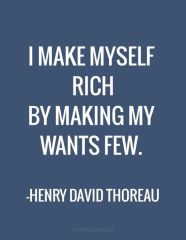
I’d love to tell you that my latest purge was inspired by something grand like re-reading Henry David Thoreau’s Walden, but no…lately I’ve been feeling like we have too much clutter in our home, that we are struggling to keep our house in order.

As any introvert could tell you (if they were actually speaking to other human beings that day), the thought of escaping to the woods near Walden Pond to live in silence and solitude definitely has its appeal.  But in this era of massive population growth and urban sprawl, it’s hard to find anywhere that could be described as silent or solitary…except Antarctica, maybe…and the climate there is not quite as hospitable as it is here in Sydney…

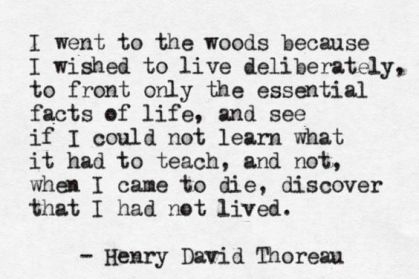
That said, Thoreau’s words have been rattling around in my head a lot lately:

thoreau-1

Not so much the bits about fronting the essential facts of life and learning what it had to teach, because having kids around gets you to do those things on a daily basis (and without needing to retreat to an isolated cabin and risk being mistaken for the next Unabomber).

No, the bit that has been reverberating in my brain has been I wished to live deliberately.

Because I do want that. And I want my children to understand what it means, too.

thoreau-3

The Bloke and I have been talking a lot lately about how basic items of food are starting to cost more than other…Stuff. (Yep, there’s that word again.) It seems it’s becoming cheaper to buy a bunch of kitchen gadgets or a pile of kids’ clothes than it is to get groceries. And it feels like we’re being encouraged to buy things — any things — faster than we can say “credit card debt”.

Inadvertently, and more than a little haphazardly, as the…ahem…shall we say “eventful” year that was 2016 rolled slowly but surely into 2017, I found myself borrowing a copy of Marie Kondo’s book The Life-Changing Magic of Tidying Up (though, to be truthful, I dipped in and out of that one) and being drawn into watching movies like Minimalism: A Documentary About the Important Things. As January approached, it felt like there was something about the transition from one year to the next that required me to take a different approach this time around, particularly in the lead-up to Inauguration Day in the US, when I strenously avoided any kind of news coverage — despite the fact that American politics has little impact on me personally.

Except that maybe American politics do impact on me, and on my family, despite the fact that we are living quietly here in the Antipodes…not least because I suspect that the election of Donald Trump, along with Brexit and any number of other things that reared their heads last year, has thrown into sharp relief the differences between the haves and the have-nots across the globe. Obviously, the situation (both internationally and domestically) is far more complicated than that — and even to describe the dichotomy in such terms is, at best, reductive and, at worst, risks deliberately misunderstanding the precursory events of the past decades.

But, that said, I can’t ignore the overriding sense I have in response to all of this political…Stuff …that something has to be done, and done differently. And the following words from Juliet Schor (who I first saw on the Minimalism movie) probably go further than most to summing up my current feeling about the state of the planet:

I agree that justice requires a vastly more equal society, in terms of income and wealth. The question is whether we should also aim for a society in which our relationship to consuming changes, a society in which we consume differently.

So that’s what we’ve been doing: consuming differently.

As a family, we’ve been discarding and donating, clearing and cleaning, reusing and recycling, simplifying and stripping back, and — perhaps, most importantly — letting go. All four of us have been part of Operation Hoik, our plan to get ourselves and our home back on track and living more mindfully and meaningfully.

thoreau-2The Stuff in our lives is disappearing and, in its place, we’ve found the space to discuss what we really need, what we really want out of life. We’re making deliberate choices, and have snapped out of the trap of mindless consumerism.
It’s not going to fix the geopolitical problems of our age, change who is governing a foreign country, or stop a war.

But attempting to live deliberately does invite us to be more thoughtful, more considered, and — hopefully — more compassionate. And I think that I, and my family, and possibly the whole world, could do with a whole lot more of that in 2017.

And with that in mind, even though it is belatedly, I wish you a truly Happy New Year.

BJx


Far From Plain Jane

austen-darcy

Oh Jane Austen…how ardently we admire and love you still…

Fun Fact for you Folks: 16 December 2016 would have been Jane Austen’s 241st birthday if she was alive today. Sadly, she only reached the age of 41, but on the upside I don’t fancy knowing what she would have look like if she had lived those extra 200 years (though I’m thinking it would probably be along the lines of Bilbo Baggins after Frodo took the One Ring away from him and moseyed off towards Mordor…)

Despite her untimely demise, I would venture to assert that it is a truth universally acknowledged that Jane Austen is one of the best loved writers (in English) the world has known — and will ever know. But rather than praising Austen’s elegant prose, or admiring her artistic longevity, or extolling her virtues as a social commentator, or waxing lyrical over her well-honed and even-better-aimed wit, I thought the occasion of her 241st birthday could be better spent considering something completely different.

What would Jane Austen make of the world of 2016?

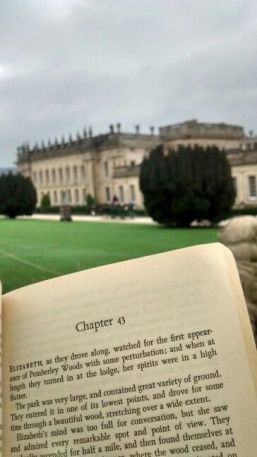
austen-pemberley

Has anything really changed? Would any of us turn down the opportunity to live at Pemberley?

What would she have made of selfies, and status updates, and social media? Would she have embraced technology and been right at the cutting edge of social commentary, garnering thousands of Likes with every carefully-worded comment, or would she have been far more circumspect — and perhaps chosen to email an errant niece privately, for example, to warn her that having viewed her Facebook feed that she would be receiving suitably decorous clothing and the Oxford English Dictionary for Christmas?

Would Jane Austen have usurped J K Rowling as the undisputed Queen of the Twittersphere? Would she have taken the view that if you can’t say it in 140 characters you’d be best not to say it at all, or would she have been entirely too polite to tweet?

Would she have taken part in the seemingly endless conversation regarding real estate (which, in the face of sky rocketing property values, has become something of a national pastime here in Australia)? It seems reasonable to suppose that she might — given that Netherfield Park being let at last was such big news in Pride and Prejudice  — or would dear Jane deem such discussion to be too crass in a modern world so obsessed with resale values?

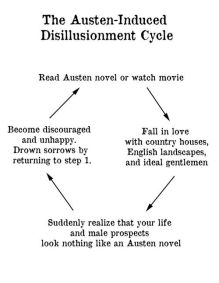
austen-disillisionment

The sad syndrome that besets Austen fans of every Persuasion…ahem…


What would Miss Austen make of the many film and television adaptations of her novels, or of their various parodies,or of the ones that even feature zombies? Would she wade into the debate over who made the best Mr Darcy — was it Laurence Olivier? Colin Firth? Matthew MacFadyen? Elliot Cowan?

What would she think of Bridget Jones?

(What, I wonder, would she make of Donald Trump?)

And, speaking of catastrophes, would she care to comment on the so-called “Austen-Induced Disillusionment Cycle” and its effects on fans around the globe?

Would Jane Austen ever Swipe Right? Or would she counsel her fellow singletons to stay away from Tinder, perhaps suggesting — gently, of course — that while Mr Wickham’s profile picture might be ever so attractive, it may not provide the full measure of the man?

austen-collins

I am, and will remain, eternally grateful that Mr Collins never got Instagram…

Would she use a Kindle, or would she remain the sort of person for whom only paper and ink would do? Would she share the iTunes playlist of the music she listened to while she wrote? Would she continue to write longhand, in her elegant handwriting, or would she use a computer — and, if she did, Jane Austen be a Mac User or PC Girl?

Would Jane Austen blog?!

Oh, just imagine that for one glorious moment…

I know I would follow her until the end of time if she did. But in the meantime, to celebrate her 241st birthday, I think I’ll go and re-read Pride and Prejudice for the twenty-seventh time instead.

PS: This one’s for my Dad, who handed me my first Austen...

Progress, not Perfection

coffee-catastrophe

I know this looks like a really good idea, but DON’T TRY THIS AT HOME…

One morning last week, having seen my children safely to school, I came into the serenity and silence of my kitchen and made a cup of freshly brewed coffee.  Black, no sugar, piping hot — just like my tea.

And then, eager to begin the day by emailing a fresh lead for a writing gig, I made my way — coffee in hand — over to my beautiful, still nearly brand new, beloved laptop.

You can see where this is going already, can’t you?

You might even be holding your breath…perhaps, hoping against hope, thinking “She didn’t…did she?  She couldn’t have…”

But I did.

Not on purpose, obviously. But it still happened.

As I set the coffee down beside my laptop, the cup tipped…and a warm wave of liquid overwhelmed the keyboard, sank down between the keys, and swamped the inner workings of my marvelous, magical machine.

Oh…the horror…

I’m not going to go into all that happened next, save to say that I was vacillating wildly between panicking that my little friend would not be able to be salvaged and berating myself repeatedly for my massive, monstrous stupidity.

Because that helps, obviously.

And once I’d managed to put the melodramatics aside — which took far longer than I’d like to admit because, believe me, I am more than capable of becoming completely histrionic when such a situation arises — I sucked in a several deep breaths. Then I went to my favourite yoga class and sucked in a few more.

(I may also have called my Dad…because adulting is hard, some days.)

And finally, when I got home from yoga and gingerly inserted the power cord back into the device and discovered that it still wasn’t working, I…

Sighed.  Deeply.

And followed that up with several more big, deep, sob-like sighs…

By this point, you may be wondering why on earth I am writing this? Why am I even admitting to this? Why would someone who prides herself on being organised, of paying attention to detail, of getting things right the first time — not to mention someone who, to earn a living, helps other people to become organised and precise — why would I write about what my kids would call a completely epic fail?

Well, for a couple of reasons, really.

First of all, accidents happen. We all experience setbacks.  We all, as Shakespeare far more elegantly put it, must “suffer the slings and arrows of outrageous fortune”. But it’s what we do in response that counts.  As Victoria Erickson once said, of disappointment:

Don’t immediately brush it off. Feel it first, and it then it will leave you quicker. Here’s the thing about broken glass: it needs to be acknowledged and swept up so you don’t step on it later.

The same thing applies, I suspect, to broken laptops.

coffee-peaky

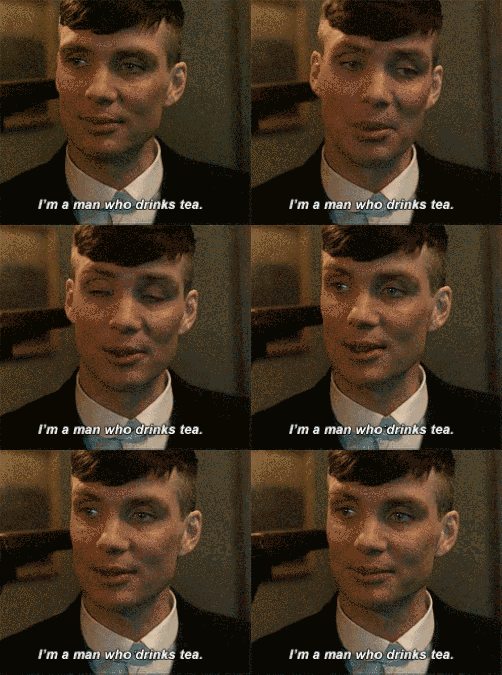
Monaghan Boy’s Magic Trick: while what I do is definitely not what Tommy Shelby does with the Peaky Blinders, the guy sure knows how to plan thoroughly and execute precisely — even if it is, sometimes, executing literally.

And that brings me to the second thing: planning. Which includes, of course, planning for potential catastrophes — and explains why I diligently followed my To Do List and backed up my laptop the afternoon before I tipped coffee all over it.

Procedures. Systems. Contingency Plans. They might sound (and frequently are) incredibly boring and mundane but believe me, they have their place. And while adhering to my regular backup procedure won’t replace my laptop, it does mean that all my data — and everything last thing I have been working on for my clients — is safe and accessible.

This life — whether it be at home, or at work — is not about achieving perfection. It’s not about managing to snatch a second or two upon a glittering pinnacle. It’s not about being flawless or faultless, because we’re human beings, after all.

Rather, I would argue that life is about striving for progress, not perfection, and about aiming to be our best and most consistent selves, each and every day. Because I would also suggest that our reaction to a situation can, quite literally, have the power to change the situation itself. And the plans we make and execute can leave us in a much better position than we might have been otherwise.

tea-instead

And, just for the record: Tommy would never tip coffee over his laptop because he, as we know, is a man who drinks tea.

Even when we tip hot coffee on our laptops.

Well, that’s what I think, anyway.

Blue Jai

PS: When did you last do a back up?


Blue Jai Creative – freelance writing and administration services for your home and business, servicing Sydney’s Northern Beaches and beyond.

© Blue Jai Creative 2016


Without a Word

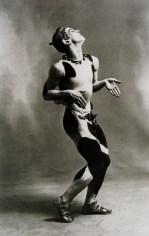
nijinsky-faun

Nijinsky as the Faun

I have been forever fascinated by how humans can convey the depth and width of their emotions without uttering a single sound. You may think it odd that someone like me, who relishes and cherishes the written word, would value such expression so highly – but, quite simply, I do.

I love watching people dance. I’ve written before about how my children do, too. And while I don’t mind a bit of a boogie myself from time to time, there are some things — ballet, for example — that I believe are best left to the experts. To those rare individuals who are disciplined enough to dedicate their lives to honing their skills and their selves to the point that they bare their very souls on stage.

On Saturday night I was fortunate enough to witness one such individual dance, when Alexandre Riabko took to the stage as a guest artist with the Australian Ballet in the title role of John Neumeier’s Nijinsky.  It was a powerful, masterful performance, vividly depicting Vaslav Nijinsky’s life inside and outside of dance via a series of memories and hallucinations as he descended, finally, into madness.

riabko-nijinsky

Descent into madness…Alexandre Riabko as Nijinksy.

Watching Riabko inhabit Nijinsky’s interior world, as other dancers recreated his recollections — of being the Golden Slave in Scheherazade, or of the Faun in L’apres midi d’un faune, or of Petrouchka, or of learning his ballet steps with his brother and sister  — was mesmerising. But as other dancers began to give form to Nijinksy’s delusions and as his complex relationships with his lover and employer at the Ballet Russes, Sergei Diaghilev, and with his wife, Romola, visibly unravelled, I was filled with an overwhelming sense of tragedy.

nijinsky-sheherazade

The Golden Slave…

The image of Nijinsky returning again and again to something like second position, arms outstretched, as though trying to find his centre and a sense of safety in the midst of his increasing confusion was heartbreaking, particularly when juxtaposed with the transformation of his memories of Diaghilev — performed with all his usual elegant line and length by Andrew Killian — from sensual lover and suave mentor to sinister impresario.

No footage of Nijinksy dancing is believed to have survived — Diaghilev, apparently, would not allow him to be filmed — but during the two and half hours he was on stage, Alexandre Riabko had me completely and utterly convinced that he was channelling the spirit of the man whom many regard as being one of the greatest interpreters of the artform to ever set foot on a stage.

I left the Sydney Opera House deeply saddened by the tragedy of Nijinsky’s tale — he never again danced publicly from the time of his final performance in 1919 until his death, after spending years in and out of asylums, in 1950 — but I was also, ultimately, uplifted by the sheer intensity, beauty and bravery of the performance I had just witnessed.

And I suspect that feeling — one of great admiration tinged with sorrow — would have stayed with me for the remainder of the weekend, had I not had the pleasure of attending a Greek Orthodox wedding with my family the following day.  My daughters had never been to a wedding before, and they were entranced by everything about the experience from the singing at the wedding ceremony to the table settings at the reception. But what really captivated them — and me — was the dancing.

Watching the wedding guests encircling the dance floor, every one of them tracing the intricate steps of a Syrtos, was every bit as mesmerising as the ballet had been the night before.  Here were women — some in sensible sandals, most in spectacular stilletos — and men following in the footsteps of those who had come before them. Here was a sure-footed groom, leading his radiant bride. Without uttering a single word, the dance spoke of tradition, of continuity, of community, of family.

And as the long line of dancers wound their way around the room, I found myself thinking of each of their bodies as a living link to the past, stretching all the way to the present and then onwards, ever onwards, as they danced into the night, celebrating with the newlyweds and wishing them a lifetime of happiness in the future.

syrtos

A long line of tradition and celebration…

Ivy, Oak and Ash

olivanders-2

Ollivanders…where the wand, as we know, chooses the wizard.

I’m writing this at my kitchen table, listening to a beautiful Ólafur Arnalds track he recorded with Nils Frahm. The music, with its high-pitched, bell-like tinkling, has an ethereal quality that sounds unmistakably like…Magic.

And then it occurs to me that this piece, relatively obscure as it is, has conjured up the memory of the opening bars of a much more famous musical score: John Williams’ overture to the original Harry Potter film, a movie filled with mystery and wonder, and more Magic than you could poke a stick at — particularly if that stick should be a wand.

Ah, Magic.

It’s such a powerful thing — such a potent, creative force.

Even though I know quite well that the Harry Potter novels and films are works of fiction, I also recognise them as works of wonder. Of a fantasy that I can — and do — quite readily buy into. And, as I’ve said before, I encourage my children to do so as well. I think that the late and ever-so-great Roald Dahl, who definitely knew wonder when he saw it, probably explained why best:

“And above all, watch with glittering eyes the whole world around you because the greatest secrets are always hidden in the most unlikely places. Those who don’t believe in magic will never find it.”


img_1713

Hogsmeade Village, Hollywood style…please respect the spell limits.

For me there can be as much Magic in a well-crafted sentence as there in a beautifully realised fictional world — complete with its own myths and history. But when The Bloke and I had the chance to take our girls to the Wizarding World of Harry Potter in Hollywood during our recent trip to the US, we both knew this was a opportunity to see some real Magic.

And it was.

We explored Hogwarts Castle, drank butterbeer at the Three Broomsticks, bought sweets at Honeydukes, visited the Owlery, and browsed through the broomsticks at Dervish and Banges.

And then we went to Ollivanders.

Ollivanders, as all self-respecting Harry Potter fans know, have been makers of fine wands since 382BC. Being a Ravenclaw myself, I could spend hours discussing the importance of the Ollivander family in history of European wandmaking or introducing you to the finer points of wandlore but that, one suspects, would be better done at another time. The most important thing to know, for the purposes of this post, is that the wand chooses the wizard.

img_2314

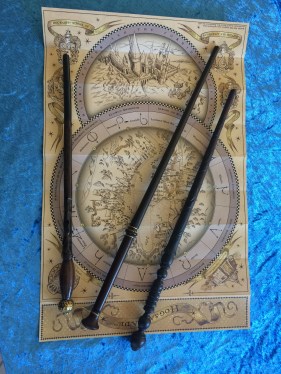
Our Wands, each pointing to the Hogwarts houses we most identify with: Gryffindor, Slytherin and Ravenclaw.

Or the witch, for that matter. Because when we came out of Ollivanders, the wands had well and truly chosen: Ivy for Marvel Girl, Oak for Miss Malaprop, and Ash for me. Not surprisingly, my wand is lying beside me on the kitchen table as a write. It is beautifully balanced, it is perfectly weighted, and it feels like it was made just for me.

And that’s the truly Magic thing, isn’t it?

But there are, as I discovered once again that day in Hogsmeade Village, many kinds of Magic…

After our visit to Ollivanders, Miss Malaprop strode purposefully towards Gladrags Wizardwear, where she proceeded to demonstrate her own considerable powers as she persuaded The Bloke to buy her a full set of Hogwarts robes (Slytherin ones, naturally) complete with house insignia and wand pocket, and some for her sister (Gryffindor, of course) as well. How does she do it? I wondered, as I struggled to calculate the cost of purchasing two sets of robes, plus tax, plus the exchange rate, plus the inevitable excess baggage cost associated with getting two large bundles of heavy black fabric back home…and I knew the answer in an instant: Miss Malaprop was utterly certain that we would let her have them before she even entered the shop, because she knew that deep down, we wanted them too.

olivanders-3

Basic Wand Motions…I think Arresto Momento would be one of the most useful spells I could have in my kitchen.

We all want to be part of something bigger than ourselves, bigger than all of us. We all know that there is real Magic to be found in shared experiences, particularly when they involve mutually suspended disbelief.

I know it’s not real.

And my kids know that, too.

(Really!)

But there is much to be said for the transformative joy that is produced when you allow the fictional to enter the everyday.  It’s why my kids have the words Nox  and Lumos on their bedroom lightswitches.  It’s why I’ll tell them I would love one of them to play Quidditch for Australia one day. It’s why Miss Malaprop and Marvel Girl got their Hogwarts robes (or they will on Christmas Day, at any rate).

And it’s also why our wands, which individually and specifically chose us, sit in pride of place in the rooms of our house that we use the most.  Our wands are tangible reminders that our differences make us as strong as our similarities, that our words and actions are powerful and must be wielded well, that there is Magic in us all.

Ivy, Oak and Ash.

Always.

olivanders

Ollivanders: makers of find wands since 382BC.