The Thrifty Fictionista: in Praise of Her Own Kind

Folks, the Thrifty Fictionista is getting a bit uppity and feeling the need to make a return in amongst Blue Jai’s Vignettes…it’s all very well to provide pops of fictional colour, but every now and then I need to use this patch of cyberspace to process the non-fictional STUFF (I believe that’s correct the technical term) swirling around in my head.

The Easter holidays are upon us here in the Antipodes, and for us that means increasingly autumnal days and cooler nights. There is a crispness in the morning air now we have switched back from Daylight Saving Time, and although the temperatures here in Sydneytown are still pushing towards 30 several days this week, night is falling sooner. Deeper. Darker.

And for the Thrifty Fictionista on holidays, that means my Reading Time starts earlier and gets longer. I’m not getting washing off the line at 6:30pm, and chances are I’ve already switched to stewing or baking something for dinner – which basically means I bung something in the oven, prep some greens to steam later, and dive headfirst into the nearest book.

I’ve read a bunch of stuff lately, but one thing has really stood out to me: the high quality of writing by female authors. I realised I have often been quick to praise certain books – especially those by people like Tim Winton and Trent Dalton – as vying for the coveted title (ahem…dreadful pun alert) of my Favourite Book, but that the works I come back to time and again are often by women.

So, I thought it was high time the Thrifty Fictionista put together a list of my Top Five Women Writers for you all to fight over – agree, disagree, comment, don’t comment, whatever. But these, in no particular order, are my picks:

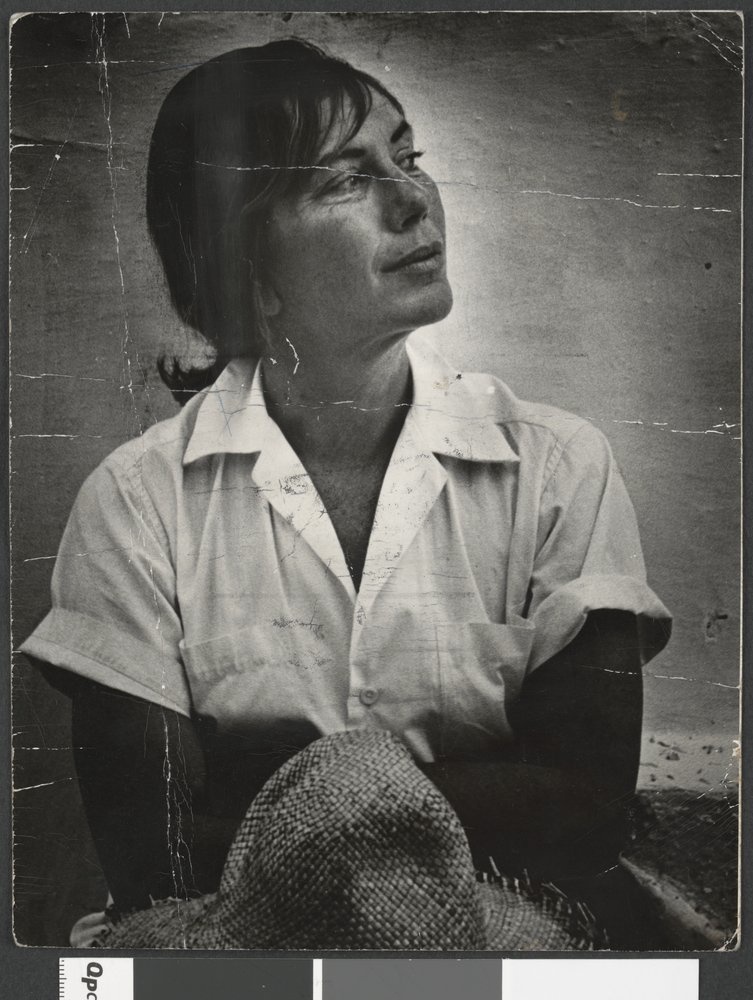
  • CHARMIAN CLIFT

So, I’m guessing my first female writer is someone you may never have heard of, but once you start reading her stuff you may not want to stop. Charmian Clift was an Australian novelist and columnist who died (by her own hand, unfortunately), in July 1969. Her writing draws upon on her life experiences living in Australian and overseas – most notably in Greece and the UK – and what it was like returning to Australia after she moved back to Sydney in 1964 with her husband and children.

Her essays, the best of which have been collected by Nadia Wheatley (also a brilliant Australian woman writer) into two volumes: Sneaky Little Revolutions and The End of the Morning. These are the sort of books I read with a soft 2B pencil in hand, underlining the most magical and lyrical lines of Clift’s prose. She was an incisive observer of life, both interior and exterior, was unafraid to point out the inequalities and vagaries plaguing Australian suburban life before second wave feminism really reached these shores, and she was also very funny.

An example of one of the many lines I highlighted while reading, just to give you a taste?

Memory is as tricky as a flawed window glass that distorts the view beyond according to the way one turns one’s head.

Please, PLEASE read Charmian Clift. She may have left us too soon, but I believe she should never be forgotten. Oh – and if you need anything else to pique your interest, the child she gave up for adoption when she was 19 ended up becoming Suzanne Chick, mother to Gina Chick, who won the first season of Alone: Australia.

How’s that for three generations of incredible women? And yes, they all have books you can read.

  • HELEN GARNER

No list of women writers could be complete without the inimitable Helen Garner. I have just finished reading her book The Season and have been struck – no, humbled – yet again by the high quality of her writing, but the unflinching keenness of her eye, the depth of her emotional awareness and honesty, the precision of her turn of phrase. It doesn’t matter if she’s writing fiction or non-fiction: Helen Garner is, quite genuinely, brilliant.

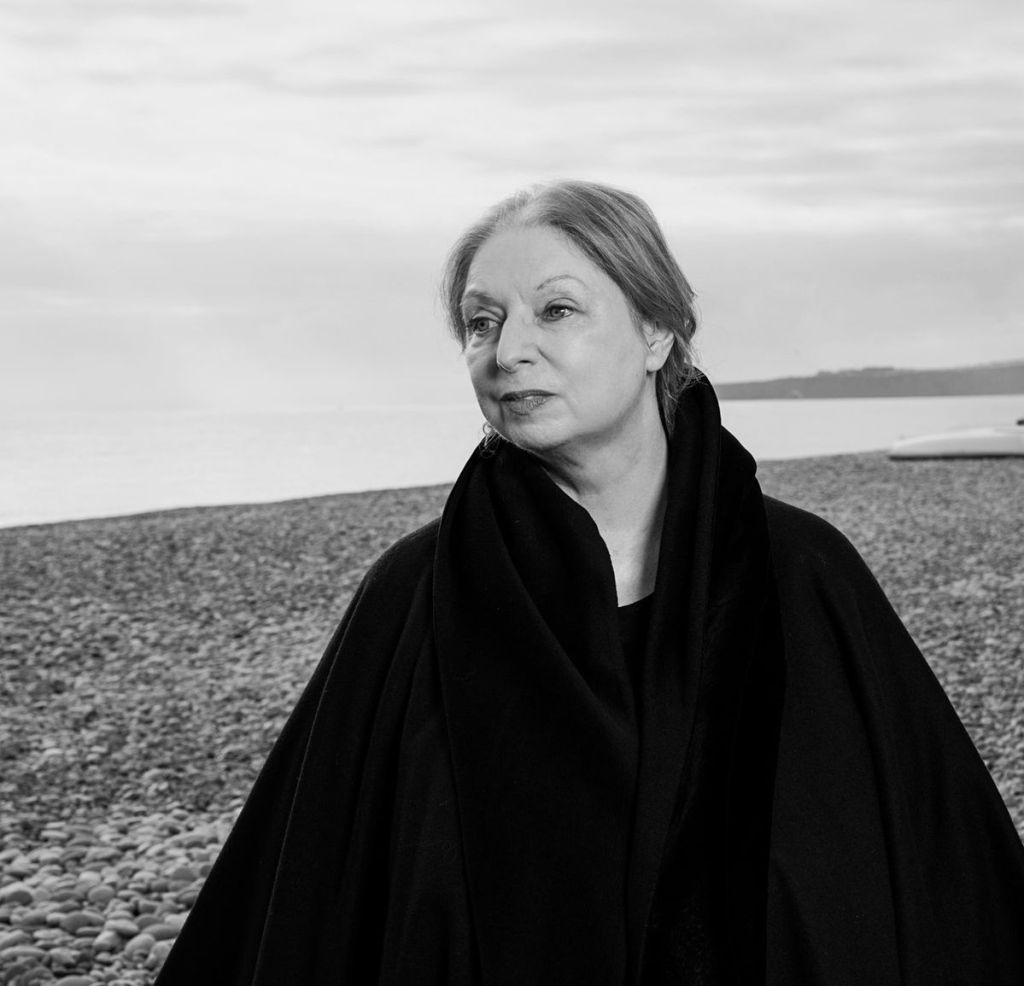
  • HILARY MANTEL

I felt – quite selfishly – bereft when Hilary Mantel died in 2022. Her passing meant, of course, that I would never again have the pleasure of reading a new novel by her. Or short story, or book review, or dazzlingly insightful essay. Like Helen Garner and Charmian Clift, Mantel did not stick to one form but made any writing she turned to appear effortless. I particularly love her historical fiction (and, as a Thrifty Fictionista can guarantee you get plenty of book for your buck in this department), and hold her Thomas Cromwell trilogy in particularly high esteem. I’m glad she wrote so much, so I have plenty of her work yet to read, but I remain mournful she is gone.

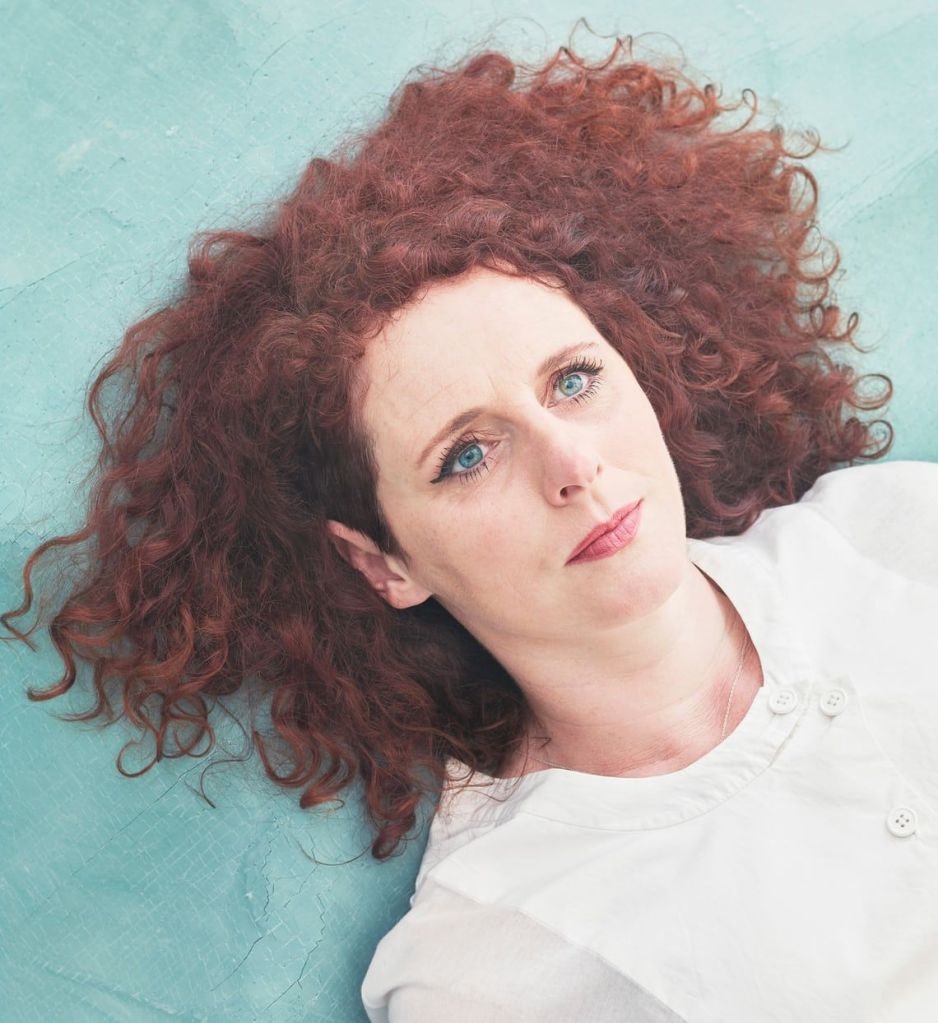
  • MAGGIE O’FARRELL

I’m not band waggoning and including Maggie O’Farrell on this list because of the recent success of the film adaptation of her novel Hamnet at the Oscars. She’s here because ever last thing of hers that I read is excellent and different: not just Hamnet, but The Marriage Portrait and This Must Be The Place and anything else she turns her hand to. I love the way O’Farrell tells stories, especially in her historical fiction, from perspectives that have often been ignored. Women’s perspectives, most obviously and particularly.

  • CURTIS SITTENFELD

I was delighted to pick up Curtis Sittenfeld’s short story collection Show, Don’t Tell at a second hand book sale recently and finally read it the other week. What a masterclass! And what a joy to return at the end of that work to a story about Lee Fiora, from her first novel, Prep. Sittenfeld’s worlds are instantly accessible and fully realised, whether they be contained in the sparse pages of a short story or the sprawl of a novel. She can take a single idea (eg. what if Hilary didn’t marry Bill? in Rodham) and imagine the unfurling of that notion so fully and deftly and with such complexity that her alternate reality seems like…reality.

Anyhoo, that’s it from the Thrifty Fictionista for now. I’m off to read and write some more…
We Need More Words

qualityThe Bloke and I don’t fight often. We’ve spent the better part of twenty years happily muddling along, quietly delighting in our continued coexistence.
But every now and then — because we’re real, normal human beings — we have a bit of a barney. Generally speaking these arguments are not over anything particularly controversial (such as just how many surfboards/boogie boards/random vessels of an inflatable variety a family of four might actually require on a weekend away), but last night…well, it was a different story.

We were watching Nanette, Hannah Gadsby’s hour-long stand up show, a vertiable tour de force explaining why she is choosing to leave comedy behind. Nanette is, simply, brilliant: it is a brutally honest and unbelievably courageous piece of story telling. It is also, in parts, uncomfortable viewing — particularly if you’re a straight, white male who has just been watching Season Two of Glow, complete with its depiction of a Harvey Weinsteinesque “meeting” involving a young and vulnerable actress, and if you had also happened to top that experience off by taking a look at Andrew Denton’s Interview with Tim Winton (the one who wrote my favourite book) speaking about toxic masculinity.

Straight, white male.

Now we all know that the straight, white male segment of the population is copping a bit of a caning at the moment. With good reason, of course — and let’s be clear: in my view, there’s nothing wrong with challenging a long-established framework of white, male privilege that has been propped up by centuries of patriarchy and misogyny. And I, as a straight, white female, last night felt the need to point out that those structures were the very things that silently condoned straight, white men heckling or wolf-whistling at me when I was a schoolgirl, walking past a construction site at the top of the street I lived in. That allowed a crowded platform of commuters to stand by and ignore the straight, white man who tried to look up my skirt, and who failed to assist me when he followed me onto the train. That normalised regular pay increases for the (overwhelmingly) straight, white male professionals in several firms in which I worked and did not even bother to schedule salary reviews for the (overwhelmingly) female support staff.  That continues to impose a tax on women’s sanitary products…but let me stop there. I could, as most women could, go on and on.

Straight, white male.

These were the words that sparked our disagreement, along with the onslaught being fairly and squarely directed at that particular segment of the population.

Because The Bloke identifies as a straight, white male — and, while I can’t dispute his logic, last night I also felt the need to point out that I don’t view him through that prism at all. I felt the need to explain that if he had been the sort of straight, white male who is currently — and with good reason — being called to account, I would never even have considered dated him, let alone marrying him. That I don’t believe him to be a misogynist. That I certainly don’t perceive him to be anything like Donald Trump.

I explained to The Bloke that when I look at him, I see a successful business owner who pays his male and female staff equally. I see a husband who consistently treats me as an equal in our life partnership. I see a father who is helping to raise two daughters to be the best human beings they can be. I see a person who frequently helps with housework and does not delineate duties on the basis of gender. I see a man who is willing to draw attention to language, attitudes and behaviours towards women that are unacceptable. I see a…feminist.

Feminist?!

Initially, The Bloke wasn’t quite sure what to make of that word, either, being aware of the many and varied connotations and convictions attached to it. But — because of the man he is — The Bloke listened to me and not only heard, but also made sure he understood my point of view.

unityAnd that’s where Hannah Gadsby is absolutely right — we need more words, people.

We need a multitude of words.

We need more words to describe the men who might, quite literally, be straight, white males, but who are also men whose own language, attitudes and behaviours are helping to dismantle the architecture of straight, white, male privilege. Men who support and empower women and girls not because they are female, but because they are human beings, and who encourage other men and raise their sons to do just the same. Men who, in my life, I feel fortunate to call father, brother, mentor, friend.

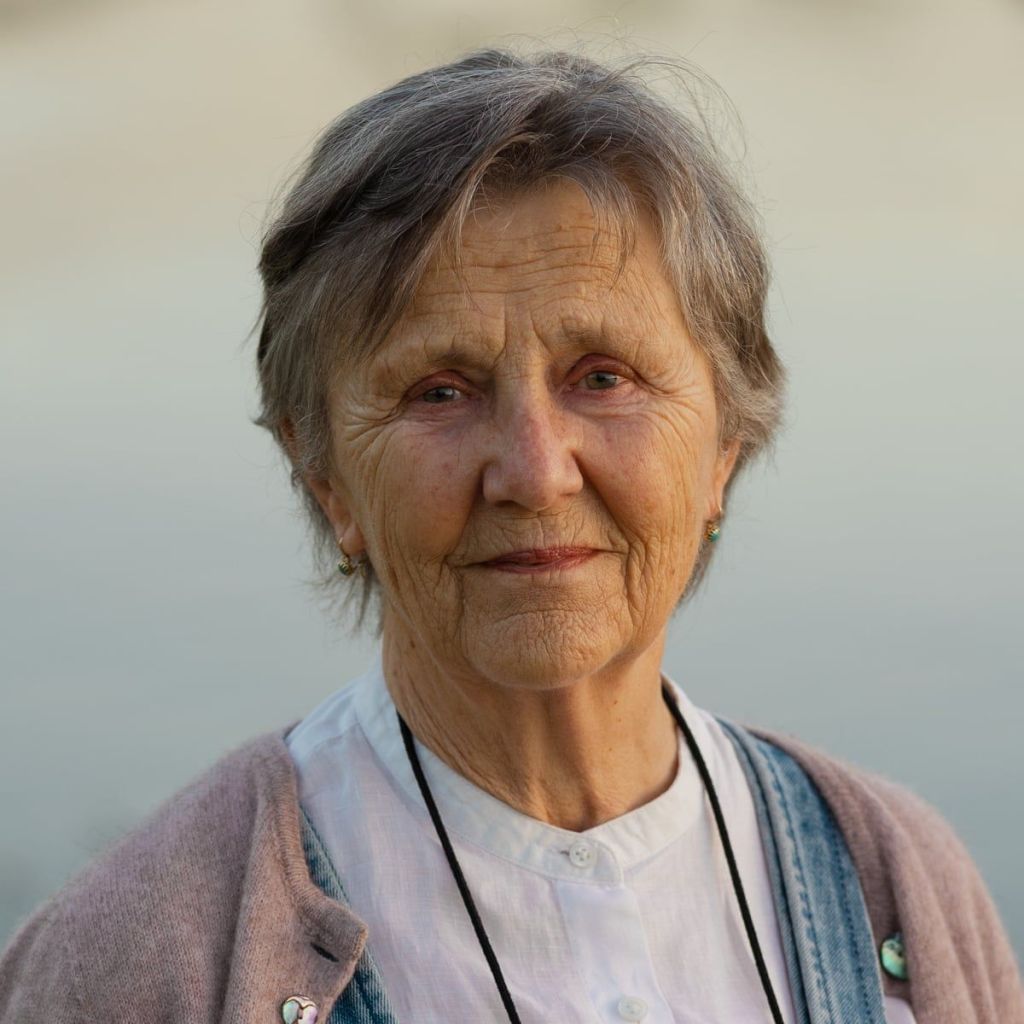
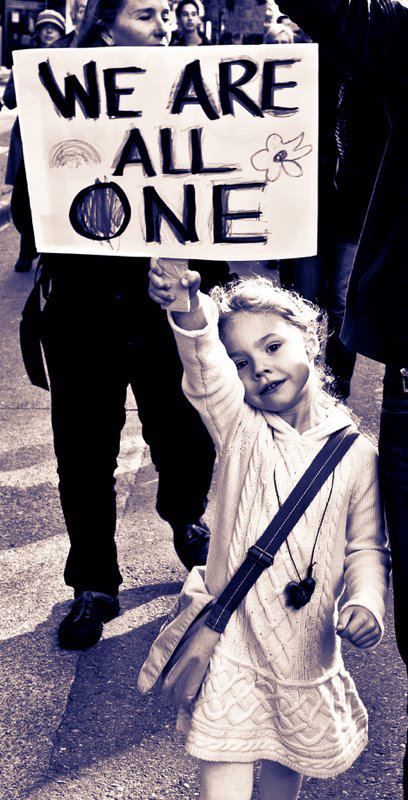
We need more words to define the things that unite us and celebrate all the things we hold in common — not more labels, or pigeonholes, or tiny little compartmentalised boxes.

We need more words.

2017 in Review: Closing the Book

As another year draws to a close, I’ve been reflecting on the things I’ve read, seen and heard this year that have affected me in some way — whether by inspiring me, giving me pause, prompting entirely unsolicited dance moves or in-shower solos, or making me think, laugh, cry or even cringe.

So with that in mind, I’ve come up with a bunch of personal Top Fives of 2017, with a few honourable mentions thrown in. Feel free to comment on them, or to share your own favourites — especially if you’d think I’d like them!

Today, I’m starting with books. I have decided that this category is open to any book written at any time, not just in 2017. I simply had to have read them during the past year. That said, I thought it was appropriate to include their year of publication, so I’ve arranged them chronologically. I’m not going to give away plot details or critique them fully — just know if they’ve made this list, I think they’re tops.

BLUE JAI’S BEST BOOKS OF 2017

  1. 2017 Crossing to SafetyCrossing to Safety by Wallace Stegner (1987).  This book was loaned to me by The Professor, and I’m still not certain whether that simple fact made reading it a more poignant experience — not least because the plot centres on the interactions between two academics and their wives. The writing is beautiful, evocative, and reminiscent without becoming nostalgic, and Stegner’s control of the narrative is masterful.  This book stayed with me for a long time after I’d read it, and made me feel like I’d spent a summer or two in Vermont.
  2. 2017 American GodsAmerican Gods by Neil Gaiman (2001). What a rollicking good read! Normally I read housebrick sized books on my Kindle, but this one I lugged to and from Fiji and am so glad I did. The story of Shadow and Gaiman’s depiction of the battle between Old Gods and New in America is (literally) fantastic, eccentric and kept this Thrifty Fictionista happily engrossed in my holiday read. I even came back and downoaded Norse Mythology, because I wanted more Gaiman goodness.
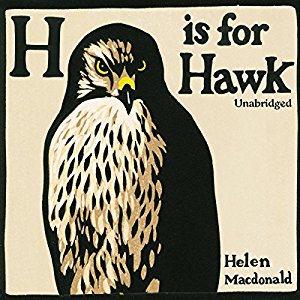
  3. 2017 H is for HawkH is for Hawk by Helen Macdonald (2014). I’m not sure I’ve read any other book quite like this one — and while the subject matter (the author’s way of dealing with her grief following the death of her father) is not easy, Macdonald’s brutally honest emotional journey aligns more perfectly that I ever expected with a wealth of arcane knowledge of falconry and the life of T H White. I never anticipated I would find such subjects remotely interesting, but this book proved me entirely wrong.
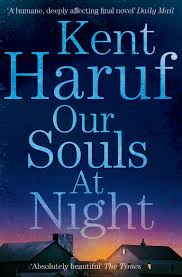
  4. 2017 Our soulsOur Souls at Night by Kent Haruf (2015). Oh…this story. Published posthumously, Haruf’s tale begins with an unusual proposition and ends up being an absolute joy to read. It’s bittersweet too, it’s true, but — in my view — ultimately uplifting. Like most purists, I suspect the book is better than the movie version, despite fact the film starred Jane Fonda and Robert Redford. Read the book first. Please. (You know it’s the right thing to do.)
  5. 2017 Life to ComeThe Life to Come by Michelle de Kretser (2017). Winning this year’s Miles Franklin award, I can’t honestly say I enjoyed this book: the characters are eminently recognisable, particularly to Sydneysiders, but I did not warm to any of them. That said, there wasn’t a single other book I read all year that had my head wriggling like a tin of worms for so many weeks after I’d put it down. Oh — and the writing is seriously, utterly brilliant.
Honourable mentions go also to Margaret Atwood’s The Handmaid’s Tale (1985), which I agree remains as relevant today as it did when first published; Island Home, Tim Winton’s beautifully written (as always) love letter to the Australian landscape and his passionate call to arms to protect it; and finally, The Dry, by Jane Harper, which is one of the best and most atmospheric thrillers I have read in an age.

Coming soon: Blue Jai’s Best Viewing and Listening of 2017…

Dirt Music


Dirt Music 3

Dancing spotlit in a bodystocking? Not me…I’ll leave that to the likes of Misty Copeland.

So the other night, after a few “light beers” (which may or may not have been entire bottles of wine), a mate of mine asked me whether I had a Favourite Book.

As in, a Favourite Book OF ALL TIME.

And I said…Yes.

Or perhaps I just whispered it.

I definitely held my breath for a split second before I answered, not sure of how my response would be received, or whether it would be treated with the reverence I reserve for Favourite Books.

Because let’s face it — owning up to having a Favourite Book (of All Time, no less) is to to reveal your self, to expose your self as completely and unapologetically as a dancer in a flesh-coloured bodysuit on a spotlit stage.  Which is fine, completely fine, if you’ve spent the requisite years honing your body and your skills to the point that a body-stocking, or a distinct lack of on-stage hiding places, or (God forbid) an audience no longer fazes you, but…clearly, that’s not me.

I write. I read.

I cook. I most definitely eat. And while my kitchen is well-known as a place where dancing is heartily encouraged, I would sooner eat a body-stocking rather than wear one.

Even so, despite my many misgivings (or maybe because I, too, had consumed several glasses of wine), the other night I actually confessed to loving one book above all others.

Now, any literature lover will tell you that the idea of narrowing down the books you couldn’t bear to part with to a Top Ten is an utterly absurd exercise. If you truly love books, whittling down your list to a Top Fifty is a difficult proposition.

But if you have a Favourite Book, you know what it is. If, unlike me, you’re the sort of person who likes to proclaim your Favourite Book far and wide and to encourage every last being in the known universe to read it, you know what it is. If, like me, you’re a little more circumspect about revealing the identity of your Favourite Book, you know what it is. Even if you have trouble admitting to yourself that one particular volume is your Favourite Book, you still know what it is.

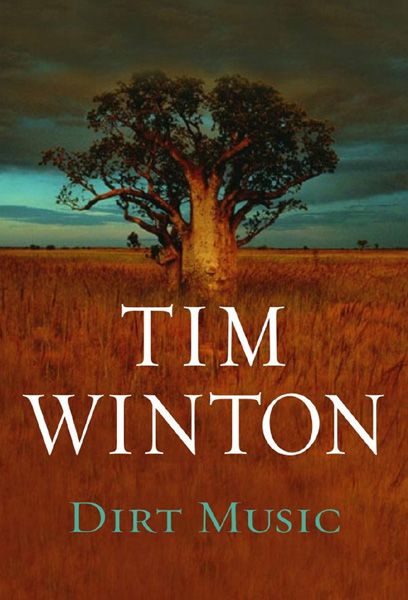
And mine is Tim Winton’s Dirt Music.

Dirt Music

So here it is — my Favourite Book. OF ALL TIME.

(Oh dear Lord! Did I just type that for the world to see?!)

Yep, Dirt Music is my Favourite Book of All Time.

And I have decided that I will own up to it, and expose myself to whatever judgements you may make about me as a result of that admission, because it is my Favourite Book.

I could have dodged the issue entirely, perhaps, and said it was impossible to decide between Dirt Music and any number of other books, such as Pride and Prejudice or Anna Karenina or The Lord of the Rings or The Great Gatsby or Hamlet, to name just a handful of others.  No authors’ names necessary, of course — they’re all tomes that are regularly cited as being Favourite Books. I could even have wrong-footed my friend by pointing him in the direction of Ursula Le Guin’s Earthsea books, or Marilynne Robinson’s Gilead, or Vikram Seth’s A Suitable Boy or  Jonathan Safran Foer’s Extremely Loud and Incredibly Close.

But I didn’t.

Because, deep down, I know that Dirt Music is my Favourite Book.

I’m not saying that it’s best book in the universe — that’s a whole other discussion. And I’m definitely not going to weigh into the whole debate about the Great Australian Novel, either, and whether that accolade goes to Winton’s Cloudstreet or not.  I’m not even saying that you should rush out, buy Dirt Music, and devour it cover to cover — it may not be your thing at all. (I mean, if you want to, of course — go ahead; it might end up being your Favourite Book too).

Nup. I’m not doing any of that.

But what I am saying is pretty simple, really.

For me, Dirt Music, Winton’s tale of Georgie Jutland losing and finding herself in the wilds and waters of Western Australia is special. In the true blue, Bruce McAvaney sense of the word.

I love — no, I utterly adore — Tim Winton’s prose.  I love the tangible physicality of his descriptions of people and place. I love the accuracy with which he captures his characters’ vernacular. I love the overarching presence of the Australian landscape, particularly of the ocean and the coast. I love the way he describes Georgie’s father as Himself, QC — and I love the sheer volume of information and resonance and impact those two words impart.

Dirt Music 2

My super-power: escaping into books…

Reading is such a great privilige, and literacy such an inordinately important gift. And, as Alain de Botton points out, “Of all the addictions, bibliophilia is the noblest and most dangerous.” Where else, but between the pages of books, can we embark on great quests, fight revolutions, ride dragons, or sail further west than west?

I will, I know, continue to read, and always — always — to write. Like Rudyard Kipling, “I am by nature a dealer in words, and words are the most powerful drug known to humanity.”

And it is beyond comforting to know that I can return time and again to the happy places that lie between the dog-eared volumes that line my shelves, to wend my way along hidden paths towards Rivendell, to walk with Elizabeth from Netherfield back to Longbourn, even to hold my breath as Anna waits for the oncoming train…

But I will always come back, time and again, to Dirt Music, if only to discover, like Luther Fox, just one last time:

She’s real…she’s real…