The Thrifty Fictionista: in Praise of Her Own Kind

Folks, the Thrifty Fictionista is getting a bit uppity and feeling the need to make a return in amongst Blue Jai’s Vignettes…it’s all very well to provide pops of fictional colour, but every now and then I need to use this patch of cyberspace to process the non-fictional STUFF (I believe that’s correct the technical term) swirling around in my head.

The Easter holidays are upon us here in the Antipodes, and for us that means increasingly autumnal days and cooler nights. There is a crispness in the morning air now we have switched back from Daylight Saving Time, and although the temperatures here in Sydneytown are still pushing towards 30 several days this week, night is falling sooner. Deeper. Darker.

And for the Thrifty Fictionista on holidays, that means my Reading Time starts earlier and gets longer. I’m not getting washing off the line at 6:30pm, and chances are I’ve already switched to stewing or baking something for dinner – which basically means I bung something in the oven, prep some greens to steam later, and dive headfirst into the nearest book.

I’ve read a bunch of stuff lately, but one thing has really stood out to me: the high quality of writing by female authors. I realised I have often been quick to praise certain books – especially those by people like Tim Winton and Trent Dalton – as vying for the coveted title (ahem…dreadful pun alert) of my Favourite Book, but that the works I come back to time and again are often by women.

So, I thought it was high time the Thrifty Fictionista put together a list of my Top Five Women Writers for you all to fight over – agree, disagree, comment, don’t comment, whatever. But these, in no particular order, are my picks:

  • CHARMIAN CLIFT

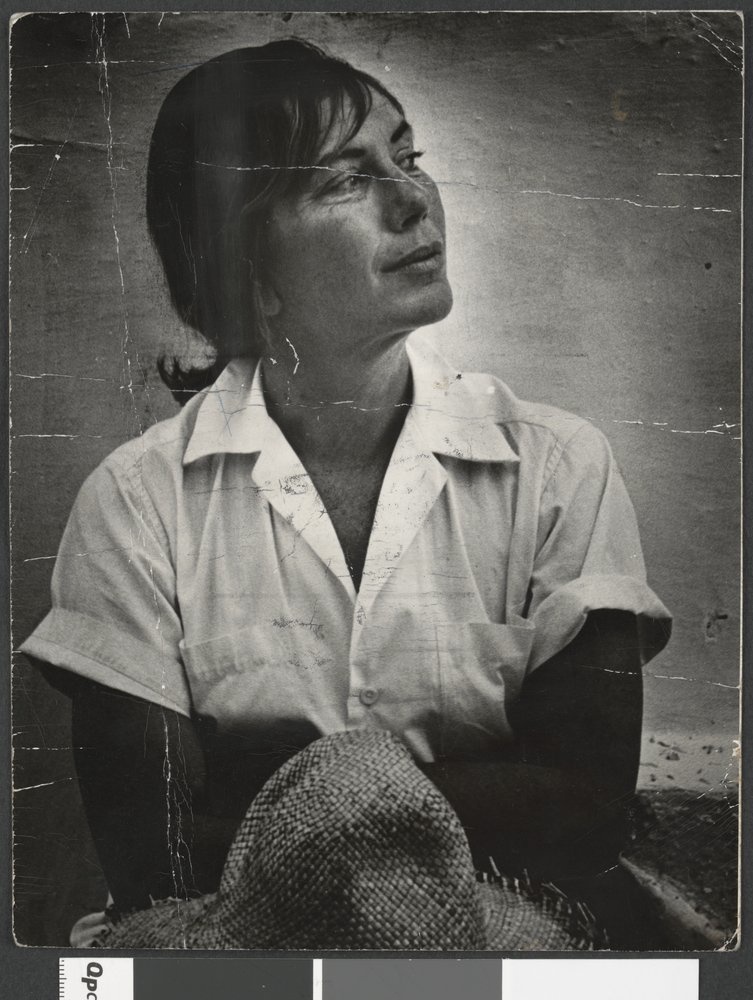
So, I’m guessing my first female writer is someone you may never have heard of, but once you start reading her stuff you may not want to stop. Charmian Clift was an Australian novelist and columnist who died (by her own hand, unfortunately), in July 1969. Her writing draws upon on her life experiences living in Australian and overseas – most notably in Greece and the UK – and what it was like returning to Australia after she moved back to Sydney in 1964 with her husband and children.

Her essays, the best of which have been collected by Nadia Wheatley (also a brilliant Australian woman writer) into two volumes: Sneaky Little Revolutions and The End of the Morning. These are the sort of books I read with a soft 2B pencil in hand, underlining the most magical and lyrical lines of Clift’s prose. She was an incisive observer of life, both interior and exterior, was unafraid to point out the inequalities and vagaries plaguing Australian suburban life before second wave feminism really reached these shores, and she was also very funny.

An example of one of the many lines I highlighted while reading, just to give you a taste?

Memory is as tricky as a flawed window glass that distorts the view beyond according to the way one turns one’s head.

Please, PLEASE read Charmian Clift. She may have left us too soon, but I believe she should never be forgotten. Oh – and if you need anything else to pique your interest, the child she gave up for adoption when she was 19 ended up becoming Suzanne Chick, mother to Gina Chick, who won the first season of Alone: Australia.

How’s that for three generations of incredible women? And yes, they all have books you can read.

  • HELEN GARNER

No list of women writers could be complete without the inimitable Helen Garner. I have just finished reading her book The Season and have been struck – no, humbled – yet again by the high quality of her writing, but the unflinching keenness of her eye, the depth of her emotional awareness and honesty, the precision of her turn of phrase. It doesn’t matter if she’s writing fiction or non-fiction: Helen Garner is, quite genuinely, brilliant.

  • HILARY MANTEL

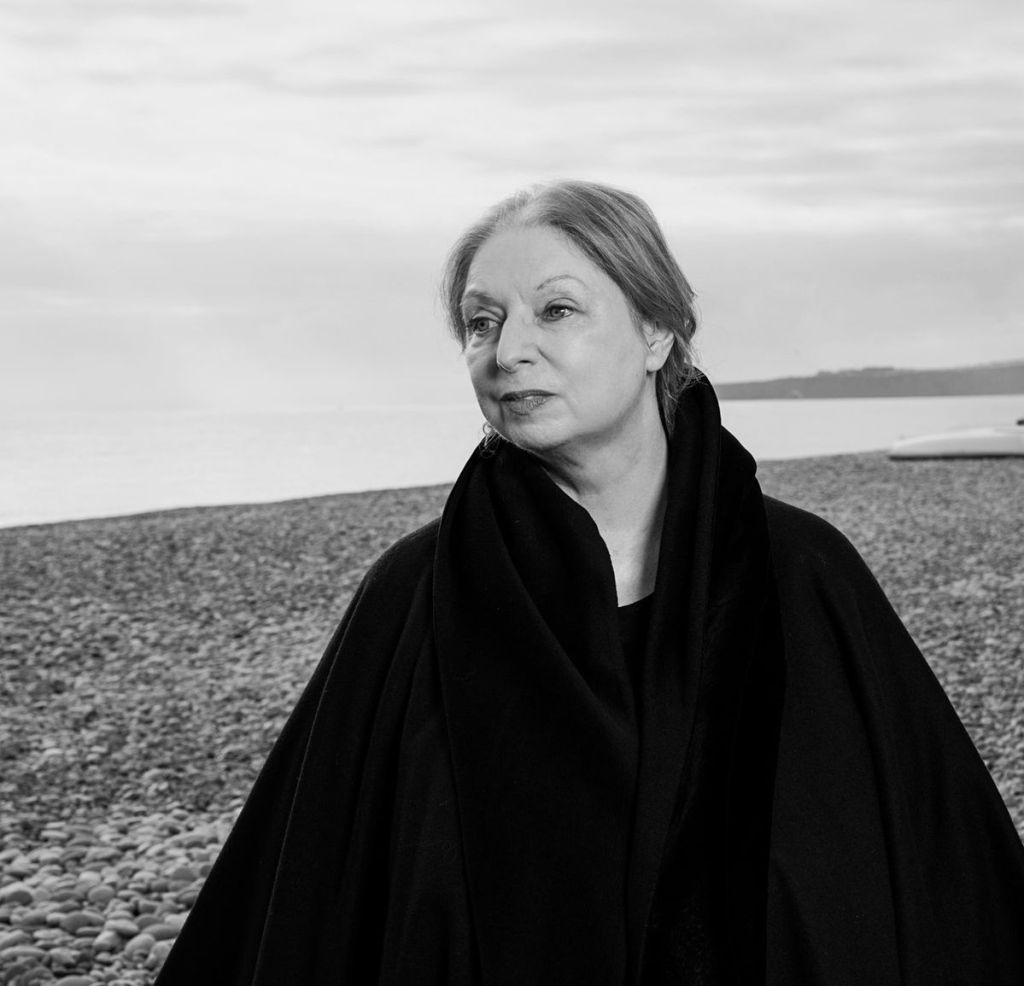
I felt – quite selfishly – bereft when Hilary Mantel died in 2022. Her passing meant, of course, that I would never again have the pleasure of reading a new novel by her. Or short story, or book review, or dazzlingly insightful essay. Like Helen Garner and Charmian Clift, Mantel did not stick to one form but made any writing she turned to appear effortless. I particularly love her historical fiction (and, as a Thrifty Fictionista can guarantee you get plenty of book for your buck in this department), and hold her Thomas Cromwell trilogy in particularly high esteem. I’m glad she wrote so much, so I have plenty of her work yet to read, but I remain mournful she is gone.

  • MAGGIE O’FARRELL

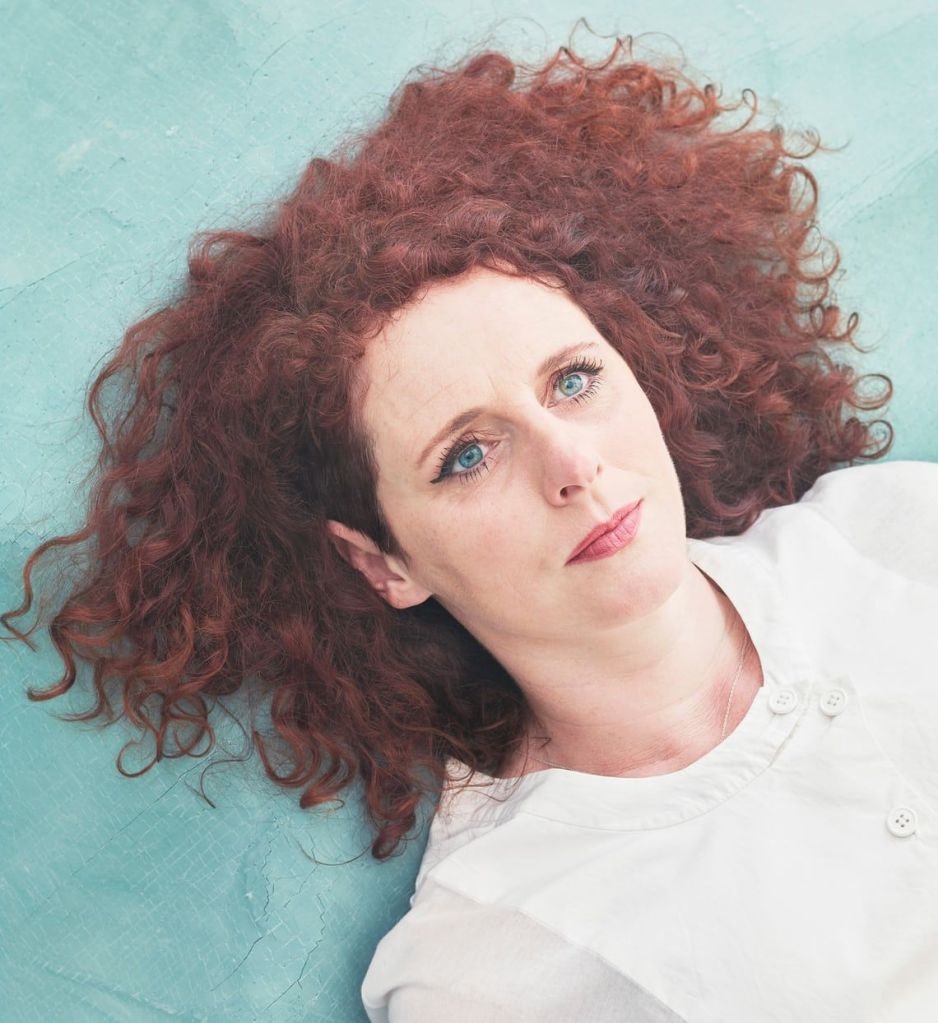
I’m not band waggoning and including Maggie O’Farrell on this list because of the recent success of the film adaptation of her novel Hamnet at the Oscars. She’s here because ever last thing of hers that I read is excellent and different: not just Hamnet, but The Marriage Portrait and This Must Be The Place and anything else she turns her hand to. I love the way O’Farrell tells stories, especially in her historical fiction, from perspectives that have often been ignored. Women’s perspectives, most obviously and particularly.

  • CURTIS SITTENFELD

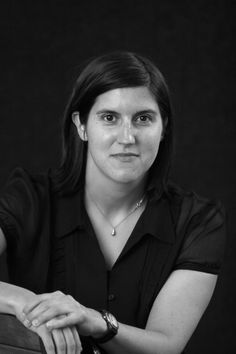
I was delighted to pick up Curtis Sittenfeld’s short story collection Show, Don’t Tell at a second hand book sale recently and finally read it the other week. What a masterclass! And what a joy to return at the end of that work to a story about Lee Fiora, from her first novel, Prep. Sittenfeld’s worlds are instantly accessible and fully realised, whether they be contained in the sparse pages of a short story or the sprawl of a novel. She can take a single idea (eg. what if Hilary didn’t marry Bill? in Rodham) and imagine the unfurling of that notion so fully and deftly and with such complexity that her alternate reality seems like…reality.

Anyhoo, that’s it from the Thrifty Fictionista for now. I’m off to read and write some more…
2020 in Books: Blue Jai’s Top 5

Well, I’ve covered my Top 5’s for 2020 in music and on screen, and now it’s time for my alter ego, the Thrifty Fictionista, to take centre stage and reveal Blue Jai’s Top 5 Books of 2020.

I don’t normally keep track of how many books I read, but for some bizarre reason utterly unknown to me I did in 2020 – and, despite home schooling and remote working, somehow found time to escape into more than 60 books. They ranged from non-fiction to biography to literary fiction to fantasy, read either on the page or on an iPad using the Libby app (which I think is brilliant).

Along the way I read some stuff I definitely won’t pick up again but which served its purpose during the darker times of the year just gone, but I also uncovered some genuine gems which, without further ado, make up Blue Jai’s Top 5 Books of 2020.

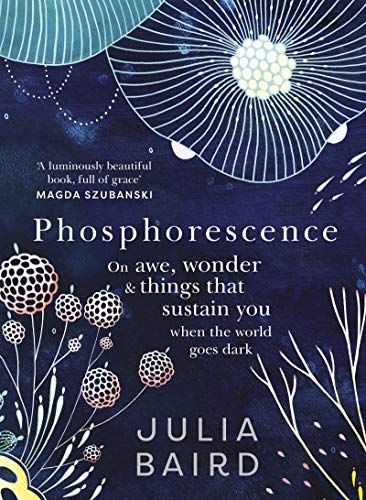
Phosphorescence: on Awe, Wonder and Things that Sustain You when the World Goes Dark by Julia Baird (2019)

I actually kicked off 2020 by reading Julia Baird’s masterful biography of Queen Victoria (which, if that sort of thing is your jam, I highly recommend). But it was this gorgeously ornamented hardback volume, which I will refer to simply as Phosphorescence for short, which took my breath away. In it, Julia Baird has delivered what I view as the best kind of writing: thoughts and ephemera so beautifully expressed and interwoven that you want to start reading the book again as soon as you have finished it.

In preparation for writing this post I was flicking back through Phosphorescence trying to find a specific passage which stuck in my memory – it was a description of sunrise on the East Coast of Australia, which compared (if I recall it correctly) the suddenness of the sun’s appearance over the rim of the Pacific to a lit match being dropped into petrol.

I couldn’t find the precise quote I was looking for…but as I leafed through the pages of this wonderful book, it reminded me of all the amazing things Baird talks about: not only phosphorescence, but storm chasing, and the Overview Effect, and forest bathing, and so many other glorious things. And in the process, I found another, completely different passage, which probably sums up even better what I love about this book:

If we accept flowering by its nature is a fleeting occurrence, then we are more likely to recognise each blossom as a triumph.  And if we accept impermanence, we are far more likely to live in the present, to relish the beauty in front of us, and the almost infinite possibilities contained in every hour, or every single breath.

Enough said, yes?

Girl, Woman, Other by Bernadine Evaristo (2019)

Turning now to fiction, I could not fail to include Bernadine Evaristo’s prize winning Girl, Woman, Other, which deservedly took out the Booker in 2019.  The intersecting stories and perspectives in this book stayed with me for a long time. Reading this novel might be described as the literary equivalent of looking into one of those glass faced clocks you can see the inner workings of – all the wheels and cogs are separate but still necessarily connected, which I loved. I also appreciated the diverse perspectives were overwhelmingly female, and the characters’ experiences – both good and bad – eminently familiar to female readers. Girl, Woman, Other is well worth your time and money, and I highly recommend it.

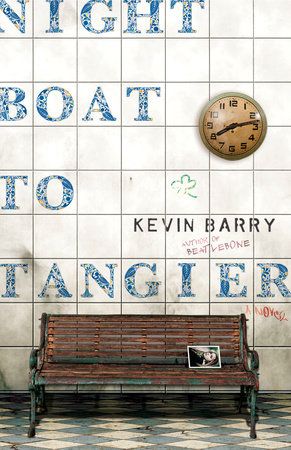
Night Boat to Tangier by Kevin Barry (2019)

Charlie Redmond and Maurice Hearne are “fading gangsters from Cork City”, sitting in the port of Algeciras, looking for Maurice’s missing daughter, Dilly. The entire novel takes place over the course of a single day, but because it is packed full of reminiscences of their time drug running in Spain and the various ups and downs of their lives in Ireland, it feels like it takes in decades.

Kevin Barry’s ability to capture the nuances of speech of the various characters in the book –particularly of the two main protagonists – stayed with me for long after I’d finished it. This novel definitely has a streak of darkness at its heart, made lighter by comedic turns and the banter between two old and very battered mates.

Rodham by Curtis Sittenfeld (2020)

The Thrifty Fictionista has come late to the Curtis Sittenfeld party, not having read American Wife or Sisterland or any of Sittenfeld’s other novels. And yet, the premise of this book – what if Hillary hadn’t married Bill? – had me hooked from the start. By necessity, the first part of the novel deals with Sittenfeld’s imagining of the romance between university students Hillary Rodham and Bill Clinton, but midway through the book they part: and when Hillary refuses Bill’s proposal of marriage, a very different version of “history” ensues.

To date I have resisted the urge to go googling down various rabbit holes on the interwebs in an effort to determine whether the very much still living Hillary Rodham Clinton has read this fictionalised account of her life as it might have been and how she has reacted to it, partly because it reminds me a bit too much of Barack Obama adding Fleabag to his list of favourite television series for the year some time back (which raised at least several eyebrows given what Phoebe Waller-Bridge’s character was doing while she watched a video of him making a speech). At least, after American Wife, one can only assume Hillary Clinton can chat to Laura Bush about what must be a truly singular experience.

I’m not going to say any more about this one for fear of spoiling the ending, but I can tell you it is well worth a read.

M Train by Patty Smith (2015)

It’s only fair and fitting, I suspect, that I bookend this Top 5 of 2020 with a biographical meandering far more similar in tone to Phosphorescence than the fiction writing I’ve included as the meat in the sandwich, so to speak.

When my aunt lent me her copy of M Train it took me a while to get into it – I suspect I was on a massive fiction bender (no doubt plowing through a massive fantasy series by Sarah J Maas or someone similar), and after reading a chapter or two I found Patti Smith wasn’t what I was after at the time.  When I picked it up again later, however, I devoured the remainder in a single sitting and absolutely loved it. Smith, who is perhaps better known as a singer-songwriter and poet, has – unsurprisingly – a lyrical ability to express emotion and to bring her interior life into the light…such as this passage when Patti visits a friend in Morocco who is close to the end of his life:

Everything pours forth. Photographs their history. Books their words. Walls their sounds. The spirits rose like an ether that spun an arabesque and touched down as gently as a benevolent mask.

—Paul, I have to go. I will come back and see you.

He opened his eyes and laid his long, lined hand upon mine.

Ahhh….I don’t think there’s a better way to end the main part of this post than with such beautiful, poignant words.

The Thrifty Fictionista’s Highly Commended Books of 2020 are, as ever, a mixed bag of goodies:

  • All Our Shimmering Skies by Trent Dalton (2020) – how I love anything this man writes! A truly unique Australian voice with an abundance of humanity;
  • The Erratics by Vicky Laveau-Harvie (2017) – a tyrannical mother, a traumatised father, an extraordinary memoir;
  • The Thursday Murder Club by Richard Osman (2020) – a mystery, some giggles and a few keenly observed words of wisdom;
  • Ayiti by Roxane Gay (2011) – short stories that pack a real punch;
  • Think Like a Monk by Jay Shetty (2020) – a self-help book, but notable because it’s the first I’ve read based on a Vedic perspective;
  • Education of an Idealist by Samantha Power (2019) – a fascinating autobiography from Barack Obama’s UN Ambassador to the United Nations; and
  • Negroland: A Memoir by Margo Jefferson (2015) – one of the most engrossing and interesting memoirs I have ever read.

Thanks so much for checking out my Top 5s for 2020!

Here’s to 2021 being a very different year, in only good ways.  I am looking forward to delving into a whole trove of excting new volumes and engrossing experiences, all between the pages of books.

Feel free to leave a comment if you’ve read something awesome, or subscribe to receive new posts directly to your inbox using the Follow button.

Until next time, mind yourselves.

BJx