Focus is a funny, occasionally unpredictable, thing — and that’s one of the reasons I chose it as Blue Jai’s Word of the Month for July.
Take this image, for example:

What did you focus on?
Was it the cars in the street, so far below? Or did you spot the coffee first, or the hand holding the mug? Or perhaps your eye was drawn to the reflection of the clouds within the cup?
There are no right or wrong answers here — it’s just a simple way of pointing out that we all see and experience the world differently, and that our circumstances and personalities and a multitude of internal and external factors cause us to focus on different things. That means that your focus is unique: it’s peculiar and particular to you.
But what I find fascinating (because of my own peculiar and particular focus, no doubt) is that there are different types of focus, too.
I’m not talking about different types of focus in a photographic sense, but in more of a “mental toolbox” sort of way. Because I know that I need different kinds of focus to perform different tasks. For me, focus is something you might measure on a spectrum.
Part of the reason I chose focus as my Word of the Month because I knew it was something I would need in abundance in July — and different kinds of focus, too. This month, I knew I needed to complete a whole pile of deadline-based tasks for my regular job as well as to honour a bunch of equally pressing commitments for clients in my freelance work, and fit all this around the time my children would be off school for Winter Holidays. Oh, and celebrating both their birthdays, too.
No pressure?!
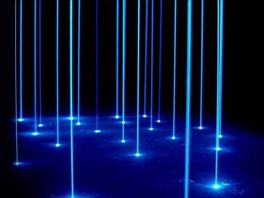
Pick your point and get it done…this is laser beam focus.
Now, I’m the first one to admit that a large part of getting things done is simply to being organised and doing what you need to do, but choosing your focus certainly helps.
At one end of the spectrum is Laser Beam Focus, which I would describe as being single minded, incredibly intense, and very specifically directed. Like laser beams themselves, this kind of focus has to be coherent, meaning it has to remain spatially and temporally constant. It’s an amplified kind of focus, and not something that is sustainable for long periods — we’re human beings, after all. That said, it’s fantastic if you’re screaming towards a deadline and really need to get something done.

Drishti point focus…not sure whether I’d be able to pull it off in these circumstances!
At the other end of the spectrum is Drishti Point Focus, which comes (as with many things I love) from yoga. Drishti translates from Sanskrit as focused gaze, but it relates also to pratyahara and dharana, the fifth and sixth limbs of yoga, which relate to sense withdrawal and concentration. In the yogic tradition there are nine different drishti points, but most of us who do yoga regularly will probably think of the spot you gaze at in the middle distance to help you find a combination of strength and ease within a pose — particularly if it involves balancing. For me, drishti point focus is active, but it is also characterised by softness and a meditative stillness. It’s focus alright, but it’s a sustainable and nourishing sort of focus.
So my suggestion for July? That you look at your to do list and apply whatever focus from the spectrum you need to get things done. Know that there are multiple solutions to each and every task and as many ways to focus on them as there are human beings, and that part of what makes your work and life your own is that you bring your unique focus to it and to everyone you meet.
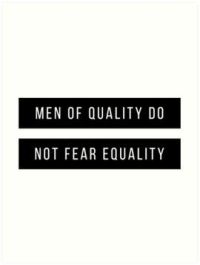 The Bloke and I don’t fight often. We’ve spent the better part of twenty years happily muddling along, quietly delighting in our continued coexistence.
 And that’s where Hannah Gadsby is absolutely right — we need more words, people.
 It’s winter where I live.
 The word
 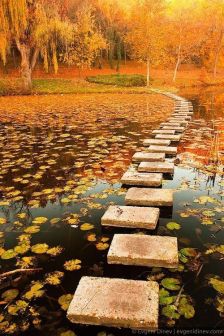 I then thought about lines in nature — of the fiddleheads of ferns and the inside of seashells and other swirling curves that fit the Fibonacci sequence. I thought of nights I spent in the Northern hemisphere, watching the sinuous lines of the Aurora Borealis. I thought of human spines, of all our vertibrae arranged in concave and convex curvatures.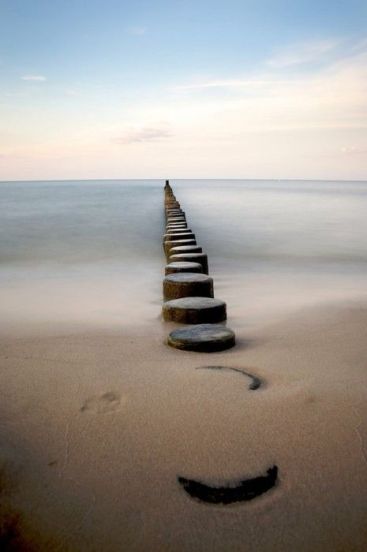

 Australia is a harsh country.
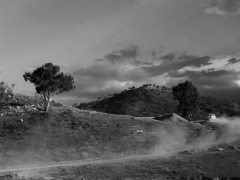
 This is my country, in monochrome.
 I love a sunburnt country,
 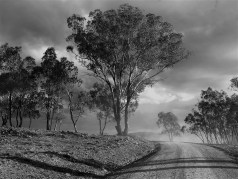 The stark white ring-barked forests,
  Core of my heart, my country!
  Core of my heart, my country!
  An opal-hearted country,


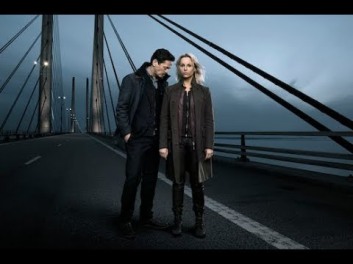 I can’t begin to tell you how much I’m going to miss that line.
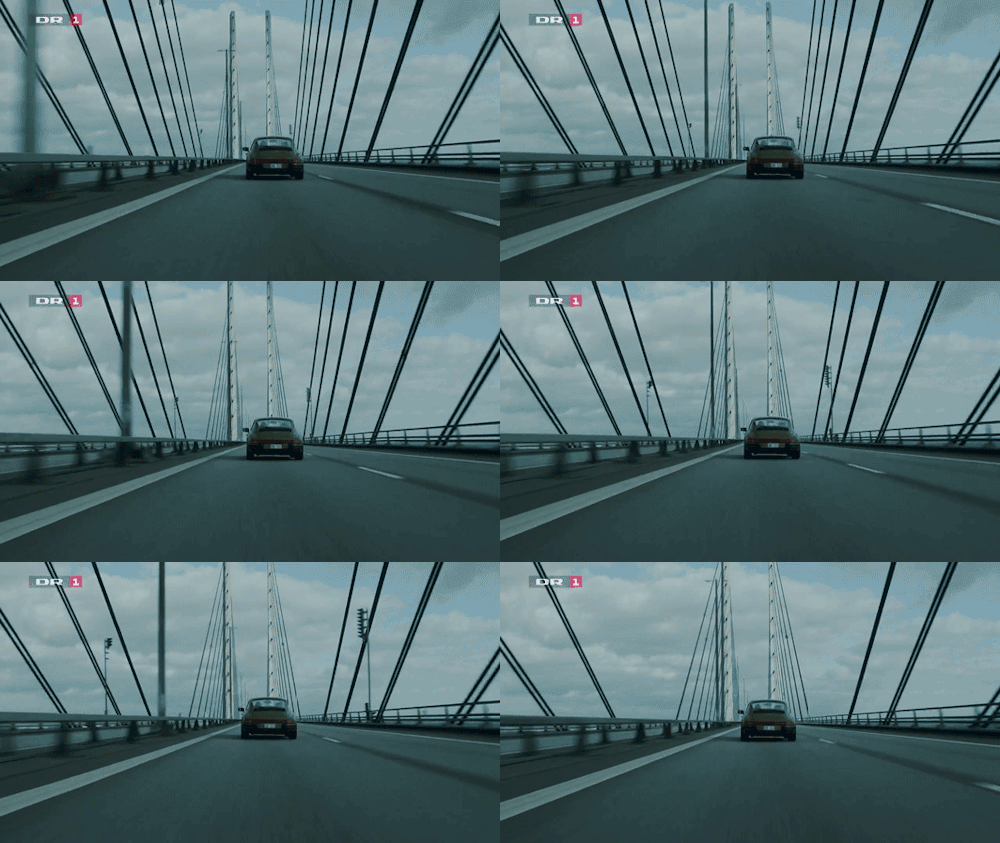
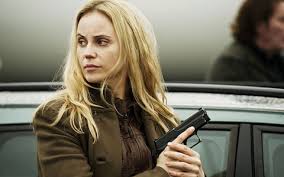 There will be no more Martin Rohde or Henrik Sabroe.
 And so, in Series 3 and 4, I felt even more deeply for Saga as she navigated her relationship with Rohde’s replacement, Henrick Sabroe, who is (entirely unsurprisingly for a production as good as this one) brilliantly played by Thure Lindhardt. Henrik is plagued by his own demons and quite literally haunted by the disappearance of his wife and two daughters years before. But it is Henrik’s acceptance of Saga — Saga, exactly as she is — that results in her increasingly apparent vulnerability and her ultimate recognition that she may be capable of loving, and of being loved.