The THREAD: August 2023

Huzzah! It’s the last day of winter here in the Antipodes, and there is already a hint of spring in the air.

I’m pushed for time today, so welcome to a rather express Edition of the THREAD – let’s jump in!

Strangely enough, I’ve been thinking about time management, and specifically about distractions. I’m one of those people who has been working from home since before the pandemic, and time management is something pride myself on being pretty good at. I think it’s also fair to say I’m experienced at navigating pathways between those devious, pesky things we call distractions — which can include anything from finding yourself suddenly possessed by an unscratchable urge to perform a chore you would otherwise find mind-numbingly boring, playing games on your phone or laptop (I’m looking at you, Wordle), or gazing blankly into the refrigerator until the annoying door alarm starts going off. Been there, done that, sent them all packing.

But when the first glimmerings of spring appear, I often want to get out amongst it instead of sitting at my desk. So this week, when my schedule was unexpectedly upended by a cancelled work placement, I’ve concentrated on putting all the things in all the boxes so I can create spaces in between where my writing can flow. I find that if I can plan out and “Tetris” all the stuff — from personal training, to kids’ extracurricular activities, to menu planning, to lunch with a friend, and even the many and various things seeking to distract me — the time I free up becomes…well, free. And when I’m free, the words can come in waves. I guess what I am trying to say is if you know yourself well enbough to identify your patterns of behaviour you can conquer any distractions, and my way of doing that (however incongruent it may sound) is by using boxes and waves.

Except sometimes things don’t go willingly into a box, which is where hearing comes in handy. Most parents know that if you sing something to a child, it becomes somehow more palatable — or maybe more like a game. Either that, or we’ve all been looking like complete loons while walking around messy living rooms singing “now it’s time to pack away” in happy, hopeful tones to our offspring. I’ve written before about how hard it is to stay cranky with your kids, for example, when you’re listening to disco music. Please give it a try if you don’t believe me — and remember, no matter how small or large, all kitchens are for dancing in.

Anyway, the same principle works for me when I’m struggling with adulting and feeling rather petulant (OK…I”ll admit it, downright childish) about it. If I’m not in the mood to go to personal training during the precisely allocated box I have timetabled for myself, for example, I put Madonna’s Ray of Light on in the car on the way to the gym and turn it up LOUD. If I can’t get into the right headspace to write, I try Ralph Vaughan Williams’ The Lark Ascending. It’s still boxes and waves, really — just in musical form.
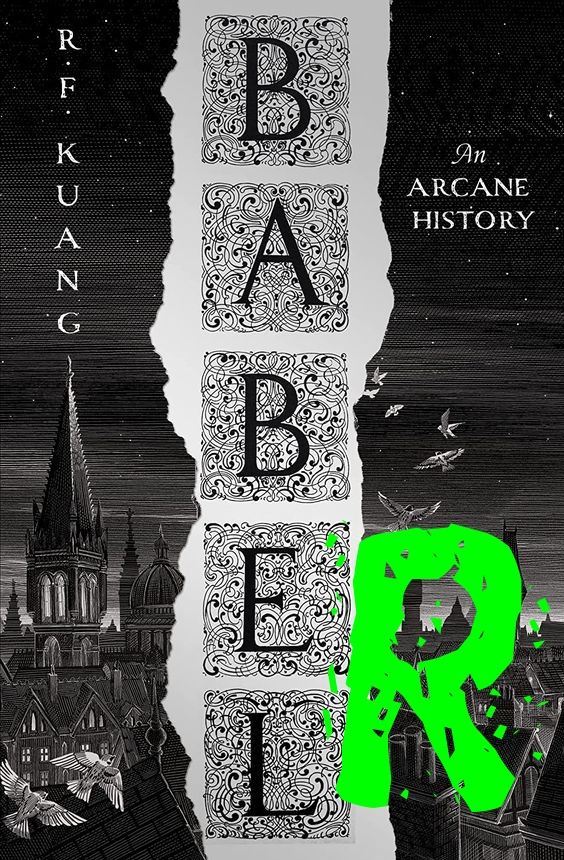
Reading is something I don’t usually have to put in a box, because I tend do it at the end of the day when I’m all snug in my PJs and ready for bed. But when I’m really busy and just want to hit the pillow at the end of the day, I find other boxes that allow me to fit my reading in — like when my daughter has her flute lesson. In this way, I’ve managed to read R F Kuang’s Babel, or the Necessity of Violence: An Arcane History, which is a fantastical historical novel my language loving father would have loved back before dementia robbed him of the ability to read. It’s a complex book dealing with equally complex themes (imperialism, colonialism, revolution, and how all of these intersect with academia), but at the centre of it all is the concept of translation. I wanted to love this novel, but found it kept me somehow at arms length — possibly because of the extensive use of footnotes (which may or may not be historically accurate, as it is a work of fiction after all), or maybe as a result of it’s scholarly tone. Did it remind me of the way I had to read when I was at university (which often for anything but pleasure)? Perhaps. That said, while I didn’t love it, I did enjoy it, and was glad to have read it.

Since then, I have started reading Pip William’s latest offering, The Bookbinder of Jericho. It is much easier going but so far it hasn’t engaged my attention to the point where I want to pick up the book instead of laying my head on the pillow…though I suspect says more about the nature of my life lately, rather than about the novel itself.

Our next topic — and also a great form of distraction — which is eating, and the simple story here is that I have been trying not to eat when I shouldn’t. As in I am still working on eating sensibly and only at mealtimes (after my peviously-reported tropical island gluttony), and so far this approach is working well.

Tonight we will have chicken schnitzel with a roast pumpkin salad, which involves not only the aforementioned pumpkin spiced up with some cumin and coriander, but also corn and black beans, toasted pepitas and a lime crema dressing. It’s delicious, and full of flavour. Tomorrow night it’s meant to be cold again — because spring is always a bit of a tease — so we will have roast lamb with baked vegetables and greens. Beyond that our meals are a bit of a mystery, but I’m sure all will become clear once I reach the appropriate box in which menu planning has been scheduled?!

When it comes to admiring, I managed to find time to watch Netflix’s latest offering in the Bridgerton franchise Queen Charlotte last week. It has all the usual Bridgerton fancies and follies: over the top costumes in riotous colours, wigs so resplendent they would make any self-respecting drag queen swoon, a smattering of sex scenes, and classical musical renderings of pop songs. But Queen Charlotte also has, at its heart, a beautiful and moving story of a couple living with and divided by mental illness. As someone who has witnessed the various ways generations of my family have dealt with living with bipolar disorder, I was genuinely moved by the depiction of the relationship between Queen Charlotte and King George III — and I am grateful that the producers of Queen Charlotte chose to tackle the subject matter rather than shying away from it. Mental illness can affect anyone, from commoners to kings, and I’m glad to see it being presented on screen rather than hidden away.

And finally, that brings us to doing. I’ve been doing rather a lot, hence all the boxes (and hopefully plenty of waves in between), but like rest of the Australian population there is one thing I have stopped everything else to do in the past month: watch our mighty Matildas play in the World Cup. While my knowledge of anything soccer-related is similar to that of Ted Lasso when he started out at Richmond FC — as in I can’t explain the offside rule but I think I know it when I see it?! — like most Australians I love sport (generally) and am now completely in love with the Matildas (specifically). And I do mean ALL of them, though I do have a particular soft spot for Mackenzie Arnold and think Hayley Raso’s hair ribbons are the bomb. I will never, ever forget the way I felt when Sam Kerr scored that amazing goal against the Lionesses, and I am inordinately proud — along with the rest of the country — of what the Matildas have done not just for women’s sport but for women in Australia and beyond.

Anyhoo, there’s no real topping the Matildas is there?

So best to wrap this up and attend to the next box full of “stuff”.

Mind yourselves,

BJx

2019 in Books

At last…the third and final instalment in my Top Five’s for 2019 has arrived — books, beautiful books!

2019 was always going to be a tough year in books for me, because 2018 was the year when Boy Swallows Universe usurped Dirt Music as my favourite book of all time.

So this year, instead of seeking out works of fiction that might make me change my mind yet again (because — as we now know Patrick Melrose would say — that’s what a mind is for, after all), I opted for to throw some non-fiction in with my usual reading escapes…and was more than pleasantly surprised.

I also read a few classics of English literature, one of which begins this, my humble list:

1. Mrs Dalloway by Virginia Woolf (1925)

Mrs DMrs Dalloway said she would buy the flowers herself.
It’s one the great opening lines in literature, and somehow evokes the quiet control Virginia Woolf exercises over each and every character in this slim and beautiful novel. I’ve long been interested in Woolf, and am so pleased I found time to read this novel this year.

Taking place over the course of a single day, Woolf takes the reader back and forward in time, from one character’s perspective to another, making us privy to their innermost thoughts about that day and its events, and of the other characters. Only in books do we have this power: to know the internal dialogue and register the emotional barometer of another (albeit fictional) person.

It is staggering to me that Woolf managed to deal with themes such as religion and secularism, mental health, sexuality and feminism in the space of so few pages. This is stream of consciousness writing at its finest, and is as relevant today as it would have been on the June day in 1923 it describes.

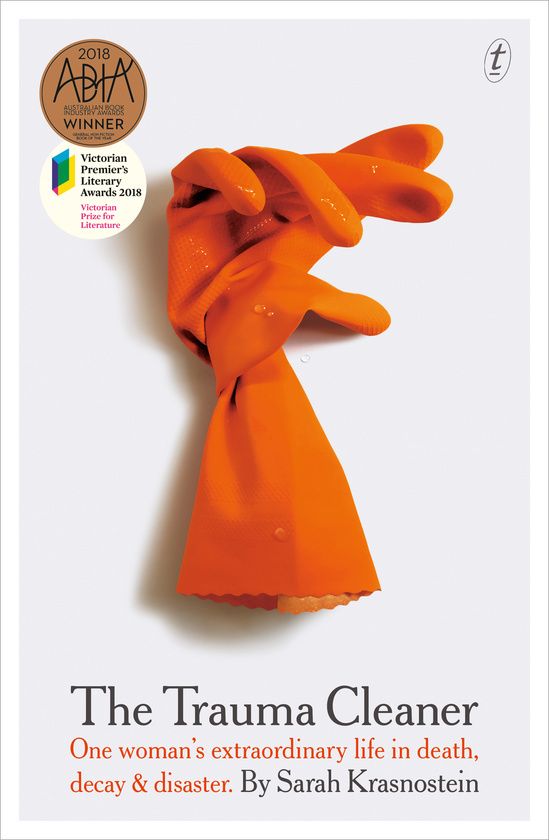
2. The Trauma Cleaner by Sarah Krasnostein (2017)

TCThe subtitle of this brilliant piece of non-fiction is “One woman’s extraordinary life in death, decay and disaster”, but not even these words begin to sum up Sandra Pankhurst and her astonishing progression from abused child, to husband and father, to drag queen and sex reassignment patient, to sex worker, businesswoman, trophy wife…the list goes on.

I had heard rumours and rumblings about this book for a couple of years. Not surprisingly, given the quality of Krasnostein’s writing, it has won a whole swag of awards, but I was honestly unprepared for the impact it would have on me. It was not that I was reading about someone who cleans up crime scenes, horders’ houses, and squalor so sordid it is almost possible to smell it coming off the page, it was the emotional wallop of Pankhurst’s own life story, interleaved with chapters about her clients and the tenderness — yes, tenderness — with which she deals with them.

Her work, in short, is a catalogue of the ways we die physically and emotionally, and the strength and delicacy needed to lift the things we leave behind.

SARAH KRASNOSTEIN

Krasonstein’s treatment of the slippery nature of memory and truth is masterful, and her frank admissions about the issues and memories her interactions with Pankhurst and her clients raise for her are, to my mind, courageous. It is impossible to read this book — and I could not put it down once I began — without having your breath taken away.

This is also a book that will  leave you thinking, hard, about things you never expected to, for a very long time.

3. Daisy Jones and the Six by Taylor Jenkins Reid (2019)

DJ6Whoa…we need to head back to Fictionland after that one, hey?

Well, what better way to do that than with Taylor Jenkins Reid’s Daisy Jones and the Six? Weirdly, upon reflection, this book also deals with memory and truth as much as The Trauma Cleaner does, though in a fictional setting. Set in Los Angeles in the 1960s and 1970s, the book poses as an oral history trying to get to the bottom of a rock’n’roll puzzle — what made Daisy Jones and the Six, one of the decade’s most successful bands, split up straight after playing the final concert of their tour in 1979?

The writing style reminded me of Lizzy Goodman’s brilliant non-fiction work Meet Me in the Bathroom: Rebirth and Rock and Roll in New York City 2001-2011, a huge tome chronicling the rise of bands like The Strokes, Yeah Yeah Yeahs, Vampire Weekend, LCD Soundsystem and The National. Being fiction, however, Daisy Jones and the Six lets you invest yourself in the characters, allows the reader to take sides without fear of any recrimination, and to enjoy the twist that comes towards the end. I thoroughly enjoyed this book.

4. City of Girls by Elizabeth Gilbert (2019)

CofGI was not expecting to include this book in my Top Five for the year, but have done so because it proved to be a rollicking good read and, in my opinion, the best piece of fiction Elizabeth Gilbert has produced in years. Unlike The Signature of All Things, which I found to be overwhelmingly populated by caricatures, City of Girls bursts at the seams with the colourful characters encountered by Vivian Morris from the time she moves to Manhattan as a nineteen year old after being kicked out of college.
Gilbert vividly recreates the theare and showgirl scene in New York City in the 1940s, and the novel is as much a love story to the city as it is the story of Vivian navigating her way through life and love, to recount it as a ninety-five year old narrator. This book is a great escape, not to mention a fascinating examination of how important it is to be free to be yourself.

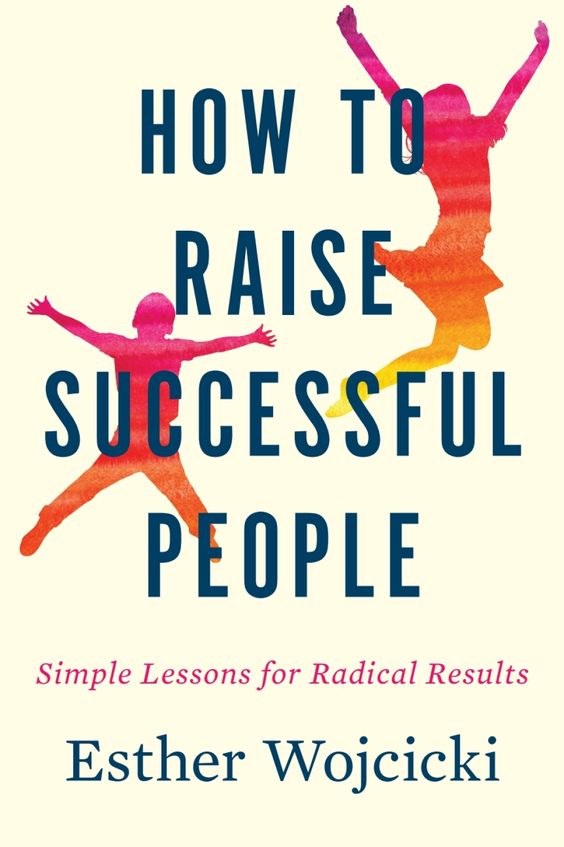
5. How To Raise Successful People by Esther Wojcicki (2019)

SPI bought this book after hearing Esther Wojcicki interviewed on a podcast and read it cover to cover in an afternoon. Wojcicki draws on her experiences raising three highly successful children (all women who have risen to the top of typically male-dominated professions) and teaching generations of Media Arts students at Palo Alto High School, and also reflects on how her childhood informed the choices she made as a parent.
It’s partly a parenting manifesto, partly a practical advice manual, and a lot of what Wojcicki has to say makes a great deal of sense to me. It might not be everyone’s cup of tea, but this was definitely a book that gave me much to think about — not to mention implement in my life — this year.

Honourable Mentions this year go two other non-fiction titles, Drusilla Modjeska’s beautiful and evocative memoir Second Half First and to Melinda Gates’ highly thought-provoking book about empowering women, The Moment of Lift.

On the fiction front, Max Porter’s novella Grief is a Thing With Feathers very nearly made my Top Five for its emotional bravery and poetic brilliance. I am yet to read Lanny but hope to get my hands on a copy in 2020. I also thoroughly enjoyed Sally Rooney’s Normal People, and will admit to spending a week devouring the entire Cormoran Strike series, penned by Robert Galbraith (aka J K Rowling), with something akin to glee. I was a late-comer to Erin Morgenstern’s The Night Circus and loved it, and am looking forward to reading her next book, The Starless Sea, this year.

So that’s all folks! I read a whole lot of other books during the year that were also noteworthy and interesting, but these were the ones that made the cut for 2019.

That said, I have just trawled my local library for a substantial summer reading stash and have kicked off with the Julia Baird’s so-far brilliant biography of Queen Victoria…it may well make my 2020 list!

If you have enjoyed this post from Blue Jai Creative and would like every new musing from the Daydream Believer delieved straight to your inbox, feel free to click on the Follow button at the top right of the page. Thanks for reading! BJx


Without a Word

nijinsky-faun

Nijinsky as the Faun

I have been forever fascinated by how humans can convey the depth and width of their emotions without uttering a single sound. You may think it odd that someone like me, who relishes and cherishes the written word, would value such expression so highly – but, quite simply, I do.

I love watching people dance. I’ve written before about how my children do, too. And while I don’t mind a bit of a boogie myself from time to time, there are some things — ballet, for example — that I believe are best left to the experts. To those rare individuals who are disciplined enough to dedicate their lives to honing their skills and their selves to the point that they bare their very souls on stage.

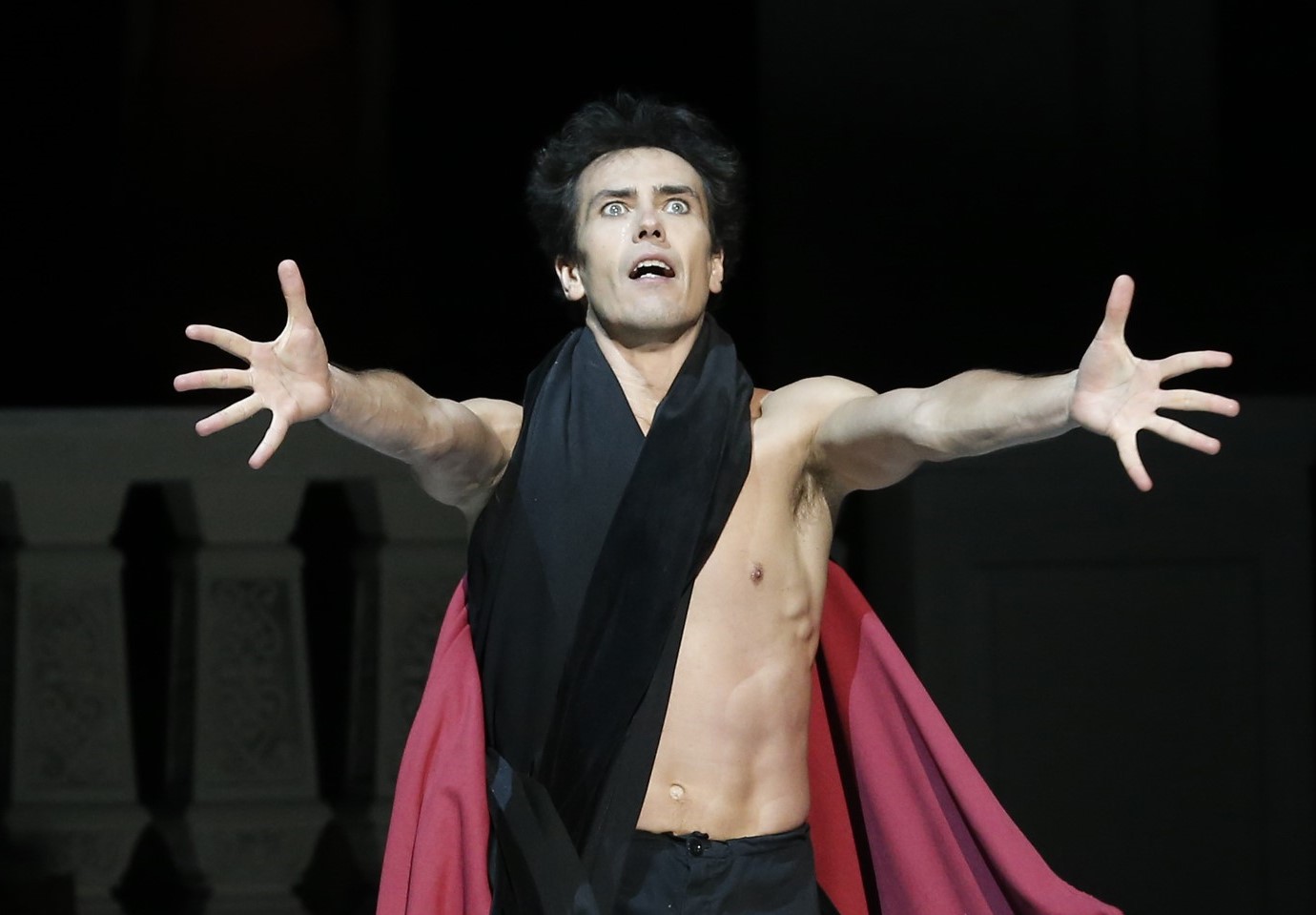
On Saturday night I was fortunate enough to witness one such individual dance, when Alexandre Riabko took to the stage as a guest artist with the Australian Ballet in the title role of John Neumeier’s Nijinsky.  It was a powerful, masterful performance, vividly depicting Vaslav Nijinsky’s life inside and outside of dance via a series of memories and hallucinations as he descended, finally, into madness.

riabko-nijinsky

Descent into madness…Alexandre Riabko as Nijinksy.

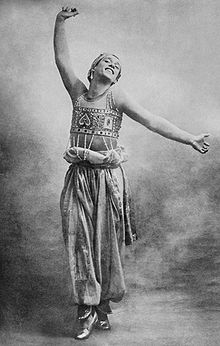
Watching Riabko inhabit Nijinsky’s interior world, as other dancers recreated his recollections — of being the Golden Slave in Scheherazade, or of the Faun in L’apres midi d’un faune, or of Petrouchka, or of learning his ballet steps with his brother and sister  — was mesmerising. But as other dancers began to give form to Nijinksy’s delusions and as his complex relationships with his lover and employer at the Ballet Russes, Sergei Diaghilev, and with his wife, Romola, visibly unravelled, I was filled with an overwhelming sense of tragedy.

nijinsky-sheherazade

The Golden Slave…

The image of Nijinsky returning again and again to something like second position, arms outstretched, as though trying to find his centre and a sense of safety in the midst of his increasing confusion was heartbreaking, particularly when juxtaposed with the transformation of his memories of Diaghilev — performed with all his usual elegant line and length by Andrew Killian — from sensual lover and suave mentor to sinister impresario.

No footage of Nijinksy dancing is believed to have survived — Diaghilev, apparently, would not allow him to be filmed — but during the two and half hours he was on stage, Alexandre Riabko had me completely and utterly convinced that he was channelling the spirit of the man whom many regard as being one of the greatest interpreters of the artform to ever set foot on a stage.

I left the Sydney Opera House deeply saddened by the tragedy of Nijinsky’s tale — he never again danced publicly from the time of his final performance in 1919 until his death, after spending years in and out of asylums, in 1950 — but I was also, ultimately, uplifted by the sheer intensity, beauty and bravery of the performance I had just witnessed.

And I suspect that feeling — one of great admiration tinged with sorrow — would have stayed with me for the remainder of the weekend, had I not had the pleasure of attending a Greek Orthodox wedding with my family the following day.  My daughters had never been to a wedding before, and they were entranced by everything about the experience from the singing at the wedding ceremony to the table settings at the reception. But what really captivated them — and me — was the dancing.

Watching the wedding guests encircling the dance floor, every one of them tracing the intricate steps of a Syrtos, was every bit as mesmerising as the ballet had been the night before.  Here were women — some in sensible sandals, most in spectacular stilletos — and men following in the footsteps of those who had come before them. Here was a sure-footed groom, leading his radiant bride. Without uttering a single word, the dance spoke of tradition, of continuity, of community, of family.

And as the long line of dancers wound their way around the room, I found myself thinking of each of their bodies as a living link to the past, stretching all the way to the present and then onwards, ever onwards, as they danced into the night, celebrating with the newlyweds and wishing them a lifetime of happiness in the future.

syrtos

A long line of tradition and celebration…

The Healing Power of Disco

Disco ball

Disco, kids’ tantrums and crime drama? It’ll all make sense soon…

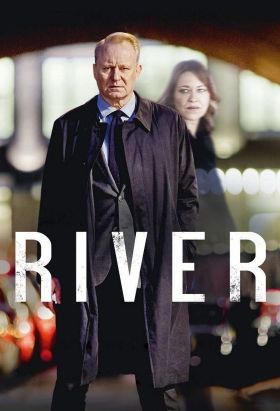
So I’ve discovered a new phenomenon this week: the healing power of disco. It has been a two phase discovery — partly inspired by a mega-meltdown from Miss Malaprop, and the rest by Stellan Skarsgård’s mesmerising performance of a police officer grappling with mental illness and the murder of his partner in River.

Yeah, I know: disco, a child’s tantrum and a crime drama are not usually things that get mentioned in the same sentence, but bear with me here — even if it’s only because the silly season officially starts today.

To be honest, it was watching River that came first, and provided me with the inspiration for dealing slightly differently with Miss Malaprop’s apocalyptic outburst yesterday morning (OK, it probably wasn’t quite that bad…it just felt like it at the time).

River is definitely not your average police procedural — it’s far too psychological and, dare I say it, Shakespearian for that. And despite the fact that Swedish Skarsgård plays the lead (and is in virtually every scene of the series’ six episodes), it’s not a Scandinavian crime drama either. Brilliantly and elegantly written by Abi Morgan, it’s a BBC production that follows the increasingly unstable detective John River (Skarsgård, obviously), who is — quite literally — haunted by his partner, Stevie (Nicola Walker), as he attempts to unravel who was responsible for her murder, a traumatic event he had the misfortune to witness.

River

Stellan Skarsgård and Nicola Walker at their brilliant best in River: “Madness can bring its own kind of clarity”, but a bit of Disco helps…

It’s compelling viewing, as dark and disturbed as River’s own mental state, yet punctuated with moments of startling insight into the beauty and fragility of humanity. And over the top of it all? A sparkling soundtrack full of the disco hits Stevie loved.

Oh I love to love…but my baby just loves to dance, he wants to dance, he loves to dance, he’s got to dance…

I’m not going to say any more about what happens to River, other than to say that I think the series is so good it probably deserves multiple viewings, that I am in total agreement with Michael Hogan’s assessment of Skarsgård’s handling of the final episode:

Skarsgård delivered a powerhouse performance: sad and soulful in one scene, sardonically spiky and manically energetic in the next. With his craggy face and crumpled demeanour, the haunted detective has prowled the streets of east London like a wounded bear, pawing at thin air as he pursued his prey.

Oh — I should probably also mention that since watching River, The Bloke and I have been humming disco anthems for at least a week now. And smiling at each other when we do. Not just because we know that we’re both remembering how Stevie made River smile when she sang along to disco songs while they drove around East London, but because it’s really hard to be grumpy when there’s disco in the house.

And that, of course, brings me to the god-awful Gotham morning I had with Miss Malaprop: what do you do when your younger child, sleep-deprived and still sugar-high after her very first camping trip, completely loses it before preschool?

Disco kitchen

Disco: my new remedy for counteracting meltdowns.

You dig out the Greatest Hits of Boney M, that’s what you do. Because it really is hard to be grumpy when there’s disco in the house.

Admittedly, it did take a little while, a whole lot of hugs (plus a hot chocolate with big AND small marshmallows), but before too long, Boney M were working their disco magic in my kitchen. And before long, there were smiles all around.

So this silly season, if the need arises, give it a spin at your house and embrace the healing power of disco…you may even discover yourself asking Santa to bring you a mirror ball to add some extra sparkle to your kitchen this Christmas.

Oh I love to love…but my baby just loves to dance, he wants to dance, he loves to dance, he’s got to dance…

Best wishes for surviving the silly season from Blue Jai.

And good luck trying to get that song out of your head now, too…