Or, more accurately, I have been revising my novel — filling in plot holes, teasing out unnecessary words, working on phrases and sentences and paragraphs and pages and chapters until…now.
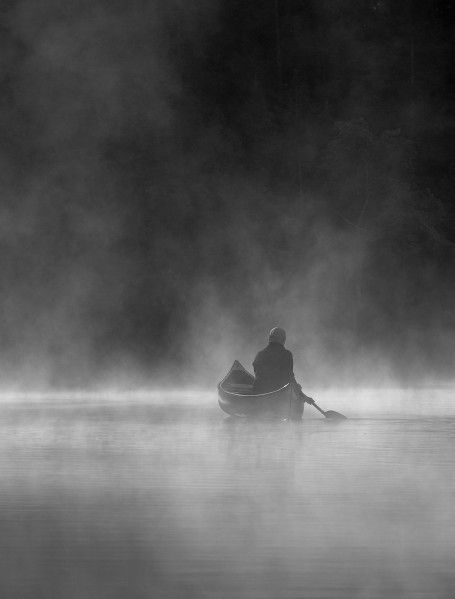
I am in unchartered waters.
I have revised and rewritten until I have caught myself up, and what lies ahead is unborn and unwritten.
It is a strange place to be, this liminal world in between the creation and the act. It is a shadowy space, where the voices in my head begin their whisperings, where I listen until one of them suggests something that sparks an idea that takes hold and forms itself into something on the page.
I have a rough outline in my head of how my novel will end, but I have listened to the whispers for long enough to know that they have minds of their own, and that they fashion what they will, when they want to. When I am quiet and still enough to let them, they tell me things I do not expect, take me places I did not know existed, and reveal truths I had not excavated.
Sometimes a single blank page appears to be infinitesimally small, adrift upon a great heaving ocean of unformed creations.
Other times words come slowly, drip by drip.
But when I allow myself to settle in that liminal space, sentences often come in streams — flowing out in descriptions and dialogue and drama — and I know I have sat long enough to be allowed the privilege of navigating that wild and watery world, hoping against hope that before too long, I will sight land.
It’s been ages since I wrote, which usually means I need to get how I am feeling about whatever is happening to my dear old Dad out of my system. The Professor had a birthday last month, so is now heading towards his mid-eighties…not that Alzheimer’s Disease will let him remember that.
Or much else, for that matter.
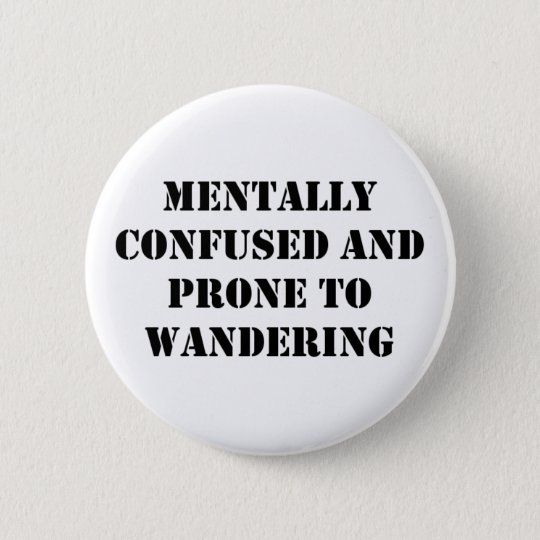
Every now and then I feel weirdly guilty about the time when my brother and I gave Dad one of those birthday cards with a badge attached — the one we picked was one bright orange with navy blue writing, and said “Mentally Confused and Prone to Wandering”. Our then-teenaged selves never once suspected he might actually need such an accoutrement: to us, Dad was so incredibly whip smart and intellectually beyond us that such a thought was ludicrous, particularly as he was then working at the dizzying heights of academia. We made him wear it to the Ivory Tower he worked at, a university which later granted him a PhD after he completed all the course work, oral and written examinations in three languages, his dissertation and his thesis defence in just under two and a half years. All while financially supporting his family.
We thought making Dad wearing the badge to work was absolutely hilarious.
Mentally confused and prone to wandering? Pfft…
And now, several decades later, The Professor is exactly that.
Seven years ago, when he was first diagnosed with dementia, if you did not know The Professor you would have been hard pressed to recognise the signs and symptoms that had alerted us to the fact that all was not well. And now, after years of gradual decline, the past twelve months have produced an accelerating deterioration of his condition.
Even so, The Professor is trying to retain his dignity while his world is so utterly, heartbreakingly diminished.
The man who we would constantly have to ask to slow down when he strode briskly ahead of us now moves unsteadily, and at a glacial pace.
A year ago, crossword puzzles delighted him…but then they became more difficult. He started looking up answers in the back of the book and filling them in. Then those answers became confused, or mis-spelled, or entered into the wrong squares. Now the whole concept is beyond him.
Spoken words, which were once a source of great enjoyment for him — let’s be honest, The Professor was literally a lecturer, both at work and at home — have all but disappeared. He now prefers to use hand gestures and facial expressions to communicate what he wants (or, increasingly, what he doesn’t want). His verbal communication is limited at best, and we have to remind him to use his words.
Use your words.
I thought my days of saying that phrase ended around the time when my children started school.
Turns out I was wrong about that, too.
I haven’t heard him say my name in a long time, and many times when we meet up I can see he has no clear idea who I am. He seems to know, however, that I am someone who loves him, and who is not is going to threaten or harm him in any way.
And so, we take refuge in humour.
If I do end up having a phone conversation with The Professor, which is now almost exclusively one-sided, I try to make him laugh. If we’re on FaceTime, I’ll settle for a smile — or a hint of recognition that he has got whatever joke I’m attempting to make.
My mother, who would definitely win the Nobel Prize for Caregiving if there was such a thing, is still looking after The Professor in their home. I honestly don’t know how sustainable that arrangement will be if he continues to decline, but given it’s something she is currently committed to, I am attempting to support her however I can. We used to try to make light of The Professor letting the (indoor) cat out, but now we’ve been reduced to joking about not letting The Professor out.
The whole situation is unsettling and confusing and seemingly never-ending, but evidently The Professor is not yet ready to leave us.
I suspect I will be more than ready when he does.
That is one thing a diagnosis like The Professor’s gives you: an extended period of time in which to grieve.
And I can honestly say I do not write about this to garner sympathy or attention for myself. Writing enables me to make sense of what I am feeling about a complicated situation, one which I am resigned to and accepting of (even though it absolutely sucks). While these are my words, they are about and for my father, who genuinely deserves all the compassion and consideration in the world.
I choose to write publicly about my experiences to acknowledge and provide a window into The Professor’s ever-shrinking world. To remind my teenaged self that the badge my brother and I gave our Dad was intended, and taken, as a joke — and one we all laughed long and hard at. To give my mother something to refer people to if their questions or kindnesses make it too hard for her to respond. To use my words to tell The Professor’s story now he is unable to tell his own.
So, if you’re reading this, please remember — for as long as your brain allows you to remember — to LIVE!
Live freely, love fiercely, choose wisely and make every single day count.
It feels like my patch of cyberspace is looking a little desolate: far more like a wonky pavement with weeds spilling from between the cracks than a verdant, carefully tended garden. That said, there is a good reason why I have neglected this space, despite my various attempts to nurture it over the years, and that is I’m trying to finish the first draft of my novel.
Writing is one of my great true loves. I love the feeling of sentences pouring forth from my fingers, pooling themselves paragraphs and flowing into pages of prose. I savour the feeling of selecting precisely the right words and placing them in a specific order to bring a particular scenario, emotion, or plot point to life.
But it takes time.
It takes time to enter the headspace of the character whose perspective you’re writing from, to inhabit their skin and to bring their inner life and backstory to the forefront of your own mind so you can produce a believeable, genuine response to what is happening in the story at any given time. And to achieve that, you need to possess a clear understanding of exactly where the tale you’re telling has come from and where it will end up — because you’ve had to create all that too, not to mention the world in which it takes place.
And sometimes you need time just to sit with an idea.
For the past two days I have been allowing a scene to germinate in my head. I’ve got some writing done, sure, but writing is not always about how many words you’ve got on a page. I’ve needed time to flesh out a new character in my mind, to understand where they fit into the action and how they relate to the other characters who already populate my world. I have needed time to figure out what they look like, how they move, and what makes them unique. And then I have needed time to turn my attention to the first impressions the character whose point of view I am currently writing from might have of them, and what knowledge these characters possess about themselves, each other and the wider plot of the novel as a whole. Only then could I map out how these characters might interact, and to decide what information I needed to hide or reveal to build suspense and drive the story towards its climax.
And that’s just for one small scene at the end of Chapter Thirteen!
Writing is hard, sometimes, no matter how much you love it.
It’s hard to find uninterrupted time to let the story unfurl in your head in the way I have just described.
It’s hard to admit you’re writing a novel in the first place.
It’s hard to answer questions about when your book will be finished, or where you’re up to, or whether it will ever be published.
It’s hard to silence the ever-present and insistent voice of my inner critic, who frequently tells me I am a fool for attempting to write a novel, or I’m arrogant to assume anyone would want to read it, or I’m any number of other negative things. (Then again, I’m yet to meet a writer whose inner critic does not persist in making a multitude of unhelpful comments and suggestions, usually at the most inopportune times).
It’s hard to keep believing in yourself and your story, knowing it might never make it onto the printed page.
But since I have started creating my characters and the world in which they live, I feel a strange sense of duty to make sure I see them through to the end — even if it means my patch of cyberspace suffers from benign neglect in the meantime.
As Glennon Doyle says, we can do hard things.
So I wish you well with whatever hard things you’re doing.
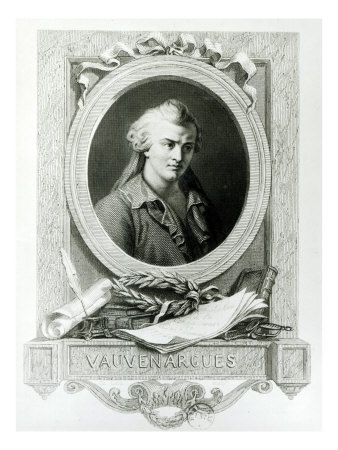
Nearly three hundred years ago, a young French nobleman by the name of Luc de Clapiers, Marquis de Vauvenargues was encouraged by his friend Voltaire to publish an assortment of essays and other writings, appended to which was a collection aphorisms called Reflections and Maxims (1746).
Among these sayings was one I stumbled across the other day:
La patience est l’art d’espérer.
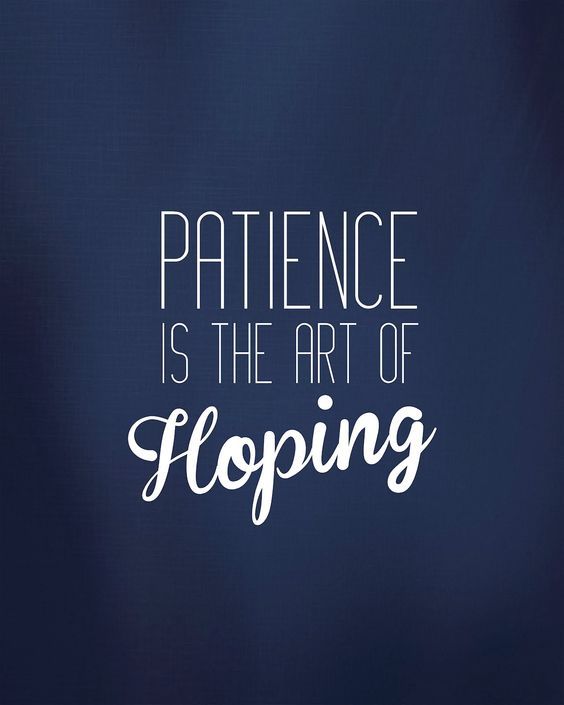
This short phrase translates, very simply, as “Patience is the art of hoping”.
Finding this shiny little gem of a sentence was helpful to me, particularly as I am currently working on two long term projects: building a house and writing a novel. Both of these ventures require abundant quantities of patience, not least because La Niña has been persistently wreaking havoc with the weather and head colds have been stubbornly interfering with my children’s health and school attendance.
For much of my life, patience has been a virtue that has often eluded me. I have written before about being stalked by the Grey Cat of Restlessness, which I freely admit is much easier to live with than Churchill’s Black Dog, but which also presents challenges of its own — especially when longer tasks are involved.
It’s not that I’m not prepared to do the work or put in the hard yards. Watching our new home slowly emerging beneath the scaffolding is exciting, and writing makes my soul sing even on the dreariest day.
But, like Inigo Montoya, I hate waiting.
I think that is why I appreciate de Clapier’s aphorism (number 251 of 700, no less) putting such a positive spin on patience. By highlighting the role of hope in being patient, it becomes far more aspirational rather than temporal.
I like hope!
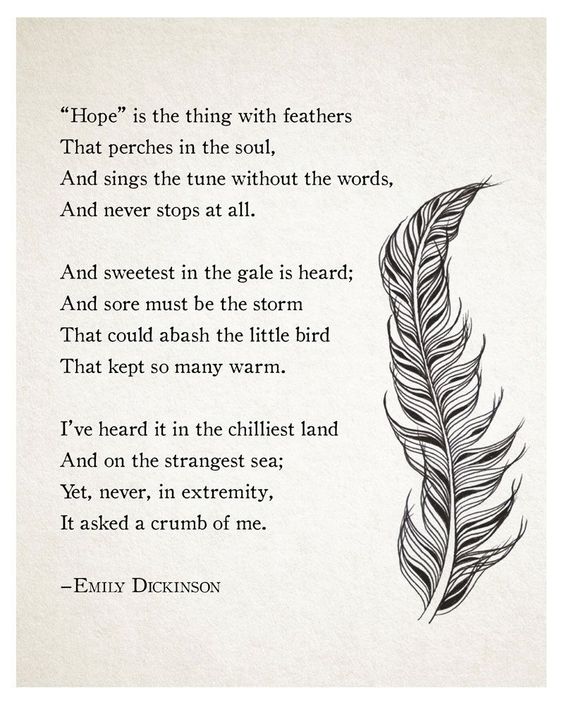
As Emily Dickinson said: Hope is the thing with feathers. It allows us to take flight.
In fact, I’m a fan of a whole raft of great qualities that can help you when things — especially creative endeavours like building houses and writing novels — feel like they’re taking forever.
Because even when things feel interminable, it is worth remembering that life is short, and ageing is a privilege.
Just ask Luc de Clapiers, Marquis de Vauvenargues, who died at the tender age of 31 the year after he published his collection of essays and other writings. Because he did it…he finished the book, and published it, even if he did so anonymously and he didn’t become famous for it until a century after his death.
The art of hoping allows us to persist, even when our patience cups feel depleted, or leaky, or empty.
Maybe especially then.
Because we never, ever know what is just around corner.
The most absurd and reckless aspirations have sometimes been the cause of remarkable success.
You may well ask what drinking gin from the cat dish has to do with the Bhagavad Gita…but in this, my second foray into looking at the Divine Qualities, I’m looking into wholesome purities of mind and heart.
Still lost?
Well, this quote from one of my favourite writers, Anne Lamott, may help:
You see, I think most of us aspire to having pure minds and pure hearts, but there are times when what we think and feel doesn’t always reflect the best version of ourselves. Times when we criticise ourselves or others, or when we catastrophise, or when our thoughts descend into worries or jealousies or biases.
For me, this happens on a daily (if not hourly) basis: no matter how much I attempt to fix my mind on thinking the best of every situation and personal encounter I have, or how much I try to be open hearted and open minded, or how much I actively choose to see and experience life as it is without judging it, I fail.
And sometimes I, too, think thoughts so vile they would have Jesus (or Buddha or any other spiritually enlightened historical figure you care to mention) reaching for a cat dish full of gin.
I suspect, however, that the entire point of embracing wholesome purity of mind and heart as a Divine Quality is to keep aiming for it — after forgiving ourselves when we inevitably, humanly, fall short.
As I write this, I am waiting for a phone call from the hospital to let me know when I can collect my husband, because The Bloke had an altercation with his own surfboard this morning (on his first wave of the day, no less), split his lip and has required surgery. It has been a valuable experience in learning to let go, not knowing all the details of what has happened, how he is going, or when he can come home.
Today’s events have also reminded me how grateful I am that we have easy access to excellent health care. That The Bloke was so unfazed by what happened that he didn’t need painkillers when he got to Accident and Emergency. That he wasn’t injured more seriously. That because hadn’t eaten breakfast he was able be put straight under general anaesthetic. That a plastic surgeon was already at the hospital and made time to operate at short notice. That we are blessed with friends who took him to A & E, stayed with him until he went into theatre, brought his car home, and have checked in to see how he is going.
Writing, as always, has helped me to stay calm. To stop my monkey mind from taking over. To break the information I know down into small chunks so I can quietly process what has happened and realistically predict what is likely to happen next.
I still may end up drinking gin from the cat dish after The Bloke is safely home, but at least I know that will be entirely by choice, rather than because I’ve let unhelpful thoughts and feelings get the better of me.
And, naturally — because I suspect this is how the universe works — as soon as I have finished writing this, The Bloke has called and told me himself that he is OK.
At the beginning of each year I attempt to find a word or theme to guide me through the twelve months ahead. It makes sense to me to do this, not only because here in the Southern Hemisphere the school year mirrors the calendar year, but also because my birthday falls in January. I find it useful to embrace an overarching concept that often ends up informing what I do, what I read, what I think, and even the way I approach my life.
Last year, I took delight as my guiding principle after dipping into Ross Gay’s Book of Delights. Prior to that I (perhaps less successfully) delved into the lives of diverse people — Marcus Aurelius, Virginia Woolf, Keith Richards — to see how their perspectives might inform my own. Another year I chose a different Word of the Month to engage with.
In 2021, I’m taking myself going down a slightly different path again — one decidedly unfamiliar to me, raised as I was in a reasonably conservative Roman Catholic home by parents who remain steadfast in their faith and who chose to send me to Catholic schools throughout my primary and secondary education. This year, inspired by reading Jay Shetty’s book Think Like a Monk, I’ve chosen to explore the Divine Qualities outlined in Chapter 16 of the Bhagavad Gita.
There are 26 Divine Qualities listed in the Gita, so I am hoping to tackle one every couple of weeks. Quite obviously, I haven’t been raised Hindu and have little experience with the Vedic tradition other than what I’ve learned from various teachers when attending yoga classes from time to time, which means I am engaging with each quality as outsider. From the oustet I think it is important to state that I do not intend to bring a religious slant to any of my posts and I mean absolutely no disrespect to believers in this or in any religion: I am simply using the Divine Qualities mentioned in the Bhagavad Gita as a starting point and exploring how these, as I understand them, apply to my own life.
The first Divine Quality mentioned in the Bhagavad Gita is FEARLESSNESS.
What a way to kick things off, huh?!
You may, given the current state of the wider world, now have an inkling of understanding as to why I was intrigued by the Divine Qualities: given that much of 2020 involved a global pandemic, trade wars, continuing environmental crises and particular politicians peddling lies and failing to protect their own people, there were many things about last year that made me FEARFUL. I often wondered, in 2020, whether my family would stay physically safe in the face of an invisible disease and mentally strong when confronted with multiple lockdowns, whether my husband’s business and those of his clients would survive the associated economic upheaval, and whether the world was actually going to hell in a handbasket.
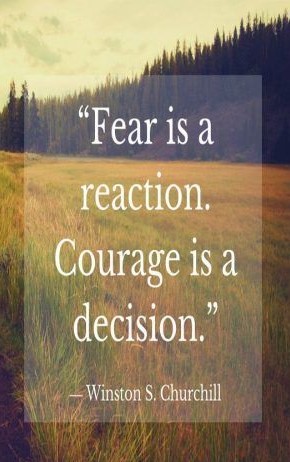
Fearlessness? I’ve never lived through a year more prone to making people fearful, or for provoking (at best) garden variety anxiety on a daily, if not hourly, basis!
Fearlessness…
I have to admit the word shocked me when I first read it, right at the top of the list of Divine Qualities. It felt like such a foreign concept in these strange and unusual times.
And yet, the more I thought about it, the more I wanted to embrace fearlessness.
Many of us spend far too much time worrying about — or even fearing — things beyond our control. What if we stopped fearing what other people might think of us, or whether we’re good enough, or if the timing is right? What if we started to trust ourselves and our abilities more, to do what is right and responsible, to make our best effort every time with the knowledge and resources we have?
For me, staring fearlessness in the face meant asking myself:
What if I actually finish my novel?
What if I allow myself time to exercise every day?
What if I publish more on this blog, even if it exposes me to potential ridicule?
What if I say no to stuff that no longer serves me?
What if I say yes to trying new things?
And I’ve decided, on balance, that all of those things are worth doing.
That it’s worth letting go of fear and trusting the universe (or God, or whatever you believe in) has my back.
That it’s important to have faith that the vast majority of people on this planet are doing their best and are kind and decent human beings.
Well, I’ve covered my Top 5’s for 2020 in music and on screen, and now it’s time for my alter ego, the Thrifty Fictionista, to take centre stage and reveal Blue Jai’s Top 5 Books of 2020.
I don’t normally keep track of how many books I read, but for some bizarre reason utterly unknown to me I did in 2020 – and, despite home schooling and remote working, somehow found time to escape into more than 60 books. They ranged from non-fiction to biography to literary fiction to fantasy, read either on the page or on an iPad using the Libby app (which I think is brilliant).
Along the way I read some stuff I definitely won’t pick up again but which served its purpose during the darker times of the year just gone, but I also uncovered some genuine gems which, without further ado, make up Blue Jai’s Top 5 Books of 2020.
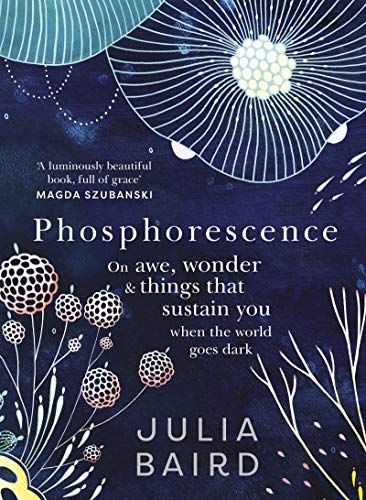
Phosphorescence: on Awe, Wonder and Things that Sustain You when the World Goes Dark by Julia Baird (2019)
I actually kicked off 2020 by reading Julia Baird’s masterful biography of Queen Victoria (which, if that sort of thing is your jam, I highly recommend). But it was this gorgeously ornamented hardback volume, which I will refer to simply as Phosphorescence for short, which took my breath away. In it, Julia Baird has delivered what I view as the best kind of writing: thoughts and ephemera so beautifully expressed and interwoven that you want to start reading the book again as soon as you have finished it.
In preparation for writing this post I was flicking back through Phosphorescence trying to find a specific passage which stuck in my memory – it was a description of sunrise on the East Coast of Australia, which compared (if I recall it correctly) the suddenness of the sun’s appearance over the rim of the Pacific to a lit match being dropped into petrol.
I couldn’t find the precise quote I was looking for…but as I leafed through the pages of this wonderful book, it reminded me of all the amazing things Baird talks about: not only phosphorescence, but storm chasing, and the Overview Effect, and forest bathing, and so many other glorious things. And in the process, I found another, completely different passage, which probably sums up even better what I love about this book:
If we accept flowering by its nature is a fleeting occurrence, then we are more likely to recognise each blossom as a triumph. And if we accept impermanence, we are far more likely to live in the present, to relish the beauty in front of us, and the almost infinite possibilities contained in every hour, or every single breath.
Enough said, yes?
Girl, Woman, Other by Bernadine Evaristo (2019)
Turning now to fiction, I could not fail to include Bernadine Evaristo’s prize winning Girl, Woman, Other, which deservedly took out the Booker in 2019. The intersecting stories and perspectives in this book stayed with me for a long time. Reading this novel might be described as the literary equivalent of looking into one of those glass faced clocks you can see the inner workings of – all the wheels and cogs are separate but still necessarily connected, which I loved. I also appreciated the diverse perspectives were overwhelmingly female, and the characters’ experiences – both good and bad – eminently familiar to female readers. Girl, Woman, Other is well worth your time and money, and I highly recommend it.
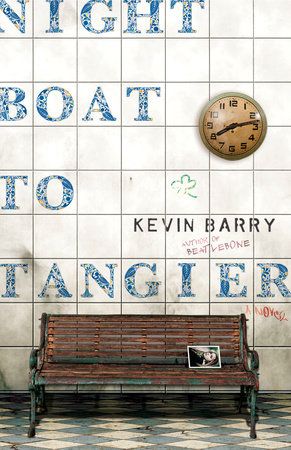
Night Boat to Tangier by Kevin Barry (2019)
Charlie Redmond and Maurice Hearne are “fading gangsters from Cork City”, sitting in the port of Algeciras, looking for Maurice’s missing daughter, Dilly. The entire novel takes place over the course of a single day, but because it is packed full of reminiscences of their time drug running in Spain and the various ups and downs of their lives in Ireland, it feels like it takes in decades.
Kevin Barry’s ability to capture the nuances of speech of the various characters in the book –particularly of the two main protagonists – stayed with me for long after I’d finished it. This novel definitely has a streak of darkness at its heart, made lighter by comedic turns and the banter between two old and very battered mates.
Rodham by Curtis Sittenfeld (2020)
The Thrifty Fictionista has come late to the Curtis Sittenfeld party, not having read American Wife or Sisterland or any of Sittenfeld’s other novels. And yet, the premise of this book – whatif Hillary hadn’t married Bill? – had me hooked from the start. By necessity, the first part of the novel deals with Sittenfeld’s imagining of the romance between university students Hillary Rodham and Bill Clinton, but midway through the book they part: and when Hillary refuses Bill’s proposal of marriage, a very different version of “history” ensues.
To date I have resisted the urge to go googling down various rabbit holes on the interwebs in an effort to determine whether the very much still living Hillary Rodham Clinton has read this fictionalised account of her life as it might have been and how she has reacted to it, partly because it reminds me a bit too much of Barack Obama adding Fleabag to his list of favourite television series for the year some time back (which raised at least several eyebrows given what Phoebe Waller-Bridge’s character was doing while she watched a video of him making a speech). At least, after American Wife, one can only assume Hillary Clinton can chat to Laura Bush about what must be a truly singular experience.
I’m not going to say any more about this one for fear of spoiling the ending, but I can tell you it is well worth a read.
M Train by Patty Smith (2015)
It’s only fair and fitting, I suspect, that I bookend this Top 5 of 2020 with a biographical meandering far more similar in tone to Phosphorescence than the fiction writing I’ve included as the meat in the sandwich, so to speak.
When my aunt lent me her copy of M Train it took me a while to get into it – I suspect I was on a massive fiction bender (no doubt plowing through a massive fantasy series by Sarah J Maas or someone similar), and after reading a chapter or two I found Patti Smith wasn’t what I was after at the time. When I picked it up again later, however, I devoured the remainder in a single sitting and absolutely loved it. Smith, who is perhaps better known as a singer-songwriter and poet, has – unsurprisingly – a lyrical ability to express emotion and to bring her interior life into the light…such as this passage when Patti visits a friend in Morocco who is close to the end of his life:
Everything pours forth. Photographs their history. Books their words. Walls their sounds. The spirits rose like an ether that spun an arabesque and touched down as gently as a benevolent mask.
—Paul, I have to go. I will come back and see you.
He opened his eyes and laid his long, lined hand upon mine.
Ahhh….I don’t think there’s a better way to end the main part of this post than with such beautiful, poignant words.
The Thrifty Fictionista’s Highly Commended Books of 2020 are, as ever, a mixed bag of goodies:
All Our Shimmering Skies by Trent Dalton (2020) – how I love anything this man writes! A truly unique Australian voice with an abundance of humanity;
The Erratics by Vicky Laveau-Harvie (2017) – a tyrannical mother, a traumatised father, an extraordinary memoir;
The Thursday Murder Club by Richard Osman (2020) – a mystery, some giggles and a few keenly observed words of wisdom;
Ayiti by Roxane Gay (2011) – short stories that pack a real punch;
Think Like a Monk by Jay Shetty (2020) – a self-help book, but notable because it’s the first I’ve read based on a Vedic perspective;
Education of an Idealist by Samantha Power (2019) – a fascinating autobiography from Barack Obama’s UN Ambassador to the United Nations; and
Negroland: A Memoir by Margo Jefferson (2015) – one of the most engrossing and interesting memoirs I have ever read.
Thanks so much for checking out my Top 5s for 2020!
Here’s to 2021 being a very different year, in only good ways. I am looking forward to delving into a whole trove of excting new volumes and engrossing experiences, all between the pages of books.
Feel free to leave a comment if you’ve read something awesome, or subscribe to receive new posts directly to your inbox using the Follow button.
Like many of you all around this wonderful world, I’m stuck at home riding out this awful COVID-19 pandemic. One would think it was an entirely delightful thing for an introvert like me to be stuck in the house, and that I would be completely au fait with such arrangements given I happily work from home three days a week. When my usual routine has been combined with (or has, more accurately, collided with) home schooling, however, I am finding that I am yearning for time ALONE rather than time AT HOME.
Even so, there are still moments of delight in these self-isolated times, little gems that have kept me going as my dear children have driven me slowly but surely around the twist. It’s true that we’ve had a lot of laughs, including when Marvel Girl decided to christen me “Catnip Everdeen” when I volunteered to run the grocery shop gauntlet and our list included cat food and litter. I also had a life-changing moment of glory when I managed to find not one, but two display books to keep the kids’ many home school materials separated and corralled.
Looking back, there have been several things that I have found truly delightful in the past couple of weeks, and I share them in the hope that you find some in your own self-isolated exile.
Our Tibouchina Tree
In the corner of our back yard stands a Tibouchina tree. Most of the year it is an ordinary, stock standard tree — you know: green leaves, brown trunk, sometimes bits fall off it, other times there are birds in it. But every year in February and March, the Tibouchina tree transforms itself into something truly resplendent, crowned with beautiful purple flowers. Every year it brings a smile to my face — and this year, believe me, it felt extra special.
Paper Towels
I never thought I would live in an era when hoarding groceries became a Thing. The silver lining to this unexpected (and more than likely unethical) behaviour, however, is that when I found a four pack of paper towel on the supermarket shelf while doing my aforementioned Catnip Everdeen impression, I felt like I had won Olympic Gold.
I might have even sent my mother a picture of it…
Passionfruit
Yep, you read that right. Passionfruit. On another of my early morning Catnip Everdeen runs (and believe me, I do them far less frequently than this post is seeming to indicate), I found a whole pile of passionfruit: large, plump and — most importantly — heavy.
I bought six.
Three of us have eaten one so far.
We are all in agreement — passionfruit this good is an unmitigated tropical delight.
Formula 1: Drive to Survive
It’s no secret Australians are completely, perhaps catastrophically sports mad, and the fact that Coronavirus made its unwelcome appearance in our country just as winter sports seasons were kicking off could be described as…unfortunate? No, let’s be honest, here: it’s been devastating — particularly for Miss Malaprop, who worked super hard to make the A Grade team in our local netball competition, only to have the season scrapped before it started. At least I was able to tell her all the professional sportspeople have been affected, too. The Sydney Swifts won’t be playing either. The Olympics have been postponed. The Melbourne Grand Prix was cancelled…
And that’s when I remembered seeing something about car racing popping up in my Netflix home screen — Formula 1: Drive to Survive. Needless to say, in the absence of any other televised sport, I am devouring it. The ups and downs of Formula 1 racing are so far removed from my daily grind the show is providing me with much needed mental relief. I get so caught up in watching it I don’t think about anything else — and that, at the moment, constitutes pure delight.
Ten Thousand Views
Another moment of delight also came via screen this week…by the very screen I’m watching these words appear on as I type. This, my little blog, the patch of cyberspace I escape to every now and then to make sense of this crazy old world, ticked over 10,000 views — and this Daydream Believer was delighted.
I honestly never expected for anyone to really read this — but apparently more than 7,000 of you out there decided to prove me wrong, and some of them obviously came back for more. It’s times like these I feel most grateful for the opportunity to write, and they take me back to a post I wrote some years ago called The Wellspring, which is as close as I have ever come to writing a manifesto describing what this blog is about. It also reminded me of how I have often used this space to try to make sense of things that confront me (like restlessness), or confound me (like the treatment of refugees), and comfort me (like reading cookbooks, of all things).
I also want to say thank you for being one of those ten thousand views…whoever, wherever you are.
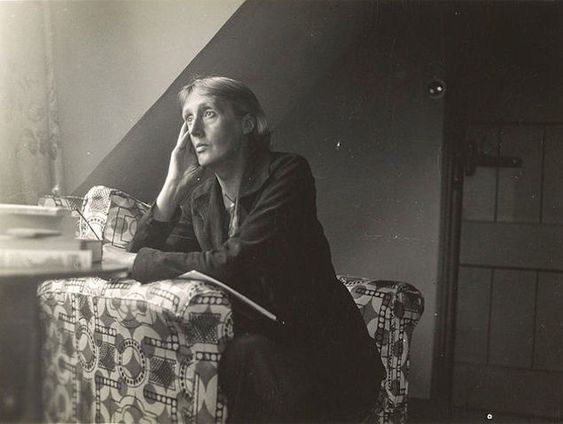
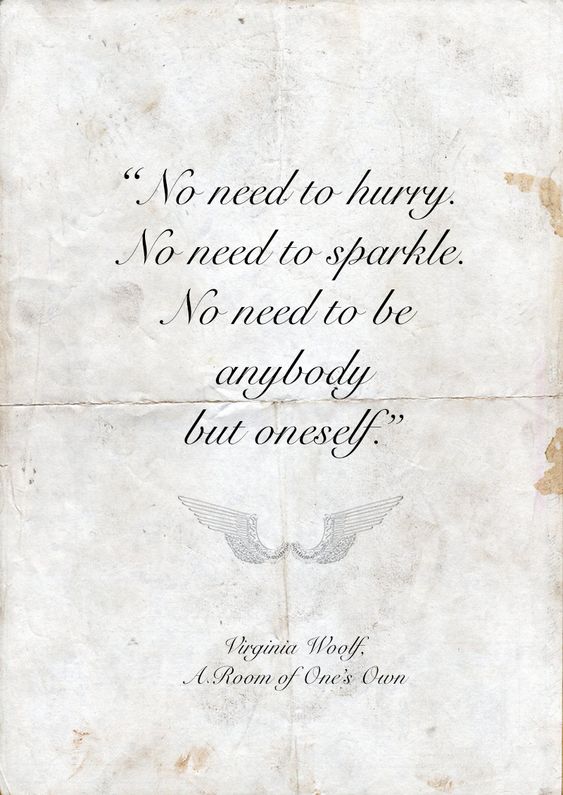
Last year I finally got around to reading Virginia Woolf’s extended essay, A Room of One’s Own, and I find myself still pondering her words today. Although it was first published in 1929, so much of what Woolf wrote rings true ninety years later: it is a feminist manifesto, delivered gently yet powerfully, bringing the place of women in literature and society into laser-sharp focus.
I’ve mulled Woolf’s words over. I’ve disappeared down various rabbitholes as her words and life have cropped up in other books I have read, most notably in Drusilla Modjeska’s beautifully written memoir Second Half First. I’ve read more of Woolf’s own works, including the brilliantly conceived and executed Mrs Dalloway. I’m planning on re-reading The Waves and To The Lighthouse, volumes I have not delved into since my university days.
And yet, despite all this investigation, I am still struggling with Woolf’s central premise in A Room of One’s Own:
A woman must have money and a room of her own if she is to write fiction.
VIRGINIA WOOLF
I firmly believe Woolf’s statement to be true.
But what, I wonder, would she make of women’s lives in the twenty first century? Ninety years after the publication of A Room of One’s Own, many things have improved for women in the western world. Our access to education has improved, along with our employment prospects and our control of our own lives and bodies.
What I think women in the western world have lost control of, however, is our minds.
Lock up your libraries if you like; but there is no gate, no lock, no bolt that you can set upon the freedom of my mind.
VIRGINIA WOOLF
I would love to embrace this idea as a true representation of my self and my life, to punch my fist skyward and proclaim that my mind is entirely my own, that my freedom is guaranteed because I am not shackled by cerebral restrictions.
But I can’t.
Not quite.
I may have money I earn myself and a place to write (even if it is not an actual room), but do I have space in my own head?
There is just so much…stuff…to remember in any given day.
Remember to schedule a dental appointment. Drop off the dry cleaning. Pick up forgotten ingredients for tonight’s dinner. Replace a child’s gluestick for school. Sign permission slips for an excursions. Meet a work deadline. Return the library books on time. Change the bedclothes. Find light blue cardboard for a child’s project (no, not dark blue or royal blue or navy blue). Collect that undelivered parcel from the post office. Arrange a playdate before netball training and remember to buy oranges for the game. Pay the gas bill. Replace yet another gluestick (what, do they eat them or something?). Phone the electrician to get the laundry light fitting replaced. Feed the fish. And the cat. And the family. Buy a present for an upcoming birthday party. And a card. Take out the garbage and know which bin needs to be curbside on which day. Update the credit card expiration date on — wait, what was the password for that account again?
Our lives are so full, and are lived at such a relentless pace. We bandy around words and phrases like “mindfulness” and “mental load”, but do we ever have time to stop — let alone to imagine?
How can we write fiction if we have no headroom to allow the stories to form? How can ideas flow and characters develop and whole realms emerge from such cluttered minds?
Fiction is like a spider’s web, attached ever so lightly perhaps, but still attached to life at all four corners.
VIRGINIA WOOLF
I know my own fiction writing is informed, in part, by the life I lead — regardless of whether I am writing a children’s picture book, a longer story for older children, or working on the young adult novel I have been aiming to finish for some years.
Much of the time, however, my fictional projects lie immobile, suspended in that spider’s web as I attend to the myriad minutiae of everyday life that encroach upon it from all four corners. And more often than not, my own innate need to create is ignored in favour of other, far more basic needs — not just of my own — and it is not until I sense my fictional worlds are hanging by a single thread that I make time to write.
Even so, I remain hopeful.
I would rather snatch a moment here and there to write a paragraph, to edit a word or two, or to scribble down a new idea than to fill my pockets with stones and walk into the nearest river.
I am learning, slowly, to prioritise my fiction writing, even if it is — by definition — not real.
Because it is real to me, and gives my life deeper meaning.
And despite her own untimely end (which I may comprehend, but cannot ever condone), I think Virginia Woolf knew exactly what it was like not to have room in her head. Even so, in spite of this — or perhaps because of it — I believe she would have continued to encourage women generally, and writers particularly, had she lived to see our present day and age, just as she did in her lifetime.
Money is one thing, I think she would tell us.
But the room of one’s own — that sacred space needs to exist in your mind as well as in your world.
Therefore I would ask you to write all kinds of books, hesitating at no subject however trivial or however vast. By hook or by crook, I hope that you will possess yourselves of money enough to travel and to idle, to contemplate the future or the past of the world, to dream over books and loiter at street corners and let the line of thought dip deep into the stream.
OK folks…it’s that time of year when I present my top fives for 2018.
Today it’s books! So without further ado, and in no particular order, here are Blue Jai’s Top 5 Books for 2018:
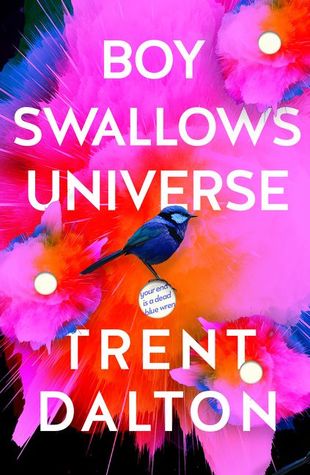
1. Boy Swallows Universe (2018) by Trent Dalton
Your end is a dead blue wren…
For me, it’s as unforgettable a first line as any of the great first lines in literary history: Moby Dick, Anna Karenina, Pride and Prejudice, Lolita. I’ve already written a tiny bit about this book, which has become my new Favourite Book of All Time. Really. It’s a rollicking good read and exceptionally well written, with the added (and almost unbelievable) bonus of being based on real events from Trent Dalton’s childhood. There is something inherently Australian about this debut novel: Dalton captures the heat and humidity of living on the outskirts of Brisbane, and all that simmers beneath.
If you’ve read it already, I can highly recommend his Conversation with Richard Fidler about writing the novel. If you haven’t read it, I’m not going to say any more…other than to say I, quite obviously, recommend you get your hand on a copy of this and — hopefully — enjoy it as much as I did.
2. Pachinko (2017) by Min Jin Lee
This sprawling family saga had me captivated from the start. Set in Korea and Japan in the early decades of last century, Min Jin Lee’s Pachinko is packed full of detail and emotion. Depicting a way of life and period of history I knew little about, I was swept up in the story of Sunja and her descendants. I found Lee’s treatment of the strange limbo occupied by the Koreans who moved to Japan, even after several generations, interesting and moving.
If you’re after a read that will deposit you in a foreign land and make you feel like you can’t leave until you know what’s happened to all the main characters, this is the book for you.
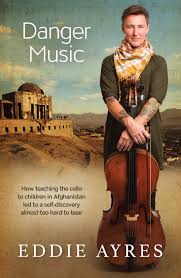
3. Danger Music (2017) by Eddie Ayres
This autobiographical tale of teaching cello to children in wartorn Afghanistan follows Ayres’ earlier book, Cadence, which was written while he was still known as Emma Ayres, the hugely popular host of ABC Classic FM’s Breakfast program (and a particular family favourite of ours).
Ayres’ story of self-discovery, set admist the chaos of Kabul and the challenges of teaching children who deal every day with the twin threats of violence and loss, is a painfully but beautifully honest account of his transition to becoming the man he always was inside. The playlist at the end of the book is an added bonus for any music lover, but this book has something for everyone.
4. Bridge of Clay (2018) by Markus Zusak
Oh, how long we all have waited for this book?! Not nearly as long as Zusak himself who, after the phenomenal success of The Book Thief, wrote and rewrote Bridge of Clay for years until he finally reached a point where he could release into our hands.
I was conscious, at different points of reading this brilliant novel, that each and every word was precisely chosen and placed…but that in no way detracted from the tale and my emotional investment in it. This was a book I tried to read slowly, to savour the writing, the characters, the whole shebang — but partway through I gave in and finished the rest of the book in one go, unable to resist the pull of the plot. This is a superbly crafted novel that is well worth your time, and one I spent days thinking about after I’d finished it.
5. Becoming (2018) by Michelle Obama
Becoming was always going to be a global blockbuster: Michelle Obama is someone many of us admire want to know more about. Here, in her own words, is Obama’s story of her upbringing, her education, her marriage, and her time in the public eye as First Lady of the United States.
It’s forthright. It’s interesting. It’s well-written. And as soon as I finished it, I was more than happy to pass it on to my elder daughter, who (despite being in primary school) devoured it as quickly as I did and enjoyed it just as much. If you’re after an autobiography to read this summer, not to mention a reminder of a time when the highest offices of one of our most powerful allies were not reduced to chaos and trivialising tweets, this is well worth a look.
Honourable mentions this year go to Ian’ McEwan’s Solar (2010), which may well be the most darkly humourous novel I have ever read, and Muhsin Al-Ramli’s haunting and heartbreaking book The President’s Gardens (originally published in Arabic in 2012) which, like Pachinko, took me to a place in time I have had little experience with but for which I now have a much deeper appreciation.
I also thorougly enjoyed Ailsa Piper’s travelogue Sinning Across Spain (2017), Helen Russell’s occasionally hilarious The Year of Living Danishly: Uncovering the Secrets of the World’s Happiest Country (2016) and delighted in Stephen Fry’s Mythos (2018), his elegant and downright funny retelling of the Greek Myths.
So there you have it! Hopefully there is something for everyone here…I’d love to know what you think and what you’ve read this year, so get in touch via the comments if you think I’ve missed one of your standout books for 2018.










 In the corner of our back yard stands a Tibouchina tree. Most of the year it is an ordinary, stock standard tree — you know: green leaves, brown trunk, sometimes bits fall off it, other times there are birds in it. But every year in February and March, the Tibouchina tree transforms itself into something truly resplendent, crowned with beautiful purple flowers. Every year it brings a smile to my face — and this year, believe me, it felt extra special.
 I never thought I would live in an era when hoarding groceries became a Thing. The silver lining to this unexpected (and more than likely unethical) behaviour, however, is that when I found a four pack of paper towel on the supermarket shelf while doing my aforementioned Catnip Everdeen impression, I felt like I had won Olympic Gold.
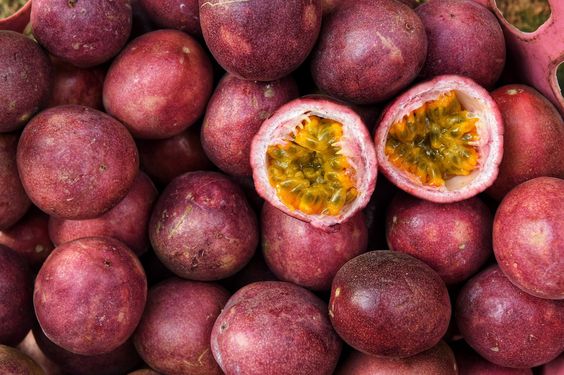 Yep, you read that right. Passionfruit. On another of my early morning Catnip Everdeen runs (and believe me, I do them far less frequently than this post is seeming to indicate), I found a whole pile of passionfruit: large, plump and — most importantly — heavy.
 It’s no secret Australians are completely, perhaps catastrophically sports mad, and the fact that Coronavirus made its unwelcome appearance in our country just as winter sports seasons were kicking off could be described as…unfortunate? No, let’s be honest, here: it’s been devastating — particularly for Miss Malaprop, who worked super hard to make the A Grade team in our local netball competition, only to have the season scrapped before it started. At least I was able to tell her all the professional sportspeople have been affected, too. The Sydney Swifts won’t be playing either. The Olympics have been postponed. The Melbourne Grand Prix was cancelled…
 Another moment of delight also came via screen this week…by the very screen I’m watching these words appear on as I type. This, my little blog, the patch of cyberspace I escape to every now and then to make sense of this crazy old world, ticked over 10,000 views — and this Daydream Believer was delighted.
 Last year I finally got around to reading Virginia Woolf’s extended essay, A Room of One’s Own, and I find myself still pondering her words today. Although it was first published in 1929, so much of what Woolf wrote rings true ninety years later: it is a feminist manifesto, delivered gently yet powerfully, bringing the place of women in literature and society into laser-sharp focus.
 Our lives are so full, and are lived at such a relentless pace. We bandy around words and phrases like “mindfulness” and “mental load”, but do we ever have time to stop — let alone to imagine?
 Even so, I remain hopeful.
 Your end is a dead blue wren…
 This sprawling family saga had me captivated from the start. Set in Korea and Japan in the early decades of last century, Min Jin Lee’s Pachinko is packed full of detail and emotion. Depicting a way of life and period of history I knew little about, I was swept up in the story of Sunja and her descendants. I found Lee’s treatment of the strange limbo occupied by the Koreans who moved to Japan, even after several generations, interesting and moving.
 This autobiographical tale of teaching cello to children in wartorn Afghanistan follows Ayres’ earlier book, Cadence, which was written while he was still known as Emma Ayres, the hugely popular host of ABC Classic FM’s Breakfast program (and a particular family favourite of ours).
 Oh, how long we all have waited for this book?! Not nearly as long as Zusak himself who, after the phenomenal success of The Book Thief, wrote and rewrote Bridge of Clay for years until he finally reached a point where he could release into our hands.
 Becoming was always going to be a global blockbuster: Michelle Obama is someone many of us admire want to know more about. Here, in her own words, is Obama’s story of her upbringing, her education, her marriage, and her time in the public eye as First Lady of the United States.
 Blue Jai: