
At the beginning of each year I attempt to find a word or theme to guide me through the twelve months ahead. It makes sense to me to do this, not only because here in the Southern Hemisphere the school year mirrors the calendar year, but also because my birthday falls in January. I find it useful to embrace an overarching concept that often ends up informing what I do, what I read, what I think, and even the way I approach my life.
Last year, I took delight as my guiding principle after dipping into Ross Gay’s Book of Delights. Prior to that I (perhaps less successfully) delved into the lives of diverse people — Marcus Aurelius, Virginia Woolf, Keith Richards — to see how their perspectives might inform my own. Another year I chose a different Word of the Month to engage with.
In 2021, I’m taking myself going down a slightly different path again — one decidedly unfamiliar to me, raised as I was in a reasonably conservative Roman Catholic home by parents who remain steadfast in their faith and who chose to send me to Catholic schools throughout my primary and secondary education. This year, inspired by reading Jay Shetty’s book Think Like a Monk, I’ve chosen to explore the Divine Qualities outlined in Chapter 16 of the Bhagavad Gita.
There are 26 Divine Qualities listed in the Gita, so I am hoping to tackle one every couple of weeks. Quite obviously, I haven’t been raised Hindu and have little experience with the Vedic tradition other than what I’ve learned from various teachers when attending yoga classes from time to time, which means I am engaging with each quality as outsider. From the oustet I think it is important to state that I do not intend to bring a religious slant to any of my posts and I mean absolutely no disrespect to believers in this or in any religion: I am simply using the Divine Qualities mentioned in the Bhagavad Gita as a starting point and exploring how these, as I understand them, apply to my own life.
The first Divine Quality mentioned in the Bhagavad Gita is FEARLESSNESS.
What a way to kick things off, huh?!
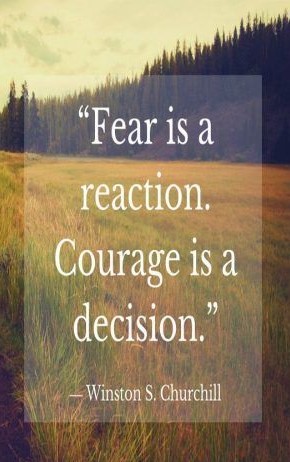
You may, given the current state of the wider world, now have an inkling of understanding as to why I was intrigued by the Divine Qualities: given that much of 2020 involved a global pandemic, trade wars, continuing environmental crises and particular politicians peddling lies and failing to protect their own people, there were many things about last year that made me FEARFUL. I often wondered, in 2020, whether my family would stay physically safe in the face of an invisible disease and mentally strong when confronted with multiple lockdowns, whether my husband’s business and those of his clients would survive the associated economic upheaval, and whether the world was actually going to hell in a handbasket.
Fearlessness? I’ve never lived through a year more prone to making people fearful, or for provoking (at best) garden variety anxiety on a daily, if not hourly, basis!
Fearlessness…
I have to admit the word shocked me when I first read it, right at the top of the list of Divine Qualities. It felt like such a foreign concept in these strange and unusual times.

And yet, the more I thought about it, the more I wanted to embrace fearlessness.
Many of us spend far too much time worrying about — or even fearing — things beyond our control. What if we stopped fearing what other people might think of us, or whether we’re good enough, or if the timing is right? What if we started to trust ourselves and our abilities more, to do what is right and responsible, to make our best effort every time with the knowledge and resources we have?
For me, staring fearlessness in the face meant asking myself:
- What if I actually finish my novel?
- What if I allow myself time to exercise every day?
- What if I publish more on this blog, even if it exposes me to potential ridicule?
- What if I say no to stuff that no longer serves me?
- What if I say yes to trying new things?
And I’ve decided, on balance, that all of those things are worth doing.
That it’s worth letting go of fear and trusting the universe (or God, or whatever you believe in) has my back.
That it’s important to have faith that the vast majority of people on this planet are doing their best and are kind and decent human beings.
That it’s time I lived with fearlessness!

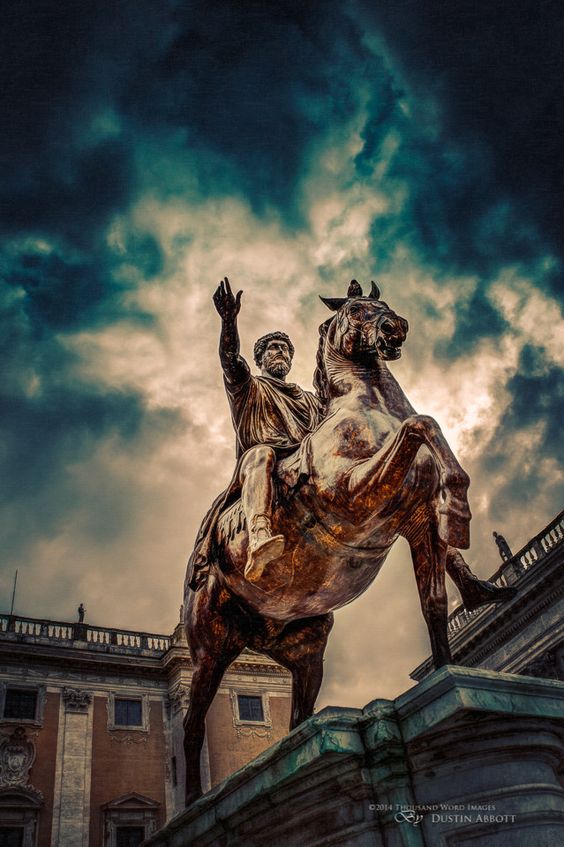 I find it hard to believe that it is almost March, and that this year I’ve only managed to get fingers to keys here in my small patch of cyberspace twice. I thought, when I began this post, that it was going to be about Virginia Woolf — but as you will see, it didn’t turn out that way at all.
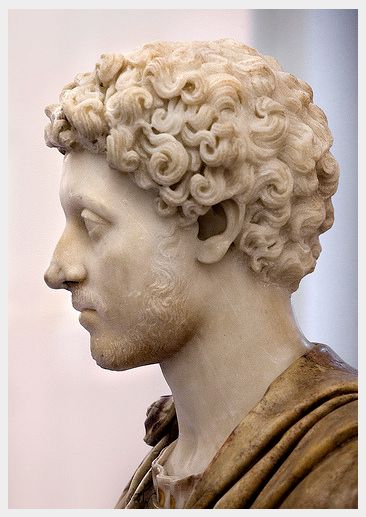 So, having unfettered myself from all sorts of strictures, I gave myself permission to meander down some old Roman roads, following the trail of the Philosopher Emperor and his wayward son. Commodus, according to Cassius Dio (who witnessed his actions and antics firsthand), was “not naturally wicked but, on the contrary, as guileless as any man that ever lived. His great simplicity, however, together with his cowardice, made him the slave of his companions, and it was through them that he at first, out of ignorance, missed the better life and then was led on into lustful and cruel habits, which soon became second nature.” Ouch.
 So that’s what I think I’ll be getting up to this year: delving into the thoughts of people who I happen to find interesting, diving into the depths and exploring topics and stories and ideas I find intriguing. I suspect that Virginia Woolf might get a look in somewhere — I know she tried to today, but Commodus must have had other ideas — and maybe Frida Kahlo, and Ursula Le Guin and goodness knows who else I happen to encounter.
 Choosing my Word of the Month for December was an absolute no-brainer: it is, and could only be,
  And even though several people have commented to me recently that everyone seems so stressed at this time of year, but my own experience has been quite the opposite. When I went to the grocery store the other day to do the last Big Shop before the Big Day, I was amazed by the number of strangers who smiled at each other and engaged each me and others in conversation — there was a palpable sense of Christmas cheer in the air.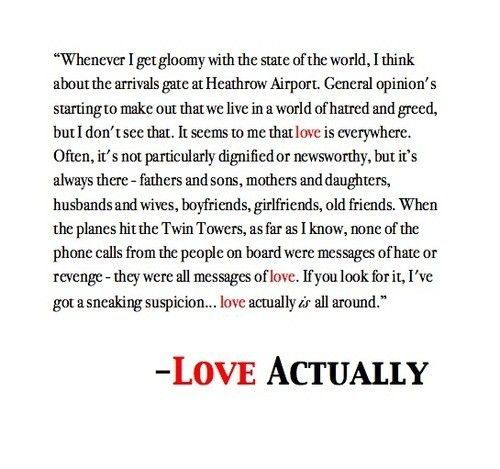
 November, it seems to me, is something of a forgotten month.
 If you’ve read any of my posts during the year, you’ll know that’s not really my style. Life is far too full of unexpected twists and turns (of both the totally awesome and not-so-crash-hot variety) for me to seek refuge in fluff and bunkum.
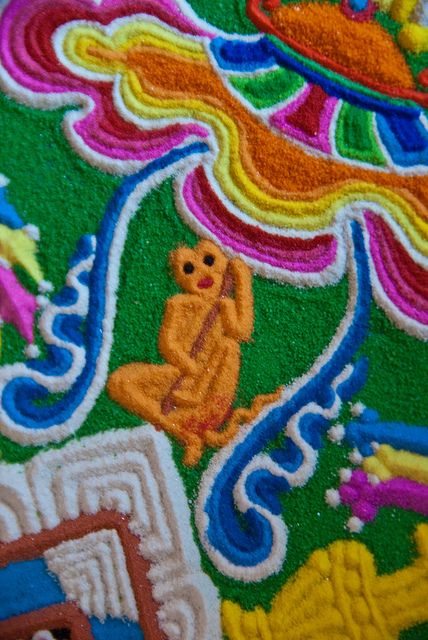 If you haven’t had the privilege to see a sand mandala being made, you can watch one being created
  It’s worth remembering, at this point, that the word integration comes from the Latin word integrus, meaning renew or restore. Each day is an opportunity to renew our commitment to bring all the pieces together, to restore our faith in the knowledge that every last grain of sand we add to our own internal mandalas counts.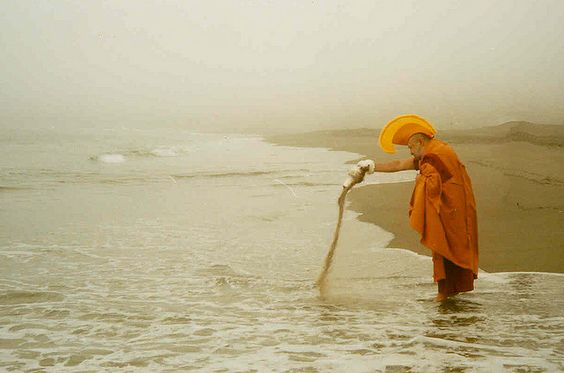



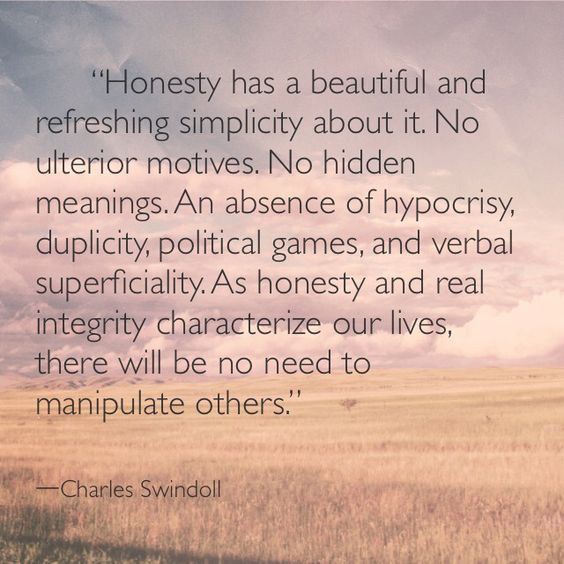 Honesty.
  It can be difficult to be
 Some time ago, I was reading a book by Gretchen Rubin when I came across this phrase: The days are long, but the years are short.
 Aristotle’s adage did make me think, however, about the things that I repeatedly do now — because these, my friends, are my habits. Sure, there’s all the obvious basic personal hygiene and basic living habits like showering daily, cleaning my teeth morning and night, eating a decent breakfast, that sort of thing. But what else, I wondered, do I do every single day?



 It’s winter where I live.
 The word
 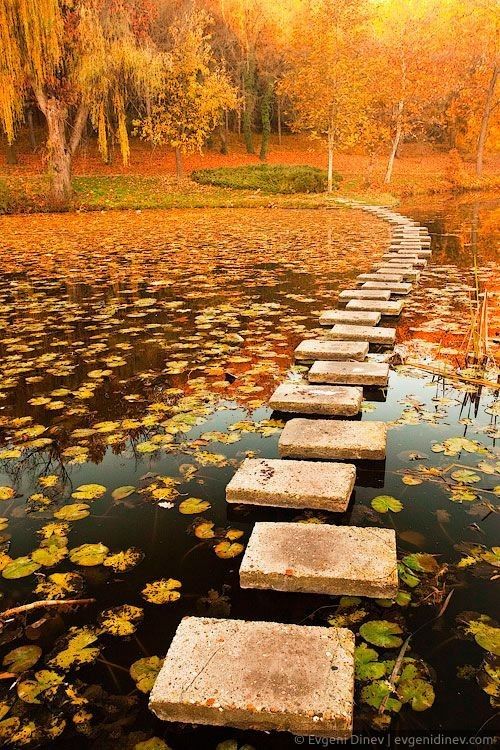 I then thought about lines in nature — of the fiddleheads of ferns and the inside of seashells and other swirling curves that fit the Fibonacci sequence. I thought of nights I spent in the Northern hemisphere, watching the sinuous lines of the Aurora Borealis. I thought of human spines, of all our vertibrae arranged in concave and convex curvatures.


 Blue Jai: