Blue Jai’s Vignettes #6

Paisley didn’t particularly care for wash day, especially in late October. By the time she hauled the bedsheets onto the line her hands were chapped, bright red against the white linen, and her face felt much the same. The wind had picked up already, whipping the prairie grass into a writhing sea of grey green.

Winter was well and truly on its way to Milk River.

Snow already capped the Sweetgrass Hills across the border. Kátoyissiksi, the Blackfoot called them. Paisley caught glimpses of the peaks between gaps in the sheets as she pegged them steadily on the washing line, the point of West Butte rising high above the others. In her fifteen years, she had never known any other view.

Paisley’s mother had gone into Milk River township for groceries, and her father was working one of the further flung fields of their farm. The canola had just been brought in, and her dad was finishing up the harvest before the snows began their inevitable fall. Her younger brother, Tyson, had begged to go along with their mother, to watch the harvest being loaded into the massive grain elevators on the outskirts of town.

There was no question Ty would take over the farm when he was old enough. The only reason her brother had learned to read was so he could consult the Farmer’s Almanac and join in conversations with his father and grandfather about weather predictions, crop rotations and soil quality.

Paisley had learned to read for a very different reason.

She eased one last crumbling wooden peg onto the line, securing a pillowcase against the whipping wind. A novel was already tucked into the deep pocket of her pinnafore, an Agatha Christie mystery whose worn pages Paisley had already read several times before. Death on the Nile was preferable to the Farmer’s Almanac any day of the week.

Grabbing an apple from the wizened tree at the back of the farmstead, Paisley stowed the wicker washing basket back in the wash house and latched the gate on her way out. Guessing she had less than an hour before her mother’s battered brown Oldsmobile lumbered into the garage, she took off at a run. Paisley’s favourite place to sit was inside a clump of juniper bushes overlooking a bend of the Milk River itself. There she could hide herself away, observing the off-white waters of the river rushing by, surrounded by hoodoos and cliffs which — if you knew where to look — were inscribed with ancient petroglyphs.

Paisley knew where every last engraving was, knew the outline of the rocky outcrops as well as she knew the back of her own hand. But today, just for a while, she was about to rejoin Hercule Poirot as he approached Abu Simbel, and the Milk River suddenly looked very much like the Nile…

Blue Jai’s Vignettes #5

Alethea had been walking for days, and she could feel it in every muscle of her body. Her pack sat heavily on her back, the leather straps digging into her shoulders. Her boots, waterlogged after fording the many streams that criss-crossed the forest, felt like twice their normal weight as she slogged her way along the Kingsway.

The mouldering leaf litter smelled dank and vaguely rotten as she trudged along, and the morning mist seeped into her clothes.

Everything felt damp.

Alethea was also beginning to feel cold. She had not been able to light a fire since she entered the forest three days earlier. The golden sundrenched wheat fields had given way to coppices and tree-lined glades, and as Alethea had ventured onwards the woods had grown steadily thicker and darker. Mists clung to the trees, giving way to drizzling rain more often than not.

The Kingsway wound through mile after mile of forest. Alethea had been keeping to the edge of the path, ready to melt into the undergrowth at a moment’s notice. She walked quietly and deliberately, but after spending so much time in the deep quiet of the woods her footfalls thudded in her ears, along with her heartbeat — the thumping in her chest keeping time with the tramping of her feet. All she had to do was keep putting one foot in front of the other, and make it to the Silver City before Samhain.

Even though she had not seen another soul since entering the forest, Alethea remained alert: the Kingsway was the only route through the dense woodland, and she was well aware a young woman making the arduous journey alone was an easy target. As the drizzle gave way to an unrelenting downpour, Alethea sighed and pulled the hood of her jacket further over her face, grateful for the double layer of protection the cowled neck of her garment gave her. She plodded onwards, resolutely dismissing thoughts of a warm fire, dry clothes, and a hot meal.

A flash of red caught Alethea’s eye through the rain — a robin, the first creature of any kind she had seen in many miles, had flown directly across the path in front of her. Alethea stopped in her tracks and watched the little bird as it hopped from vine to branch, making its way up the slope on the right hand side of the path. The rain eased momentarily, and Alethea glimpsed something unusual beneath the dripping bough of the oak the robin had just alighted on: the beginnings of a stone staircase.

Alethea looked up and down the Kingsway, even though she was quite certain she was alone, and quickly made her way across the path. Scrambling through the sodden undergrowth, inwardly cursing the wet branches lashing at her face and body, she soon arrived at the place where the stone staircase began winding its way upwards between mossy rocks. The robin was hopping his way up the steps ahead of her, the feathers of his breast flaring red against the grey stone.

Alethea’s breath caught.

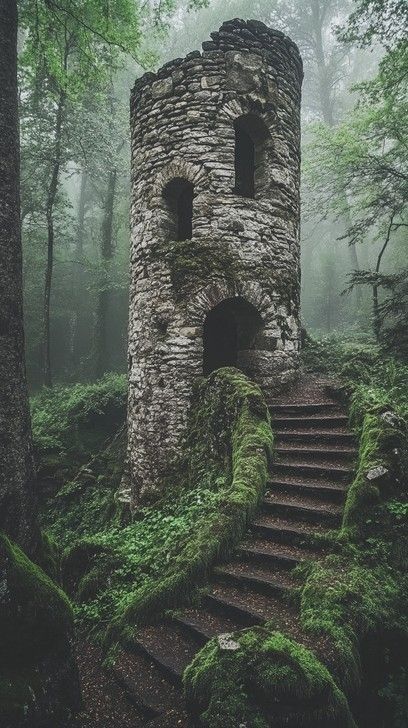
At the top of the stairs was a small, circular tower with an arched doorway and two similarly shaped windows set into the wall above. She crept upwards, taking care not to make any sound, and peered at the archway. Alethea could see rusted hinges on the side of the doorway, and realised the wooden door that must have once stood here had long since rotted away. She sniffed carefully: there was no scent of smoke, of food, of anything other than the decaying leaf litter that layered the forest floor.

With a final glance behind her, Alethea took a deep breath and stepped inside the tower…

Blue Jai’s Vignettes #4

Ellie really liked Joe, but she wasn’t sure how to tell him.

When he’d arrived at Crickwood High at the beginning of second term, heaps of girls had been interested in him: swarming around, waiting in clusters for the bus, all trying to figure out who he might be into.

Joe was tall. He was reasonably well muscled. He had curly hair which flopped in a slightly dorky but adorable way into his eyes. He looked nice, smelled nice, was nice.

And yet, not long after arriving at Crickwood, Joe had decided the gaggles of girls at the bus stop weren’t worth his time, and had apparently — inexplicably — chosen to befriend Ellie instead.

Ellie now suspected the fact she had been wearing a muscle tee saying “BOWIE” provided the biggest clue as to why Joe had slung himself into the seat next to hers on the bus one afternoon.

“You a fan?” was the first thing he’d asked her, nodding at the rainbow of letters emblazoned across her chest, which included — of course — a lightning bolt in place of the “I”.

Ellie had attempted a nonchalant shrug in response, deciding after one sidelong glance into Joe’s blue eyes there was no way she was admitting the Bowie tee was actually her mother’s.

“I guess. I like a lot of different music.”

“Yeah, me too.”

“Hunky Dory.”

Joe had laughed — not at her, but with her — appreciating the fact that she had gone there, making the corniest of jokes. And ever since that day, they sat together as they rode the bus home.

Music was what they talked about. Mostly. There wasn’t a huge amount to do in Crickwood after school — apart from hitting the gym alongside all the girls attempting to squat their way to a backside rivalling one of the Kardashians, or working the check out aisles at the local Coles. On the rare afternoons they had homework, Ellie and Joe went to the library. But most of the time they just hung out, propping themselves up against the wall of the milk bar, talking about music and bands.

Ellie’s mum had said it was OK — even it she had been a bit distracted at the time, trying to get an assignment finished for the uni course she was studying part time.

“Can I hang out with Joe this afternoon?”

“The new kid?”

“Yeah.”

“Where’d they move from again?”

“Sydney, I think?”

“Christ on a bike. Why the hell would anyone move to Crickwood?”

“Probably the mine.”

“Mmmm…probably…can you pass me that green text book?”

As time went on, Ellie had just about run out of music-related things Joe might find remotely interesting, and reluctantly found herself asking her mum about what she listened to during high school. She felt simultaneously bemused and embarrassed by her mother’s enthusiastic sharing of Spotify playlists, but was grateful all the same. The Violent Femmes, Pearl Jam, REM, the Pixies, Massive Attack, Lou Reed, and the Ramones all found their way into her ears via her mum’s recommendations. And Bowie — always David Bowie.

Ellie realised conversations about music were bringing her closer to her mother as well as to Joe, which felt a bit weird.

Weird but good.

“Hey Ellie — how about you ask your friend Jo over for dinner this Friday? I’ve finally finished all my exams and assignments, so maybe we could get takeaway. It’d be nice to finally meet her.”

Wait, what — her?

Blue Jai’s Vignette’s #3

Slap, slap, slap…

The clatter of her sandals on the cobblestones made Mariana anxious and jittery.

Rome was dangerous after dark.

The villa was being watched, and she had been warned attempting to be stealthy was more likely to attract unwanted attention. She understood she was almost certainly being followed, and was convinced there were eyes tracking her every move — not that she could see them.

Mariana carefully adjusted the palla concealing her face and tried to step quietly and confidently, the way her mistress, Calpurnia, would.

Calpurnia, who had loaned her the expensive palla beneath which she hid.

Calpurnia, who had entrusted Mariana with the message hidden deep beneath the folds of her stola, sending her out into the gathering darkness with a single unliveried servant bearing a swinging, sputtering lantern.

Calpurnia, wife of Julius Ceasar, whose husband had just been brutally murdered.

The columns of Temple of Jupiter Optimus Maximus loomed portentously above Mariana as she made her way down the Capitoline Hill into the Forum. She kept a cautious distance from the servant striding purposefully ahead of her, sticking to the shadows just beyond the circle of bobbing lanternlight. Never before had she been so accutely aware of the vast number of columns surrounding her — some decorating the facades of buildings, others displaying statues, all of them capable of hiding a well-armed man behind them.

The moon was rising swiftly above the Palatine Hill, a huge golden orb just past full. The Ides of March had fallen only two days prior, the same day Caesar had fallen.

Beneath her clothing, Mariana could feel the slip of parchment Calpurnia had handed to her minutes before digging into her skin, each sharply folded edge pricking like a knife…

Blue Jai’s Vignettes #2

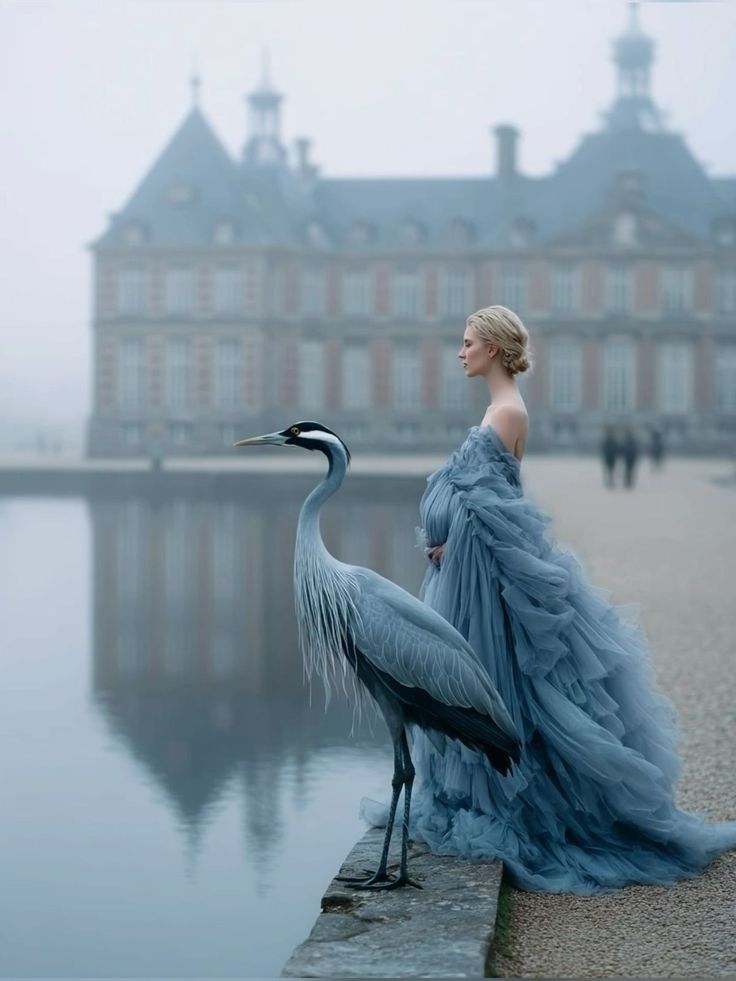
The early morning mist had not yet lifted when the bird alighted behind her, taking several elegant steps to join her at the water’s edge.

“Report,” she commanded.

The bird inclined his head.

The Vespyn armies are massing in the Borderlands, along the edge of the Forest of Andyr. We do not have much time.

She could hear his voice clearly in her head, as cutting as the icy breeze biting the bare skin between her shoulder blades.

“And the Messendyr? Will they come?”

I believe so, but the more pressing question is whether they can mobilise in time. We have requested archers and cavalry, together with a small detachment of Pine Riders, renowned for being best scouts within the Forest. Bastian flew south two days ago to press our case with General Tausten and is expected to return before nightfall.

Ariana considered his words in silence. She did not doubt Bastian’s powers of persuasion, nor the Messendyrs’ abilities in battle. When General Tausten’s forces combined with the troops she had already rallied beneath her blue-grey banner they should be able to foil an attack — provided they could cross the River Arden, navigate the narrow paths of the Forest of Andyr and take up an advantageous position beneath the pines and firs on the Forest’s edge before the Vespyns did.

Sullivan was right, as usual.

What they needed most was time.

Surreptitiously, she observed his reflection in the water. His posture was strong and sure, as always, but even in avian form she could detect a weariness around his eyes.

“How long is it since you resumed human form?” she asked quietly, folding her arms against the morning chill. Shapeshifting was as dangerous as it was difficult, mastered by only a few highly accomplished Adepts. Ariana was all too aware Sullivan’s position was more problematic than that of most Shapeshifters: he was nobleborn as well as Adept, a hazardous combination which forced him to choose constantly between conflicting loyalties. That said, she could not fault his steadfast allegience to herself and her cause.

Two nights, he responded eventually.

Ariana turned her head to look at him directly for the first time since he landed, accutely aware of the pair of servants crunching their way towards them over the wide expanse of gravel in front of the chateau.

“Be careful, my feathered friend.”

The bird dipped his head in response, opened his wings and took off, flying low above the slate coloured water.

Always, my Lady Crane

Blue Jai’s Vignettes #1

Dorothy Brownlow was not having it.

There was no way she would let Janice McNulty’s snide remarks get her down, just as surely she was not buying Janice a cup of coffee after aqua aerobics — even though it was almost certainly her turn.

So what if she had inadvertently picked up her shower cap from the hook on the back of the bathroom door? Hank had decided to leave early for golf, muttering something about having his putter fixed at the pro shop, and it wasn’t until he dropped her at the pool that she realised her error — not that it was a big deal. Dorothy had been to the hairdresser only two days before, and the shower cap wouldn’t squash her freshly-set curls the way her thick rubber swimming cap did. Besides, if Marjorie Guthrie chose to wear that ridiculous straw sun visor during class every week, how come Janice had never felt the need to comment on that?

No, Dorothy was not having it.

She had opted not to take up her customary place beside Janice in the front row of the class, even though it afforded the best vantage point for observing Donny, the aqua aerobics instructor, in his tank top and trim white shorts. Instead, she had tucked the arms of her natty catseye sunglasses securely beneath the elastic of her blue shower cap, and chose a position in the second row directly behind her so-called friend.

It was early spring in Florida, and begonias and black-eyed Susans were beginning to bloom beyond the neat row of white sun lounges beneath the pooside palm trees. Insects droned and buzzed above the red and pink petals, while in the pool the water was refreshing and cool. The second row, Dorothy considered, offered her a more than satisfactory view of the vibrant flowers and the handsome instructor. She felt a smug and satified smile turning up the corners of her mouth as she followed Donny’s commands, putting her hands on her hips and stretching backwards, tilting her face towards the sun.

As the class went on, the women raised and lowered their arms in accordance with Donny’s instructions, twirled in the water, kicked their legs and hopped from foot to foot. Still smarting from Janice’s nasty comments, Dorothy was periodically seized by a juvenile urge to pull a face behind her friend’s back, but found herself increasingly mesmerised by the back of her friend’s head. Unlike her plain and practical shower cap, Janice’s swimming cap was bedecked with chunky yellow and orange flowers, bobbing like a bouquet in the water in front of her, around which an alarming number of bees had begun to swarm…

2020 in Books: Blue Jai’s Top 5

Well, I’ve covered my Top 5’s for 2020 in music and on screen, and now it’s time for my alter ego, the Thrifty Fictionista, to take centre stage and reveal Blue Jai’s Top 5 Books of 2020.

I don’t normally keep track of how many books I read, but for some bizarre reason utterly unknown to me I did in 2020 – and, despite home schooling and remote working, somehow found time to escape into more than 60 books. They ranged from non-fiction to biography to literary fiction to fantasy, read either on the page or on an iPad using the Libby app (which I think is brilliant).

Along the way I read some stuff I definitely won’t pick up again but which served its purpose during the darker times of the year just gone, but I also uncovered some genuine gems which, without further ado, make up Blue Jai’s Top 5 Books of 2020.

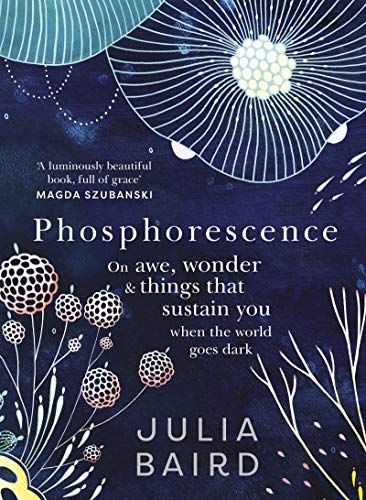
Phosphorescence: on Awe, Wonder and Things that Sustain You when the World Goes Dark by Julia Baird (2019)

I actually kicked off 2020 by reading Julia Baird’s masterful biography of Queen Victoria (which, if that sort of thing is your jam, I highly recommend). But it was this gorgeously ornamented hardback volume, which I will refer to simply as Phosphorescence for short, which took my breath away. In it, Julia Baird has delivered what I view as the best kind of writing: thoughts and ephemera so beautifully expressed and interwoven that you want to start reading the book again as soon as you have finished it.

In preparation for writing this post I was flicking back through Phosphorescence trying to find a specific passage which stuck in my memory – it was a description of sunrise on the East Coast of Australia, which compared (if I recall it correctly) the suddenness of the sun’s appearance over the rim of the Pacific to a lit match being dropped into petrol.

I couldn’t find the precise quote I was looking for…but as I leafed through the pages of this wonderful book, it reminded me of all the amazing things Baird talks about: not only phosphorescence, but storm chasing, and the Overview Effect, and forest bathing, and so many other glorious things. And in the process, I found another, completely different passage, which probably sums up even better what I love about this book:

If we accept flowering by its nature is a fleeting occurrence, then we are more likely to recognise each blossom as a triumph.  And if we accept impermanence, we are far more likely to live in the present, to relish the beauty in front of us, and the almost infinite possibilities contained in every hour, or every single breath.

Enough said, yes?

Girl, Woman, Other by Bernadine Evaristo (2019)

Turning now to fiction, I could not fail to include Bernadine Evaristo’s prize winning Girl, Woman, Other, which deservedly took out the Booker in 2019.  The intersecting stories and perspectives in this book stayed with me for a long time. Reading this novel might be described as the literary equivalent of looking into one of those glass faced clocks you can see the inner workings of – all the wheels and cogs are separate but still necessarily connected, which I loved. I also appreciated the diverse perspectives were overwhelmingly female, and the characters’ experiences – both good and bad – eminently familiar to female readers. Girl, Woman, Other is well worth your time and money, and I highly recommend it.

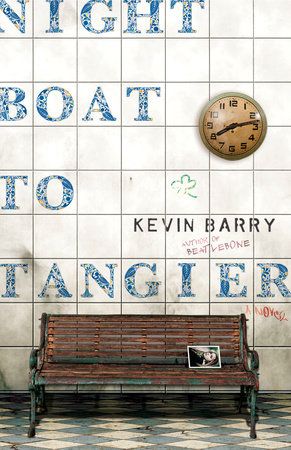
Night Boat to Tangier by Kevin Barry (2019)

Charlie Redmond and Maurice Hearne are “fading gangsters from Cork City”, sitting in the port of Algeciras, looking for Maurice’s missing daughter, Dilly. The entire novel takes place over the course of a single day, but because it is packed full of reminiscences of their time drug running in Spain and the various ups and downs of their lives in Ireland, it feels like it takes in decades.

Kevin Barry’s ability to capture the nuances of speech of the various characters in the book –particularly of the two main protagonists – stayed with me for long after I’d finished it. This novel definitely has a streak of darkness at its heart, made lighter by comedic turns and the banter between two old and very battered mates.

Rodham by Curtis Sittenfeld (2020)

The Thrifty Fictionista has come late to the Curtis Sittenfeld party, not having read American Wife or Sisterland or any of Sittenfeld’s other novels. And yet, the premise of this book – what if Hillary hadn’t married Bill? – had me hooked from the start. By necessity, the first part of the novel deals with Sittenfeld’s imagining of the romance between university students Hillary Rodham and Bill Clinton, but midway through the book they part: and when Hillary refuses Bill’s proposal of marriage, a very different version of “history” ensues.

To date I have resisted the urge to go googling down various rabbit holes on the interwebs in an effort to determine whether the very much still living Hillary Rodham Clinton has read this fictionalised account of her life as it might have been and how she has reacted to it, partly because it reminds me a bit too much of Barack Obama adding Fleabag to his list of favourite television series for the year some time back (which raised at least several eyebrows given what Phoebe Waller-Bridge’s character was doing while she watched a video of him making a speech). At least, after American Wife, one can only assume Hillary Clinton can chat to Laura Bush about what must be a truly singular experience.

I’m not going to say any more about this one for fear of spoiling the ending, but I can tell you it is well worth a read.

M Train by Patty Smith (2015)

It’s only fair and fitting, I suspect, that I bookend this Top 5 of 2020 with a biographical meandering far more similar in tone to Phosphorescence than the fiction writing I’ve included as the meat in the sandwich, so to speak.

When my aunt lent me her copy of M Train it took me a while to get into it – I suspect I was on a massive fiction bender (no doubt plowing through a massive fantasy series by Sarah J Maas or someone similar), and after reading a chapter or two I found Patti Smith wasn’t what I was after at the time.  When I picked it up again later, however, I devoured the remainder in a single sitting and absolutely loved it. Smith, who is perhaps better known as a singer-songwriter and poet, has – unsurprisingly – a lyrical ability to express emotion and to bring her interior life into the light…such as this passage when Patti visits a friend in Morocco who is close to the end of his life:

Everything pours forth. Photographs their history. Books their words. Walls their sounds. The spirits rose like an ether that spun an arabesque and touched down as gently as a benevolent mask.

—Paul, I have to go. I will come back and see you.

He opened his eyes and laid his long, lined hand upon mine.

Ahhh….I don’t think there’s a better way to end the main part of this post than with such beautiful, poignant words.

The Thrifty Fictionista’s Highly Commended Books of 2020 are, as ever, a mixed bag of goodies:

  • All Our Shimmering Skies by Trent Dalton (2020) – how I love anything this man writes! A truly unique Australian voice with an abundance of humanity;
  • The Erratics by Vicky Laveau-Harvie (2017) – a tyrannical mother, a traumatised father, an extraordinary memoir;
  • The Thursday Murder Club by Richard Osman (2020) – a mystery, some giggles and a few keenly observed words of wisdom;
  • Ayiti by Roxane Gay (2011) – short stories that pack a real punch;
  • Think Like a Monk by Jay Shetty (2020) – a self-help book, but notable because it’s the first I’ve read based on a Vedic perspective;
  • Education of an Idealist by Samantha Power (2019) – a fascinating autobiography from Barack Obama’s UN Ambassador to the United Nations; and
  • Negroland: A Memoir by Margo Jefferson (2015) – one of the most engrossing and interesting memoirs I have ever read.

Thanks so much for checking out my Top 5s for 2020!

Here’s to 2021 being a very different year, in only good ways.  I am looking forward to delving into a whole trove of excting new volumes and engrossing experiences, all between the pages of books.

Feel free to leave a comment if you’ve read something awesome, or subscribe to receive new posts directly to your inbox using the Follow button.

Until next time, mind yourselves.

BJx

(Head)room of One’s Own

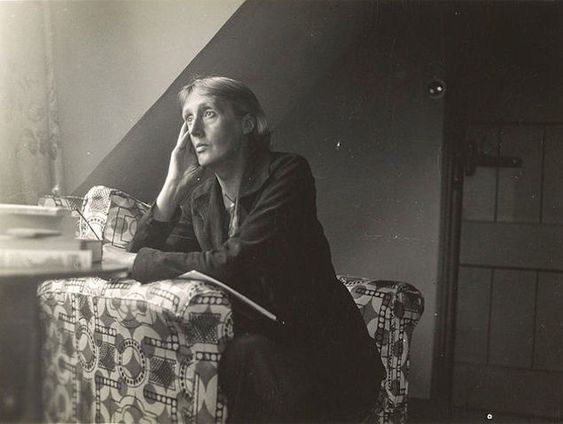
Virginia 1Last year I finally got around to reading Virginia Woolf’s extended essay, A Room of One’s Own, and I find myself still pondering her words today. Although it was first published in 1929, so much of what Woolf wrote rings true ninety years later: it is a feminist manifesto, delivered gently yet powerfully, bringing the place of women in literature and society into laser-sharp focus.
I’ve mulled Woolf’s words over. I’ve disappeared down various rabbitholes as her words and life have cropped up in other books I have read, most notably in Drusilla Modjeska’s beautifully written memoir Second Half First. I’ve read more of Woolf’s own works, including the brilliantly conceived and executed Mrs Dalloway. I’m planning on re-reading The Waves and To The Lighthouse, volumes I have not delved into since my university days.

And yet, despite all this investigation, I am still struggling with Woolf’s central premise in A Room of One’s Own:

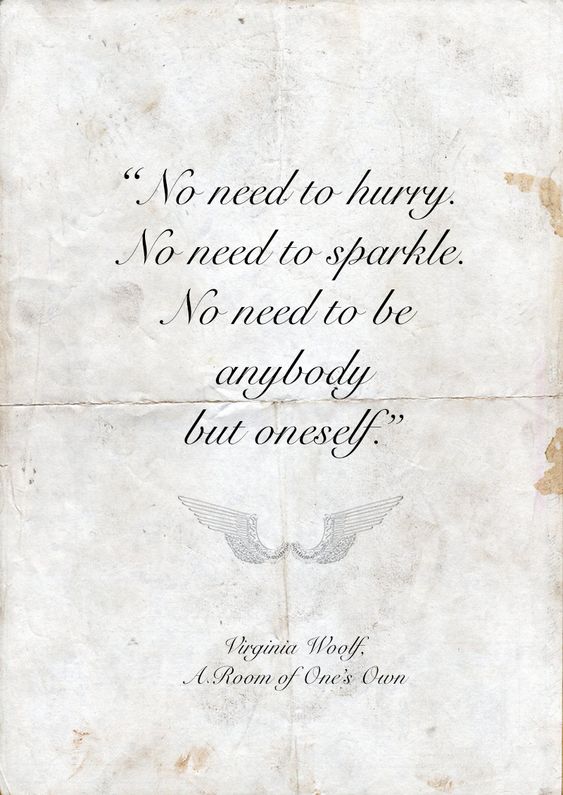
A woman must have money and a room of her own if she is to write fiction.

VIRGINIA WOOLF

I firmly believe Woolf’s statement to be true.

But what, I wonder, would she make of women’s lives in the twenty first century?  Ninety years after the publication of A Room of One’s Own, many things have improved for women in the western world.  Our access to education has improved, along with our employment prospects and our control of our own lives and bodies.

What I think women in the western world have lost control of, however, is our minds.

Lock up your libraries if you like; but there is no gate, no lock, no bolt that you can set upon the freedom of my mind.

VIRGINIA WOOLF

I would love to embrace this idea as a true representation of my self and my life, to punch my fist skyward and proclaim that my mind is entirely my own, that my freedom is guaranteed because I am not shackled by cerebral restrictions.

But I can’t.

Not quite.

I may have money I earn myself and a place to write (even if it is not an actual room), but do I have space in my own head?

There is just so much…stuff…to remember in any given day.

Remember to schedule a dental appointment. Drop off the dry cleaning. Pick up forgotten ingredients for tonight’s dinner. Replace a child’s gluestick for school. Sign permission slips for an excursions. Meet a work deadline. Return the library books on time. Change the bedclothes. Find light blue cardboard for a child’s project (no, not dark blue or royal blue or navy blue). Collect that undelivered parcel from the post office. Arrange a playdate before netball training and remember to buy oranges for the game. Pay the gas bill. Replace yet another gluestick (what, do they eat them or something?). Phone the electrician to get the laundry light fitting replaced. Feed the fish. And the cat. And the family. Buy a present for an upcoming birthday party. And a card. Take out the garbage and know which bin needs to be curbside on which day. Update the credit card expiration date on — wait, what was the password for that account again?

Virginia 2Our lives are so full, and are lived at such a relentless pace. We bandy around words and phrases like “mindfulness” and “mental load”, but do we ever have time to stop — let alone to imagine?
How can we write fiction if we have no headroom to allow the stories to form? How can ideas flow and characters develop and whole realms emerge from such cluttered minds?

Fiction is like a spider’s web, attached ever so lightly perhaps, but still attached to life at all four corners.

VIRGINIA WOOLF

I know my own fiction writing is informed, in part, by the life I lead — regardless of whether I am writing a children’s picture book, a longer story for older children, or working on the young adult novel I have been aiming to finish for some years.

Much of the time, however, my fictional projects lie immobile, suspended in that spider’s web as I attend to the myriad minutiae of everyday life that encroach upon it from all four corners. And more often than not, my own innate need to create is ignored in favour of other, far more basic needs — not just of my own — and it is not until I sense my fictional worlds are hanging by a single thread that I make time to write.

Virginia 3Even so, I remain hopeful.

I would rather snatch a moment here and there to write a paragraph, to edit a word or two, or to scribble down a new idea than to fill my pockets with stones and walk into the nearest river.

I am learning, slowly, to prioritise my fiction writing, even if it is — by definition — not real.

Because it is real to me, and gives my life deeper meaning.

And despite her own untimely end (which I may comprehend, but cannot ever condone), I think Virginia Woolf knew exactly what it was like not to have room in her head. Even so, in spite of this — or perhaps because of it — I believe she would have continued to encourage women generally, and writers particularly, had she lived to see our present day and age, just as she did in her lifetime.

Money is one thing, I think she would tell us.

But the room of one’s own — that sacred space needs to exist in your mind as well as in your world.

Therefore I would ask you to write all kinds of books, hesitating at no subject however trivial or however vast. By hook or by crook, I hope that you will possess yourselves of money enough to travel and to idle, to contemplate the future or the past of the world, to dream over books and loiter at street corners and let the line of thought dip deep into the stream.

VIRGINIA WOOLF


The Thrifty Fictionista Takes to Her Bed…

TF Adventure

I would MUCH rather be on an adventure than have the flu.

So, it finally happened.  I thought, when I got laryngitis a couple of weeks ago (much to the eternal — or perhaps infernal — amusement of my children), that I had done my time with lurgies great and small this Winter.  Or Spring.  Or whatever the damn season is, given that the temperature rocketed up to 34°C two days ago before plunging back to a wild and windswept 12°C.

Unfortunately, my own temperature has been vacillating just as unpredictably: influenza has me in its evil grip, and the Thrifty Fictionista has taken to her bed.  Still, rather than railing against the indignity of barely having the energy to get out of said bed, or boring you with my symptoms, I have managed to haul myself upright for a minute or two so I can tell you what has been keeping me sane for the past three days.

Books.

Books, books and more books.  And even though recently I have been reading things like Margaret Atwood’s The Handmaid’s Tale (which I freely admit I could not read in bed as I found that a bit too disturbing), and Virginia Woolf’s A Room of One’s Own (which I highly recommend — both as a read and a concept), and Jane Harper’s The Dry (which is as fine a debut novel as you’ll ever read as well as providing an unflinchingly accurate depiction of life in small outback Australian towns), I have — as usual — a confession.

TF Kell

I do wish I had a coat like Kell’s…

The Thrifty Fictionista can’t read such things when she is sick.

No, when I am sick, I need magic.

And so, the past few days have I reached for my Kindle (which, with its amazing capacity to deliver whole books into my waiting hands without leaving my bed, seems like magic itself) and buried myself in V E Schwab’s A Darker Shade of Magic trilogy.

On Wednesday, I re-read A Darker Shade of Magic, because it had been quite some time since I had dipped into the world of Red London.  Or Grey London or White London, for that matter.  And given the flu made me feel like I was already well on my way to Black London, I found myself wishing for a coat like Kell’s — you know, the one that you can turn inside out and every time it’s a different coat — and for the ability to wield Antari blood magic.

As Hasari…I wanted to whisper.

Heal…

TF Spells

Oh, for a working spell, not days stuck malingering in bed.

But the flu had other ideas, so I kept on reading and followed the thief, Lila Bard (you just have to love a girl who would like to be a pirate, don’t you?), and the magician Kell on their adventures through the various Londons, saving cities and rescuing (or was it resurrecting?) princes.

On Thursday, I started reading A Gathering of Shadows, and was gratified to discover that it was considerably longer than the first book, as the damn flu showed no signs of abating even when hit with hard core antibiotics and a decent-sized helping of The Bloke’s best Spaghetti Bolognese. I love that Lila did wind up becoming a pirate — ahem, I mean a Privateer — and thoroughly enjoyed meeting her Captain, Alucard Emery, and I relished the magic and mayhem of the Essen Tasch tournament.

And now it is Friday, and I have just downloaded the third book, A Conjuring of Light, hoping that it will bring me just that: light relief from being stuck in this bed.  Still.

So, without further ado, I am going to get on with it, not least because I need to lie down again…but also because I am grateful for the escape.  For the distraction.  For the adventure.

And — mostly definitely — for the magic.


Ivy, Oak and Ash

olivanders-2

Ollivanders…where the wand, as we know, chooses the wizard.

I’m writing this at my kitchen table, listening to a beautiful Ólafur Arnalds track he recorded with Nils Frahm. The music, with its high-pitched, bell-like tinkling, has an ethereal quality that sounds unmistakably like…Magic.

And then it occurs to me that this piece, relatively obscure as it is, has conjured up the memory of the opening bars of a much more famous musical score: John Williams’ overture to the original Harry Potter film, a movie filled with mystery and wonder, and more Magic than you could poke a stick at — particularly if that stick should be a wand.

Ah, Magic.

It’s such a powerful thing — such a potent, creative force.

Even though I know quite well that the Harry Potter novels and films are works of fiction, I also recognise them as works of wonder. Of a fantasy that I can — and do — quite readily buy into. And, as I’ve said before, I encourage my children to do so as well. I think that the late and ever-so-great Roald Dahl, who definitely knew wonder when he saw it, probably explained why best:

“And above all, watch with glittering eyes the whole world around you because the greatest secrets are always hidden in the most unlikely places. Those who don’t believe in magic will never find it.”


img_1713

Hogsmeade Village, Hollywood style…please respect the spell limits.

For me there can be as much Magic in a well-crafted sentence as there in a beautifully realised fictional world — complete with its own myths and history. But when The Bloke and I had the chance to take our girls to the Wizarding World of Harry Potter in Hollywood during our recent trip to the US, we both knew this was a opportunity to see some real Magic.

And it was.

We explored Hogwarts Castle, drank butterbeer at the Three Broomsticks, bought sweets at Honeydukes, visited the Owlery, and browsed through the broomsticks at Dervish and Banges.

And then we went to Ollivanders.

Ollivanders, as all self-respecting Harry Potter fans know, have been makers of fine wands since 382BC. Being a Ravenclaw myself, I could spend hours discussing the importance of the Ollivander family in history of European wandmaking or introducing you to the finer points of wandlore but that, one suspects, would be better done at another time. The most important thing to know, for the purposes of this post, is that the wand chooses the wizard.

img_2314

Our Wands, each pointing to the Hogwarts houses we most identify with: Gryffindor, Slytherin and Ravenclaw.

Or the witch, for that matter. Because when we came out of Ollivanders, the wands had well and truly chosen: Ivy for Marvel Girl, Oak for Miss Malaprop, and Ash for me. Not surprisingly, my wand is lying beside me on the kitchen table as a write. It is beautifully balanced, it is perfectly weighted, and it feels like it was made just for me.

And that’s the truly Magic thing, isn’t it?

But there are, as I discovered once again that day in Hogsmeade Village, many kinds of Magic…

After our visit to Ollivanders, Miss Malaprop strode purposefully towards Gladrags Wizardwear, where she proceeded to demonstrate her own considerable powers as she persuaded The Bloke to buy her a full set of Hogwarts robes (Slytherin ones, naturally) complete with house insignia and wand pocket, and some for her sister (Gryffindor, of course) as well. How does she do it? I wondered, as I struggled to calculate the cost of purchasing two sets of robes, plus tax, plus the exchange rate, plus the inevitable excess baggage cost associated with getting two large bundles of heavy black fabric back home…and I knew the answer in an instant: Miss Malaprop was utterly certain that we would let her have them before she even entered the shop, because she knew that deep down, we wanted them too.

olivanders-3

Basic Wand Motions…I think Arresto Momento would be one of the most useful spells I could have in my kitchen.

We all want to be part of something bigger than ourselves, bigger than all of us. We all know that there is real Magic to be found in shared experiences, particularly when they involve mutually suspended disbelief.

I know it’s not real.

And my kids know that, too.

(Really!)

But there is much to be said for the transformative joy that is produced when you allow the fictional to enter the everyday.  It’s why my kids have the words Nox  and Lumos on their bedroom lightswitches.  It’s why I’ll tell them I would love one of them to play Quidditch for Australia one day. It’s why Miss Malaprop and Marvel Girl got their Hogwarts robes (or they will on Christmas Day, at any rate).

And it’s also why our wands, which individually and specifically chose us, sit in pride of place in the rooms of our house that we use the most.  Our wands are tangible reminders that our differences make us as strong as our similarities, that our words and actions are powerful and must be wielded well, that there is Magic in us all.

Ivy, Oak and Ash.

Always.

olivanders

Ollivanders: makers of find wands since 382BC.