The Professor: Now on Wheels

For many and various reasons, it has been an age since I posted anything here. I’ve not been writing any Blue Jai’s Vignettes because I’ve been concentrating on editing my novel, and am glad to say I have only four chapters to go before that process is finished (for this run through, in any case). As any writer will tell you, the editing process can seem interminable, but it was necessary to strip thousands of words from my manuscript and I am glad to have persisted until the end is in sight.

But enough about that — I thought it was also high time to provide an update in our Travels with the Professor.

Yes! The Professor is still alive. Nearly ten years after his Alzheimer’s diagnosis, and just over a year since he finally went into care in a wonderful group home, my father remains with us in body. That body is now considerably larger than it used to be, because The Professor now struggles to walk or move, and generally gets around in a special electric wheelchair. It is also because Alzheimer’s is often accompanied by an ever-sweetening tooth, and the Professor is now particularly fond of ice cream.

His mind, of course, is another story. The Professor, once so voluble, has lost the ability to speak to us. He communicates using gestures, if he can, or with his eyes — which can still appear famously hawklike if he’s not happy.

Weirdly, however, the Professor has retained the ability to read aloud, which has led to my mother and I having one last shot at a different form of communication: I’ve started writing him letters. Nothing too long, printed in a decent sized font, and always including a picture of something relevant to whatever has been going on recently, like my daughter’s high school graduation. My wonderful mother then prints these letters out, and takes them to him to add to a display book so he can look through them when he wants to.

The other thing I am including in each and every letter is a paragraph assuring the Professor that we are all doing well, that we are looking after each other the way he would want us to, and that — in particular — I am making sure my mother is OK. We’re not sure what is keeping the Professor with us, but we hope that this information will somehow filter through the tangled passageways of his brain and let him know we’re OK with it if he decides to shuffle off this mortal coil at last.

Ten years is a long time to live, if you’re slowly but surely slipping away.

There is really not much for me to report on how he is going, or what he is doing, because doing so would revolve around lengthy descriptions of an old man nodding off, napping, or being fast asleep.

So, I thought I’d finish this post with some random musings about what I’ve learned in the decade since the Professor’s diagnosis.

  • A human mind is a strange and unusual thing to possess, especially when it is being ravaged by disease. Witnessing the changing parade of residents at the Professor’s group home has shown me Alzheimer’s and other forms of dementia affect people in highly individual ways, destroying some neural pathways (such as the ability to see, swallow, or speak) while allowing others to persist. You can never be sure what will short-circuit next, or what will unexpectedly connect.
  • I am surprised by the things I can accept as being normal. For example, I am no longer bothered by the fact the Professor does not recognise me. I genuinely thought that would be heartbreaking for me always, but it turns out it’s not. Similarly, I am not worried by the fact that the gifts I give him now are appropriate for children — like fidget poppers, soft toys and helium balloons. I have to meet the Professor where he is at, which means giving him something to do with his hands or providing him with something to look at.
  • Grieving for someone while they are still living is weird, and sometimes unsettling. Please understand I am not writing about this to garner sympathy, but to point out that it can be disconcerting to find yourself overcome by feelings normally associated with bereavement when the person you love remains resolutely alive. Simply put, my father is still living, but my Dad has been gone for many years now. I miss Dad, and I mourn him — even when he’s right in front of me.
  • And a final thought, which there is no getting around and never has been: Alzheimer’s completely and totally sucks.

And there you have it. As I said, I’m not writing this to attract attention or seek sympathy, but to draw awareness. If this post makes it easier for even one person to understand what it’s like to have a loved one lose themselves to Alzheimer’s, I know that would make the Professor happy. And if my story is similar to your own, and this post helps you feel like someone out there understands a small part of what you’re going through, that would make me happy.

Mind yourselves,

BJx

Blue Jai’s Vignettes #9

I’ve been pacing, and the only reason no one has told me to stop is they can’t hear my footsteps over the rain drumming on the roof.

Or maybe because they don’t want to talk to me, or acknowledge my existence, my patently obvious pain.

No one wants to tell me anything at all.

They’ve been missing for half the day and the river is still rising, the ravine is getting slipperier, and the road into camp is becoming treacherous.

Nothing but rain from an already leaden sky.

Nothing but wind whipping the treetops into a frenzy. They look like demented dancers, thrashing and flailing their arms.

I saw whirling dervishes once, in Turkey. Beautiful Sufi mystics turning in even circles, white skirts swirling, faces alight with the promise of divine connection, one hand turned towards the ground and the other towards their god.

Would it make Caleb and Miller reappear, if I tried dancing like that? If I tried spinning on the spot, my red rain jacket flying out behind me, my wet hair tangling and my sodden bootlaces tripping me? Would anyone understand what I was attempting, how desperately I was trying to ground myself and contact the divine, all at the same time? Wound they even know what a whirling dervish was?

Everyone here is all business and crackling handheld radios, as squared off as their search areas. Outside I see their big pick up trucks with bigger tyres, mounted with bright lights and brimming with equipment. Sat navs and satellite phones and spades.

No one seems to believe me when I say I told them not to go. When I recall mentioning the roadworks on the interstate, and how their sleeping bags would get wet, and the weather forecast. Always the weather forecast.

No one hears when I ask how long it will be until dark.

It’s like the words are coming out of my mouth but they’re in a foreign language: I speak Parent, fluently, and they only speak Park Service.

Or Paramedic.

And so I pace, trying to match my steps with the rain still hammering on the roof, the words still yammering in my head…I told you not to go…I told you not to go…and it is my mind that whirls with thoughts of Caleb and Miller, still out there somewhere, and their sleeping bags are all wet and did I mention the weather forecast?

And now even I can see it won’t be long until dark…

Blue Jai’s Vignettes #7

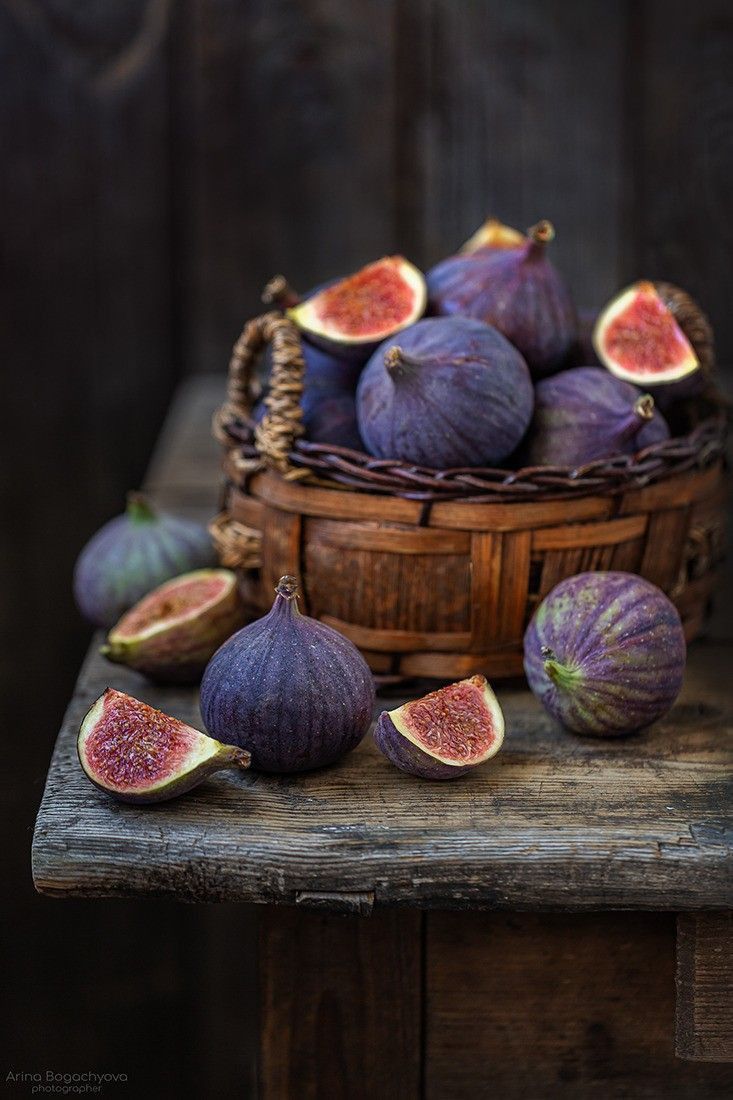
She was never sure exactly how the figs arrived that day, but when she got home she found a pile of ripened fruit overflowing from unfamiliar basket on the kitchen table, purple with promise.

No one locked their doors in those days. That said, if a neighbour had something for you they would usually leave it at your door if you were out rather than bringing it inside. Had the figs been left on the doorstep, however, their perfect globes, all swollen with sweetness, would have been ruined by birds and ants and other creatures.

The gift of figs felt extravagant.

She was grateful for them, though a little peturbed — particularly as the days passed and no one in the village mentioned them or asked whether she had enjoyed them. She had been used to receiving small gifts, especially of food, after her husband had passed away. People would prepare a little extra for her when cooking for their families, making sure she was nourished during her grief.

But the gift of figs felt different, and far more intentional.

She pondered who might have left them for her as took one of the velvety figs in her hands and sliced it open to reveal the jewel-toned flesh within. The earthy fragrance of the fruit was intoxicatingly evocative, reminding her of golden evenings in summers long past. The scent transported her to a different time and place, when she had walked long-limbed and barefoot through a clifftop orchard at sunset, wind and salt spray from the ocean below in her hair.

Her heart skipped a beat.

She looked more closely at the basket holding the figs, wondering if it was the same one she had been handed all those years ago…

A Friday Morning Coffee with Keef

KR 7

Today’s imaginary interviewee: Keith Richards

I’m never quite sure who’s going to show up for my peripatetic (and completely invented) brain-picking sessions with people I admire. After my last foray into imaginary interviewing — when I intended to focus on Virginia Woolf and ended up rambling on about the Roman Emperor Marcus Aurelius instead — I sat down one day not much later and made a list of people I thought I might like to “meet”.

I made two lists, actually, divided simply along the lines of life or death.

And armed with those lists, I quickly realised that it is much simpler to write about a person who is no longer gracing the Earth with their presence, particularly if they have been dead for quite some time.  In the era of #metoo (fundamentally important as that movement is), it is far more challenging to delve into the thoughts of a living person, particularly when they may or may not end up being outed as a sex pest.

KR 2

True. But you also see my sex pest problem…

Imagine my surprise, therefore, when I turned up in my little patch of cyberspace this morning and discovered Keith Richards waiting for me.

Not really, obviously.

But after spending an evening this week watching Olé Olé Olé!: A Trip Across Latin America, the Rolling Stones’ documentary about their 2016 tour which culminated in their historic Cuban concert, there he was.

Keef.

With plenty, as always, to say. And, one can only assume, probably not all that bothered about whatever acusation anyone would level at him — the man, as he freely admits, has lived long and hard, and outlived many it was readily assumed he would predecease.

KR 6

Good question. How do you play with your time?

I’m not what you’d call a diehard Rolling Stones fan. I don’t have a standout favourite Stones song, but harbour soft spots for several (depending mainly on my mood). I know better than to put myself in the middle of any pointless Beatles vs Stones battles, because there’s actually no contest: the world is a better place for having both bands (I stand firmly with the girl from the taco ad on that one…“¿Porque No Los Dos?” ). And I can’t say I prefer any one of the Rolling Stones over another: I tend to appreciate them collectively more than I do indivdiually.

And yet, I have to admit there is something undeniably intriguing about Keith Richards.

Unlike the 2015 film Under the Influence, which focussed solely on Keith himself, the Olé Olé Olé! doco is about the whole band, though it does shift (seamlessly, I might add) from ensemble pieces to individual portraits of the band members. The juxtaposition of these different points of view enhances both: the concert footage of stadiums seething with fans is made all the more massive, while the one-on-one sequences achieve greater intimacy and poignancy. As the band wends its way (via private jet and with police escourts) through South America, we glean insights from each member into the various countries they are visiting and how they have changed during the fifty (yes, fifty) years that they have been performing there, into life on the road, and into life itself.

KR 8

Richards in Lima, 2016.

There is a beautiful moment in the film when Richards can be seen, initially from a distance, sitting poolside at a clifftop hotel in Lima, playing an acoustic guitar. The pool is turquoise, his shirt scarlet, the sounds flamenco. There is no doubting his musical ability: this is a man who, to use Malcolm Gladwell’s phrase, has done his 10,000 hours, playing everywhere from small pubs to gigantic arenas, or simply noodling away with an instrument and an endless succession of cigarettes, whiling away the time. Richards’ observation of Lima is that it has changed, markedly, since he first visited it in 1968: cities spring up “like tombstones” he says, as the camera pans out to reveal a skyline full of skyscrapers, resembling a cemetary more than one would like to admit.

Richards is a man who, quite clearly, knows how lucky he is — he seems, genuinely, to appreciate the trappings of fame he gets to enjoy, but he also appears to be acutely aware how fortunate he is to be doing what he loves (sorry, make that absolutely loves) for a living, and to be doing it with a bunch of blokes he has been hanging out with for five decades.

There is something that sticks us together. It’s nothing you’d ever catch us talking about. I feel I’m awfully blessed, really.

KEITH RICHARDS

KR 9

There’s a glimmer of it in here….

There is an occasional glint in his eye or a throaty chuckle that betrays the fact that he doesn’t half mind his own notoriety, either, but it’s nothing malicious — if anything, now that Richards is aged 75, these small glimpses remind me in some way of my own globetrotting gypsy grandmother who, at a similar point in her life, may well have had the same sense of mischievous glee in behaving in ways that were not generally considered to be age appropriate.

And finally, beneath all of this is a strong, unspoken sense that Richards knows just how lucky he is to be alive.

And that, for my money, is something worth remembering.