
I’m not entirely sure who said it (though I strongly suspect it was C S Lewis), but there’s an old saying that goes something like this:
Isn’t it funny how day by day nothing changes, but when you look back everything is different?
It doesn’t feel like more than a month has gone by since I sat down and wrote the first of these THREAD posts, but here I am again. Only a few weeks ago that I was musing about raising teenagers, reading Jonathan Franzen and reminiscing about our (now far less) recent trip to New Zealand. That holiday feels like an eternity ago, now we are well and truly in the swing of all things school and work.
Since it’s been a busy month, I’ve got a bunch of things buzzing around in my head — so best to let them out.
THINK | HEAR | READ | EAT | ADMIRE | DO

This month I have been Thinking about the imminent retirement of Adam Bull from the Australian Ballet. I have genuinely enjoyed watching him dance over the years, and am sorry the blasted pandemic meant I had to put my ballet subscription on hold, meaning I will probably not get to see him take the stage again. I’ve never been a dancer (my body favours sporty stuff rather than the life balletic), but I have come to love and appreciate the athleticism, grace beauty of both classical and contemporary ballet. I will be sad to see Adam Bull’s tall and striking figure leave the company after more than two decades, but am grateful to have seen him perform.
I’ve also been thinking about how various artforms inform and inspire each other, largely because I have just finished reading Maggie O’Farrell’s book The Marriage Portrait. The novel opens with Lucrezia de’ Medici, Duchess of Ferrara realising — on page one, no less — that her husband intends to murder her, and that the portrait he has commissioned of her is being painted in isolated castello precisely because that is where he intends to carry out the fell deed without anyone realising or interfering. Needless to say, I was pretty much hooked from the initial paragraphs and finished the book in a night.
The painting which inspired the novel is generally attributed to Florentine artist Agnolo Bronzino, and also served as the stimulus for Robert Browning’s poem “My Last Duchess”. Like O’Farrell’s novel, the poem has an equally memorable opening:
“That’s my last Duchess painted on the wall,/Looking as if she were alive.”
When I first looked at Bronzino’s portrait, I was struck by how modern Lucrezia appears — and how worldly, despite her youth. She did not survive her marriage to the Duke of Ferrara, and died suddenly at the age of 16. Lucrezia’s dress in the painting might be dreadfully outmoded, but her expression is intelligent and her gaze direct. I went down quite the rabbithole trying to figure out who she reminded me of, and stumbled across this comparison, which seemed rather apt:

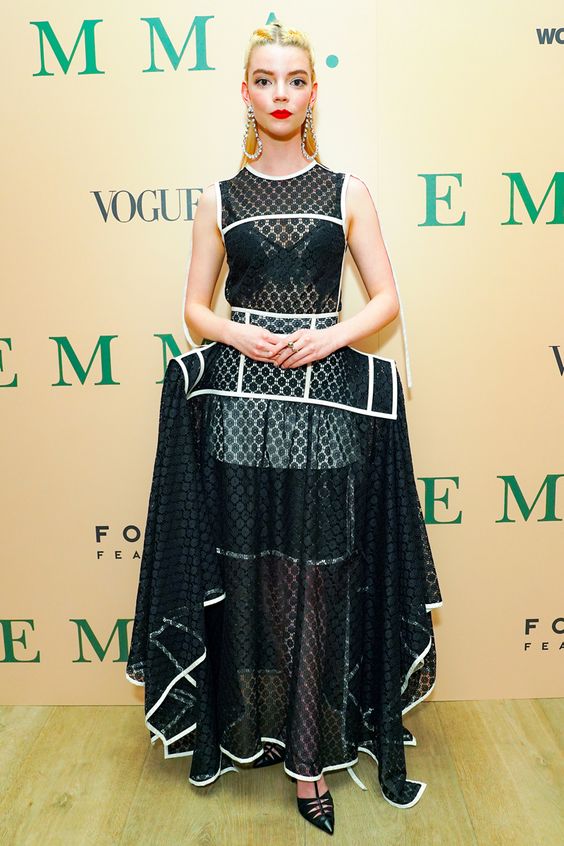
Fortunately, Anya Taylor-Joy is very much alive, and I suspect she’d do a great job of playing Lucrezia de’ Medici if The Marriage Portrait ever made it to the big screen — much like Scarlett Johansson did in Girl with a Pearl Earring, which was based on Tracy Chevalier’s novel of the same name, which in turn was inspired by the painting by Johannes Vermeer. Or how Adam Bull played the Prince in Tchaikovsky’s ballet The Sleeping Beauty, which was based on the fairy tales of Charles Perrault.
Is everything created somehow borrowed, rather than brand new? I’m not sure…but it’s certainly given me a lot to think about.

I finally got around to Hearing this interview Helen Garner gave Annabel Crabb late last year. Recorded to mark the occasion of Garner’s 80th birthday, it is a thought provoking hour of insights into the life of artists generally and writers particularly. I suspect one of the main reasons I enjoyed listening to this so much was that this particular interview was a discussion between two women I admire (and whose general vocabulary I covet). Then again, in my experience it is always pleasurable to listen to intelligent, articulate and opinionated people discuss…things. Anything, really. If they are speaking of something about which you know nothing, you have the opportunity to learn something new. Perhaps more importantly, if they are discussing something with which you are familiar, you may gain a fresh perpsective or better understanding of someone else’s point of view.
In any case, Garner spoke candidly about many things, including the self-doubt which plagues her whenever she is writing something new, the book she believes to be her worst, her views on feminism, the controversy provoked by The First Stone and her understanding of how and why that particular storm erupted and how it appears differently to her now. She also talked about her numerous journals, leading Crabb to extract a promise from her not to burn any more of them. I found the interview thoroughly entertaining — much as I did Garner’s book Everywhere I Look, which just so happens to contain a superb extended essay about the Australian Ballet.

In addition to Maggie O’Farrell’s The Marriage Portrait, I have been doing quite a lot of Reading lately. Truly excitingly, I strongly suspect some of the books I have read lately are Great Books (and yes, those capitals are Definitely Required). Last weekend I finished reading Ian McEwan’s lastest, Lessons, which was brilliant but requires further reflection before I write about it. A few weeks ago, however, I finished Shehan Karunatilaka’s outstanding novel The Seven Moons of Maali Almeida, which won the 2022 Booker Prize. This book got under my skin, and well and truly into my subconscious. Quite literally, I found myself dreaming things based on the pages I had read before I went to sleep — and, not surprisingly given the novel details the post-mortem exploits of a war photographer, they were not particularly pleasant things.
The Seven Moons of Maali Almeida is both a ghost story and a murder mystery, but is neither in the traditional sense. Set against the backdrop of the Sri Lankan Civil War, the novel demands you engage with all sorts of things including politics, religion, gender, class, friendship and family dynamics — the works. Despite concerning the exploits of a dead photographer during his first week an the Afterlife populated by supernatural beings, the book brims with roiling mass of humanity. This is a novel of colour and movement, peppered with dialects and idiomatic speech, bursts of hilarity and moments of adroitly observed insight, like this one:
Evil is not what we should fear. Creatures with power acting in their own interest: that is what should make us shudder.
I highly recommend The Seven Moons of Maali Almeida. A word to the wise, however: if you do choose to read it, really go with it. Suspend your disbelief and you’ll be in for quite a ride.
I next read Leigh Bardugo’s book Hell Bent, her sequel to Ninth House. Even though this is a fantasy novel with substantial supernatural elements, reading Hell Bent after The Seven Moons of Maali Almeida felt like returning to a reassuringly familiar world: not only is the geographical setting real, but the temporal setting is also close to present day. Additionally, the main characters are distinctly human…until they’re not. No spoilers here! Though I’m genuinely looking foward to the next instalment of Galaxy Stern’s adventures.

In terms of Eating, I’ve been getting a lot more organised and have resumed menu planning. Not only does this save me time and reduces my mental load, but it also boosts the variety factor when it comes to family meals. The added benefit of posting the week’s menu ahead of time is that other family members can also pitch in and start meal prepping if needs be (not that this has ever happened…I live in hope). Knowing I have increased work commitments coming up next term, I am making an effort to get into good habits now and and am reminding myself of meals I can cook ahead or dinners that are “one pot wonders”. In this vein I’ve also been calling to mind various traybake recipes, and have been figuring out what (other than muffins) I can make as lunchbox treats.
Since we’ve had a long hot March, we’re still enjoying our salad days — especially the salads featured in Hetty McKinnon’s brilliant cookbook Community: Salad Recipes from Arthur Street Kitchen. I don’t think I own a single coobook I have made more meals from than this one, and our most recent discovery from this gem is Pumpkin with Chickpeas, Toasted Coconut and Lemon Tahini (except we ditched the Lemon Tahini dressing in favour or a bit of extra lime juice). It’s a Fijian inspired salad, packed with fabulous flavours and topped with the satisfying crunch of toasted pepitas. It’s also truly delicious.
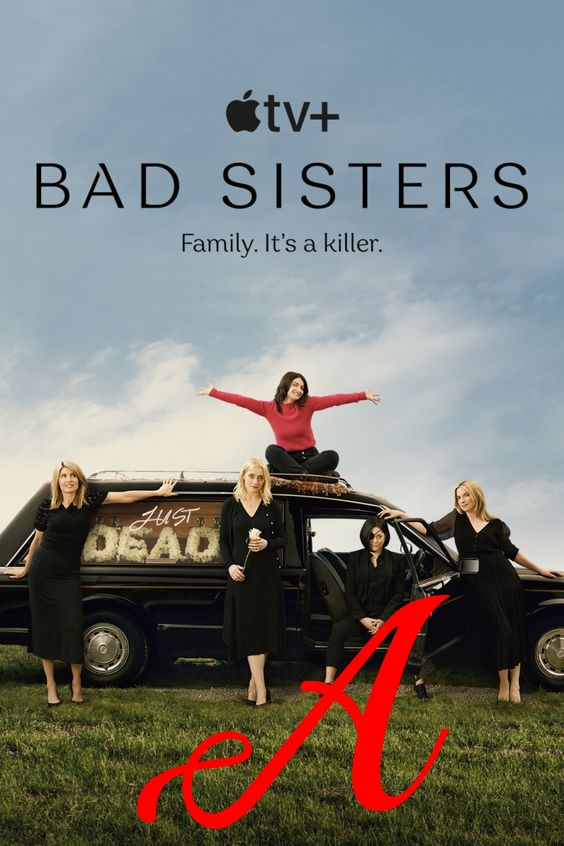
Admiring is one of my favourite sections of the THREAD, and this month I cannot go past the brilliantly and blackly comic television show Bad Sisters. Set in present day Dublin and featuring five sisters, the first episode features the funeral of John Paul — husband of the second eldest of the Garvey sisters, Grace. It turns out JP, during his life, was quite a piece of work (abusive, controlling, manipulative and generally nasty) so it may come as no surprise that the storyline flip flops between the past — during which all four of Grace’s sisters have some sort of a go at bumping off their evil brother-in-law to rescue their sister and niece — and the present, when a harried and hapless insurance agent is desperately trying to prove JP’s death has been caused by the Garvey sisters’ foul play so he does not have to pay out a life insurance claim. It is not immediately apparent who or what has killed John Paul, but the show is so darkly funny and entertaining that Marvel Girl and I binged the ten episodes over the course of a single weekend.
Back at the beginning of the month I also found myself admiring the glorious scenery that forms the backdrop to Yellowstone. I had been putting off watching Season 6 of this fabulous show, because I didn’t want to watch an episode a week. (I also suspect I was feeling slightly superstitious about watching the most recent season because I watched the other five while I was isolating when I had COVID, and a fresh wave was hitting around the time Season 6 came out). In any case, I adore the scenery in the show — which could probably, given how many people fight over the land in Yellowstone, be counted as a character in itself — particularly as it reminds me of the country near where I spent part of my childhood when our family moved to Canada for a couple of years. So, as it turns out, I watch Yellowstone the nostalgia it evokes for me just as much as the drama — and for Kelly Reilly’s vivid portrayal of badass Beth Dutton. Just as an aside — did you know Kelly Reilly is English? Her accent in the show is pretty tight.

And that brings us, as always, to Doing, though this month one of the main things I have been doing is waiting for and then celebrating the return of another stellar television series: Ted Lasso. Season 3 is landing at last, and not a moment too soon! There are so many things that I (along with the rest of the known world) love about Ted Lasso. The writing is so sharp it sparkles, and the performances — especially now we are three seasons in — are so well-honed they truly shine. Rather than fangirling at length over the cast, because I can’t think of a single one of them I don’t love, let’s just leave it by saying there are so many lines from this show that have found their way into our family’s daily vocabulary — not least of which is simply, “Oi!” — that I can’t imagine life without Ted Lasso. It’s that good.
Other things I have been doing have included making a concerted effort to maintain good hydration and to keep stringing together sessions with my personal trainer. PT sessions are easier to keep up with (you schedule regular sessions, you turn up: “Simples” as the meerkats say). Drinking enough water? You’d think it would be so straightforward, but making and sustaining this habit is taking me longer than I expected. I am incredibly grateful to my girls, who thoughtfully presented me with a large Ravenclaw drinkbottle for my birthday, because I now try to chug my way through this several times a day. I’m getting better with hydration, and I’m deadset sure it will be worth the effort, so…go me?!
Anyway, we’ve reached the end of the THREAD for March 2023. Like a piece of string, I’m never sure how long it’s going to be and this one has been a bit of an epic, (so good on you if you’ve stuck with me and got this far), so my head is definitely less “buzzy” than it was when I started. As always, I’d love to hear what’s buzzing around in your head or what you’ve been THREADing your way through, so leave a comment if you’d like to.
Until next time, mind yourselves!
BJx





 Blue Jai: