Blue Jai’s Vignettes #7

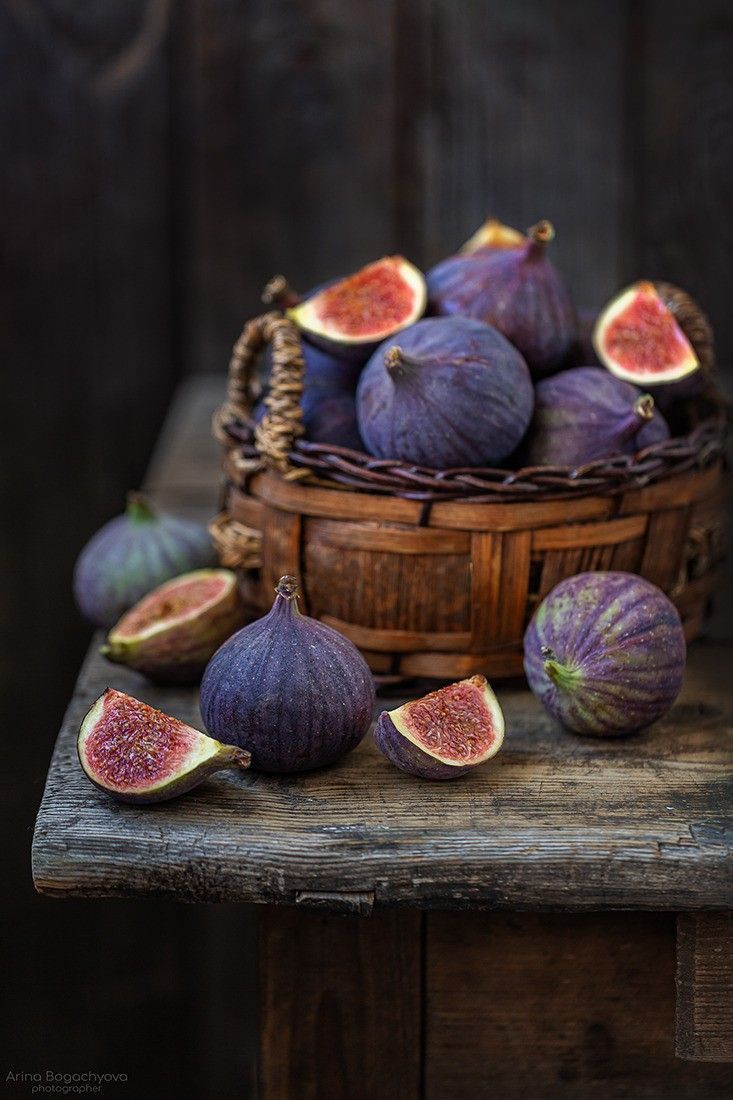
She was never sure exactly how the figs arrived that day, but when she got home she found a pile of ripened fruit overflowing from unfamiliar basket on the kitchen table, purple with promise.

No one locked their doors in those days. That said, if a neighbour had something for you they would usually leave it at your door if you were out rather than bringing it inside. Had the figs been left on the doorstep, however, their perfect globes, all swollen with sweetness, would have been ruined by birds and ants and other creatures.

The gift of figs felt extravagant.

She was grateful for them, though a little peturbed — particularly as the days passed and no one in the village mentioned them or asked whether she had enjoyed them. She had been used to receiving small gifts, especially of food, after her husband had passed away. People would prepare a little extra for her when cooking for their families, making sure she was nourished during her grief.

But the gift of figs felt different, and far more intentional.

She pondered who might have left them for her as took one of the velvety figs in her hands and sliced it open to reveal the jewel-toned flesh within. The earthy fragrance of the fruit was intoxicatingly evocative, reminding her of golden evenings in summers long past. The scent transported her to a different time and place, when she had walked long-limbed and barefoot through a clifftop orchard at sunset, wind and salt spray from the ocean below in her hair.

Her heart skipped a beat.

She looked more closely at the basket holding the figs, wondering if it was the same one she had been handed all those years ago…

All Roads Lead to Rome

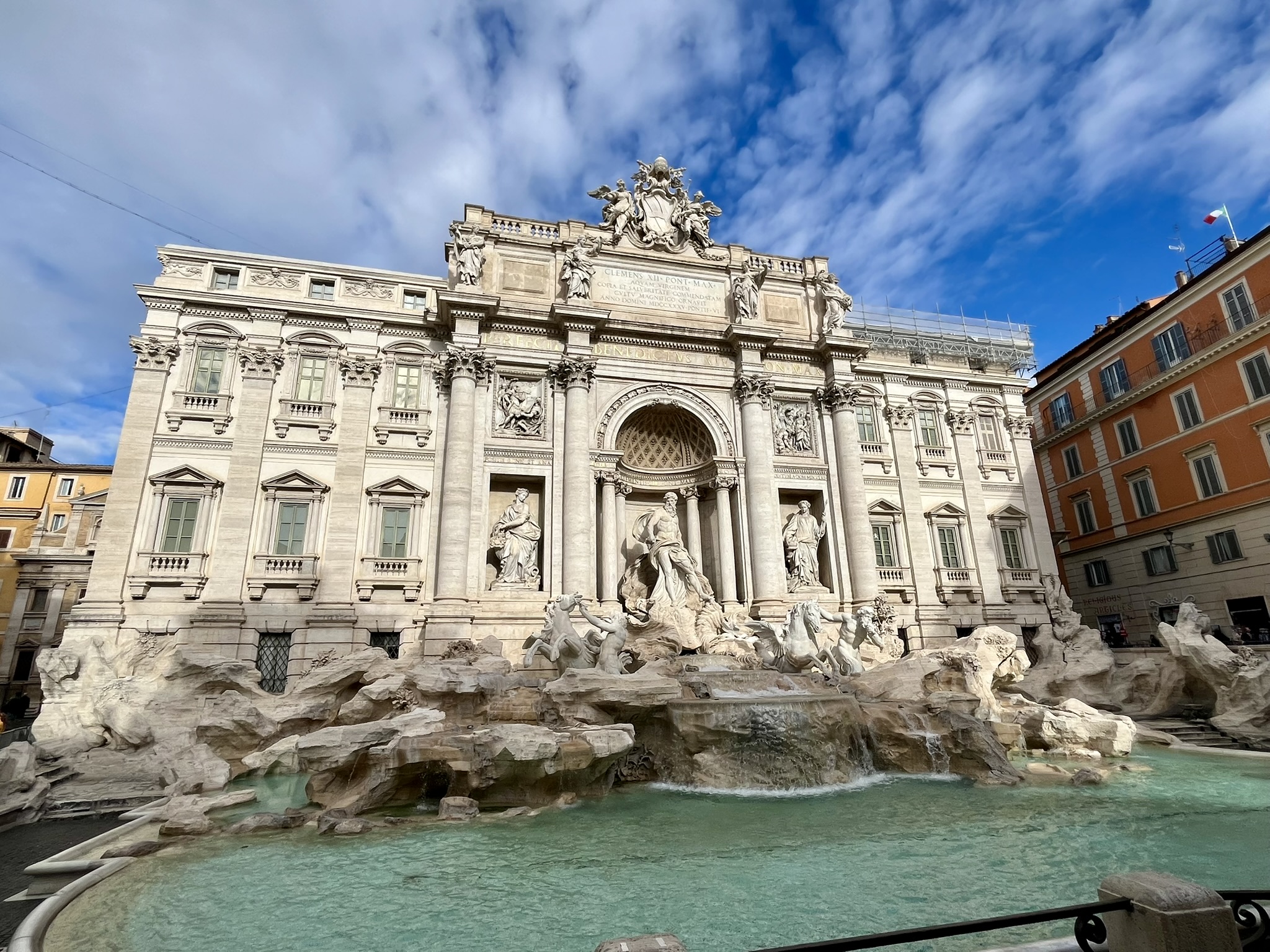
There is an old pagan ritual designed to appease local water deities which thrives to this day in the beating heart of Rome. People stand with their backs to the glorious splendour of the Trevi Fountain and toss a coin with their right hand over their left shoulder into the water. One coin, they say, guarantees your return to Rome. Two coins are meant to increase your chance of finding true love in the near future. And three coins offer a combination of the first two: that you will return to Rome, find love in Rome, and get married in the Eternal City.

I first tossed a coin into the Trevi Fountain 28 years ago, not long after I had finished an Arts Degree which allowed me to complete a double major in English and History. I spent three years sailing through seas of literature from many different lands and time periods, discovering all manner of other cultures, but learning about the history of Rome was something I returned to each and every year I spent at the University of Sydney. I felt like I was worlds away from Europe — and in many ways, I was. But the Eternal City was a source of fascination for me, and so it remains.

A couple of months ago, The Bloke and I embarked with Marvel Girl and Miss Malaprop on a European adventure, one I had spent many years wishing for and many months planning. Our first stop, not surprisingly, was Rome. Australians are resigned to the fact that when we travel, it takes ages to get any where. Let’s face it — it takes less time for a Sydneysider like myself to fly to New Zealand or even Fiji than it does to Perth. But after the better part of an entire day spent in airports and on planes, I was beyond excited to head out the first night we arrived in Rome to show The Bloke just what I had been raving on about for all these years.

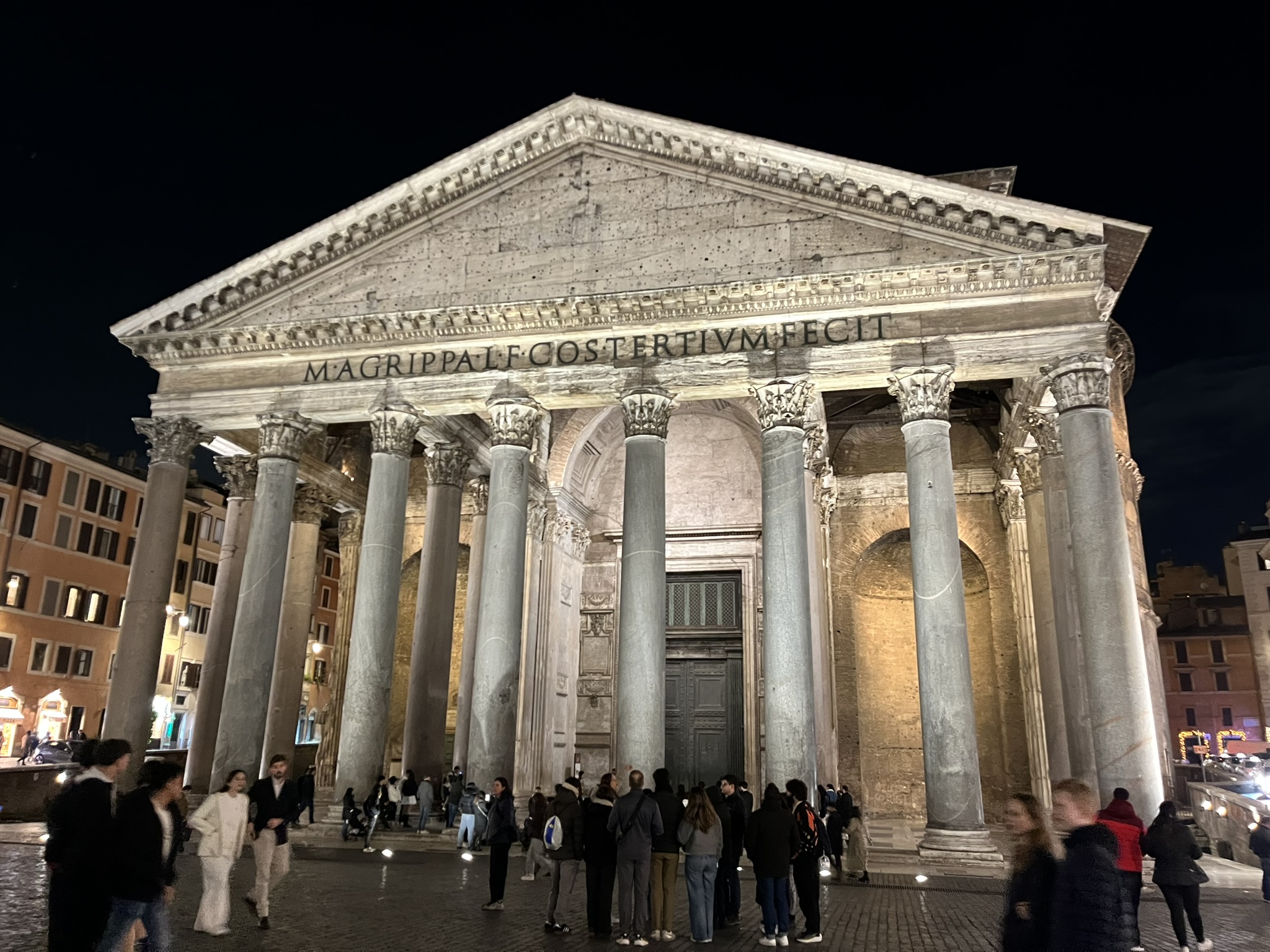
It was chilly, that November evening, with winter well on the way. But I love Rome, and Rome — I suspect — loves me. Without looking at a map or my phone, I led The Bloke first to the vast expanse of the Piazza Navona, with fountains by Bernini and Boromini and others, and its obelisk pointing high into the night sky. I explained the piazza got its shape from the Stadium of Domitian beneath it, where chariot races were run, then took The Bloke onwards through winding cobbled streets until we came to another, smaller piazza and came face to face with the Pantheon. It was the first time he had seen a building from the second century with his own eyes and, despite the jet lag and fatigue, I saw the moment when the penny dropped: that we get to walk around these places, and see inside them, and know that other people have lived and breathed and talked and laughed here — exactly, precisely here — for thousands of years. We can stand in their footsteps, however invisible, and feel the same sense of awe.

The Bloke was deep in thought as we made our way back to the hotel and our children, safe and snug indoors. And beneath the hubbub of Roman traffic and chattering tourists, I felt like I could almost hear Richard Harris speaking his beautiful words as Emperor Marcus Aurelius from Gladiator:

There was once a dream that was Rome. You could only whisper it. Anything more than a whisper and it would vanish…

But it didn’t vanish, and I was there again — in Rome.

And the Eternal City felt strangely like home.

Blue Jai’s Vignettes #6

Paisley didn’t particularly care for wash day, especially in late October. By the time she hauled the bedsheets onto the line her hands were chapped, bright red against the white linen, and her face felt much the same. The wind had picked up already, whipping the prairie grass into a writhing sea of grey green.

Winter was well and truly on its way to Milk River.

Snow already capped the Sweetgrass Hills across the border. Kátoyissiksi, the Blackfoot called them. Paisley caught glimpses of the peaks between gaps in the sheets as she pegged them steadily on the washing line, the point of West Butte rising high above the others. In her fifteen years, she had never known any other view.

Paisley’s mother had gone into Milk River township for groceries, and her father was working one of the further flung fields of their farm. The canola had just been brought in, and her dad was finishing up the harvest before the snows began their inevitable fall. Her younger brother, Tyson, had begged to go along with their mother, to watch the harvest being loaded into the massive grain elevators on the outskirts of town.

There was no question Ty would take over the farm when he was old enough. The only reason her brother had learned to read was so he could consult the Farmer’s Almanac and join in conversations with his father and grandfather about weather predictions, crop rotations and soil quality.

Paisley had learned to read for a very different reason.

She eased one last crumbling wooden peg onto the line, securing a pillowcase against the whipping wind. A novel was already tucked into the deep pocket of her pinnafore, an Agatha Christie mystery whose worn pages Paisley had already read several times before. Death on the Nile was preferable to the Farmer’s Almanac any day of the week.

Grabbing an apple from the wizened tree at the back of the farmstead, Paisley stowed the wicker washing basket back in the wash house and latched the gate on her way out. Guessing she had less than an hour before her mother’s battered brown Oldsmobile lumbered into the garage, she took off at a run. Paisley’s favourite place to sit was inside a clump of juniper bushes overlooking a bend of the Milk River itself. There she could hide herself away, observing the off-white waters of the river rushing by, surrounded by hoodoos and cliffs which — if you knew where to look — were inscribed with ancient petroglyphs.

Paisley knew where every last engraving was, knew the outline of the rocky outcrops as well as she knew the back of her own hand. But today, just for a while, she was about to rejoin Hercule Poirot as he approached Abu Simbel, and the Milk River suddenly looked very much like the Nile…

Blue Jai’s Vignettes #5

Alethea had been walking for days, and she could feel it in every muscle of her body. Her pack sat heavily on her back, the leather straps digging into her shoulders. Her boots, waterlogged after fording the many streams that criss-crossed the forest, felt like twice their normal weight as she slogged her way along the Kingsway.

The mouldering leaf litter smelled dank and vaguely rotten as she trudged along, and the morning mist seeped into her clothes.

Everything felt damp.

Alethea was also beginning to feel cold. She had not been able to light a fire since she entered the forest three days earlier. The golden sundrenched wheat fields had given way to coppices and tree-lined glades, and as Alethea had ventured onwards the woods had grown steadily thicker and darker. Mists clung to the trees, giving way to drizzling rain more often than not.

The Kingsway wound through mile after mile of forest. Alethea had been keeping to the edge of the path, ready to melt into the undergrowth at a moment’s notice. She walked quietly and deliberately, but after spending so much time in the deep quiet of the woods her footfalls thudded in her ears, along with her heartbeat — the thumping in her chest keeping time with the tramping of her feet. All she had to do was keep putting one foot in front of the other, and make it to the Silver City before Samhain.

Even though she had not seen another soul since entering the forest, Alethea remained alert: the Kingsway was the only route through the dense woodland, and she was well aware a young woman making the arduous journey alone was an easy target. As the drizzle gave way to an unrelenting downpour, Alethea sighed and pulled the hood of her jacket further over her face, grateful for the double layer of protection the cowled neck of her garment gave her. She plodded onwards, resolutely dismissing thoughts of a warm fire, dry clothes, and a hot meal.

A flash of red caught Alethea’s eye through the rain — a robin, the first creature of any kind she had seen in many miles, had flown directly across the path in front of her. Alethea stopped in her tracks and watched the little bird as it hopped from vine to branch, making its way up the slope on the right hand side of the path. The rain eased momentarily, and Alethea glimpsed something unusual beneath the dripping bough of the oak the robin had just alighted on: the beginnings of a stone staircase.

Alethea looked up and down the Kingsway, even though she was quite certain she was alone, and quickly made her way across the path. Scrambling through the sodden undergrowth, inwardly cursing the wet branches lashing at her face and body, she soon arrived at the place where the stone staircase began winding its way upwards between mossy rocks. The robin was hopping his way up the steps ahead of her, the feathers of his breast flaring red against the grey stone.

Alethea’s breath caught.

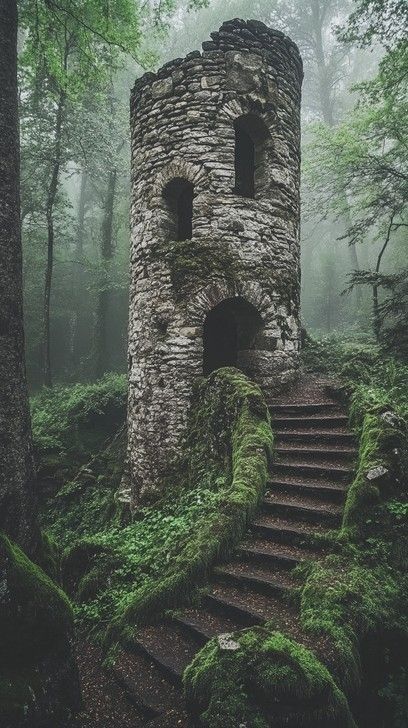
At the top of the stairs was a small, circular tower with an arched doorway and two similarly shaped windows set into the wall above. She crept upwards, taking care not to make any sound, and peered at the archway. Alethea could see rusted hinges on the side of the doorway, and realised the wooden door that must have once stood here had long since rotted away. She sniffed carefully: there was no scent of smoke, of food, of anything other than the decaying leaf litter that layered the forest floor.

With a final glance behind her, Alethea took a deep breath and stepped inside the tower…

Blue Jai’s Vignettes #4

Ellie really liked Joe, but she wasn’t sure how to tell him.

When he’d arrived at Crickwood High at the beginning of second term, heaps of girls had been interested in him: swarming around, waiting in clusters for the bus, all trying to figure out who he might be into.

Joe was tall. He was reasonably well muscled. He had curly hair which flopped in a slightly dorky but adorable way into his eyes. He looked nice, smelled nice, was nice.

And yet, not long after arriving at Crickwood, Joe had decided the gaggles of girls at the bus stop weren’t worth his time, and had apparently — inexplicably — chosen to befriend Ellie instead.

Ellie now suspected the fact she had been wearing a muscle tee saying “BOWIE” provided the biggest clue as to why Joe had slung himself into the seat next to hers on the bus one afternoon.

“You a fan?” was the first thing he’d asked her, nodding at the rainbow of letters emblazoned across her chest, which included — of course — a lightning bolt in place of the “I”.

Ellie had attempted a nonchalant shrug in response, deciding after one sidelong glance into Joe’s blue eyes there was no way she was admitting the Bowie tee was actually her mother’s.

“I guess. I like a lot of different music.”

“Yeah, me too.”

“Hunky Dory.”

Joe had laughed — not at her, but with her — appreciating the fact that she had gone there, making the corniest of jokes. And ever since that day, they sat together as they rode the bus home.

Music was what they talked about. Mostly. There wasn’t a huge amount to do in Crickwood after school — apart from hitting the gym alongside all the girls attempting to squat their way to a backside rivalling one of the Kardashians, or working the check out aisles at the local Coles. On the rare afternoons they had homework, Ellie and Joe went to the library. But most of the time they just hung out, propping themselves up against the wall of the milk bar, talking about music and bands.

Ellie’s mum had said it was OK — even it she had been a bit distracted at the time, trying to get an assignment finished for the uni course she was studying part time.

“Can I hang out with Joe this afternoon?”

“The new kid?”

“Yeah.”

“Where’d they move from again?”

“Sydney, I think?”

“Christ on a bike. Why the hell would anyone move to Crickwood?”

“Probably the mine.”

“Mmmm…probably…can you pass me that green text book?”

As time went on, Ellie had just about run out of music-related things Joe might find remotely interesting, and reluctantly found herself asking her mum about what she listened to during high school. She felt simultaneously bemused and embarrassed by her mother’s enthusiastic sharing of Spotify playlists, but was grateful all the same. The Violent Femmes, Pearl Jam, REM, the Pixies, Massive Attack, Lou Reed, and the Ramones all found their way into her ears via her mum’s recommendations. And Bowie — always David Bowie.

Ellie realised conversations about music were bringing her closer to her mother as well as to Joe, which felt a bit weird.

Weird but good.

“Hey Ellie — how about you ask your friend Jo over for dinner this Friday? I’ve finally finished all my exams and assignments, so maybe we could get takeaway. It’d be nice to finally meet her.”

Wait, what — her?

Blue Jai’s Vignette’s #3

Slap, slap, slap…

The clatter of her sandals on the cobblestones made Mariana anxious and jittery.

Rome was dangerous after dark.

The villa was being watched, and she had been warned attempting to be stealthy was more likely to attract unwanted attention. She understood she was almost certainly being followed, and was convinced there were eyes tracking her every move — not that she could see them.

Mariana carefully adjusted the palla concealing her face and tried to step quietly and confidently, the way her mistress, Calpurnia, would.

Calpurnia, who had loaned her the expensive palla beneath which she hid.

Calpurnia, who had entrusted Mariana with the message hidden deep beneath the folds of her stola, sending her out into the gathering darkness with a single unliveried servant bearing a swinging, sputtering lantern.

Calpurnia, wife of Julius Ceasar, whose husband had just been brutally murdered.

The columns of Temple of Jupiter Optimus Maximus loomed portentously above Mariana as she made her way down the Capitoline Hill into the Forum. She kept a cautious distance from the servant striding purposefully ahead of her, sticking to the shadows just beyond the circle of bobbing lanternlight. Never before had she been so accutely aware of the vast number of columns surrounding her — some decorating the facades of buildings, others displaying statues, all of them capable of hiding a well-armed man behind them.

The moon was rising swiftly above the Palatine Hill, a huge golden orb just past full. The Ides of March had fallen only two days prior, the same day Caesar had fallen.

Beneath her clothing, Mariana could feel the slip of parchment Calpurnia had handed to her minutes before digging into her skin, each sharply folded edge pricking like a knife…

Blue Jai’s Vignettes #2

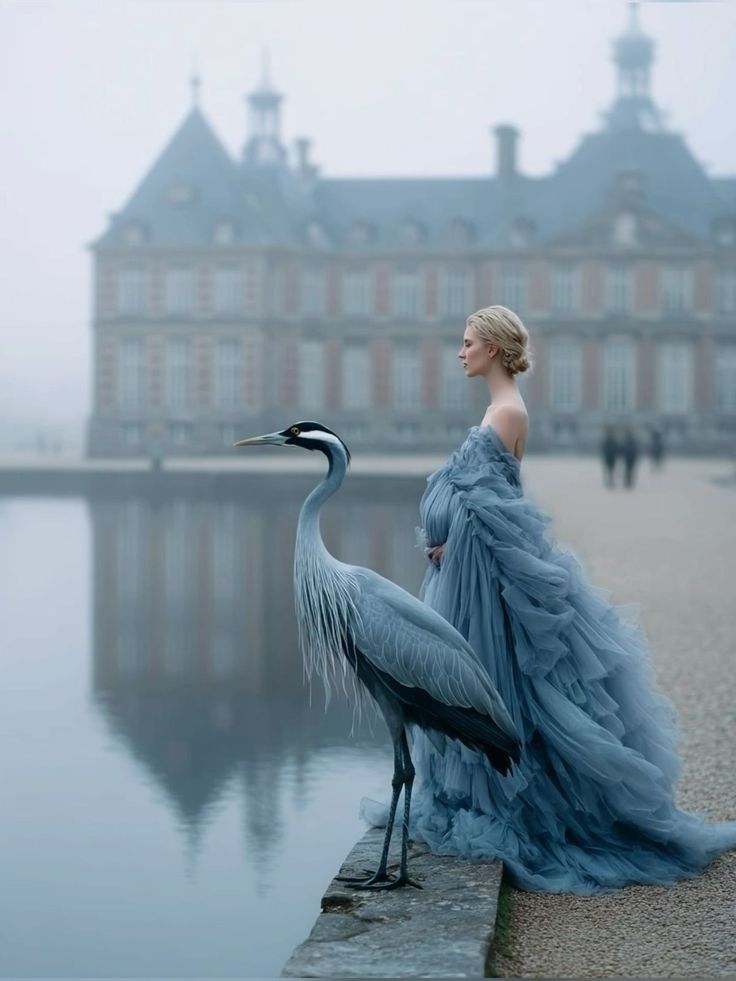
The early morning mist had not yet lifted when the bird alighted behind her, taking several elegant steps to join her at the water’s edge.

“Report,” she commanded.

The bird inclined his head.

The Vespyn armies are massing in the Borderlands, along the edge of the Forest of Andyr. We do not have much time.

She could hear his voice clearly in her head, as cutting as the icy breeze biting the bare skin between her shoulder blades.

“And the Messendyr? Will they come?”

I believe so, but the more pressing question is whether they can mobilise in time. We have requested archers and cavalry, together with a small detachment of Pine Riders, renowned for being best scouts within the Forest. Bastian flew south two days ago to press our case with General Tausten and is expected to return before nightfall.

Ariana considered his words in silence. She did not doubt Bastian’s powers of persuasion, nor the Messendyrs’ abilities in battle. When General Tausten’s forces combined with the troops she had already rallied beneath her blue-grey banner they should be able to foil an attack — provided they could cross the River Arden, navigate the narrow paths of the Forest of Andyr and take up an advantageous position beneath the pines and firs on the Forest’s edge before the Vespyns did.

Sullivan was right, as usual.

What they needed most was time.

Surreptitiously, she observed his reflection in the water. His posture was strong and sure, as always, but even in avian form she could detect a weariness around his eyes.

“How long is it since you resumed human form?” she asked quietly, folding her arms against the morning chill. Shapeshifting was as dangerous as it was difficult, mastered by only a few highly accomplished Adepts. Ariana was all too aware Sullivan’s position was more problematic than that of most Shapeshifters: he was nobleborn as well as Adept, a hazardous combination which forced him to choose constantly between conflicting loyalties. That said, she could not fault his steadfast allegience to herself and her cause.

Two nights, he responded eventually.

Ariana turned her head to look at him directly for the first time since he landed, accutely aware of the pair of servants crunching their way towards them over the wide expanse of gravel in front of the chateau.

“Be careful, my feathered friend.”

The bird dipped his head in response, opened his wings and took off, flying low above the slate coloured water.

Always, my Lady Crane

The Curse of Inigo Montoya

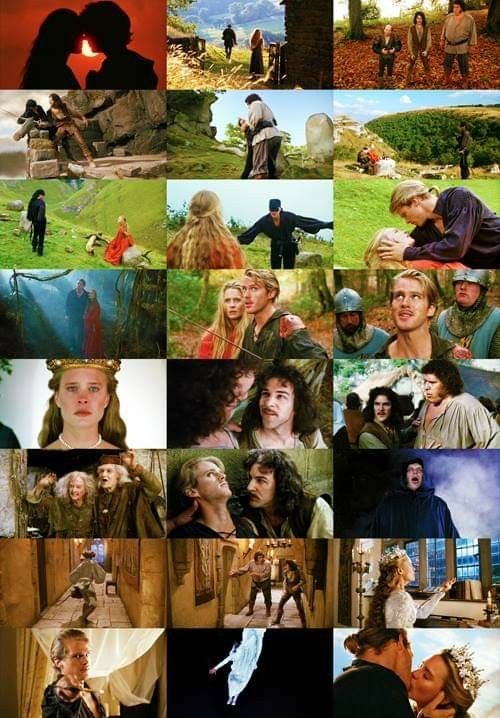
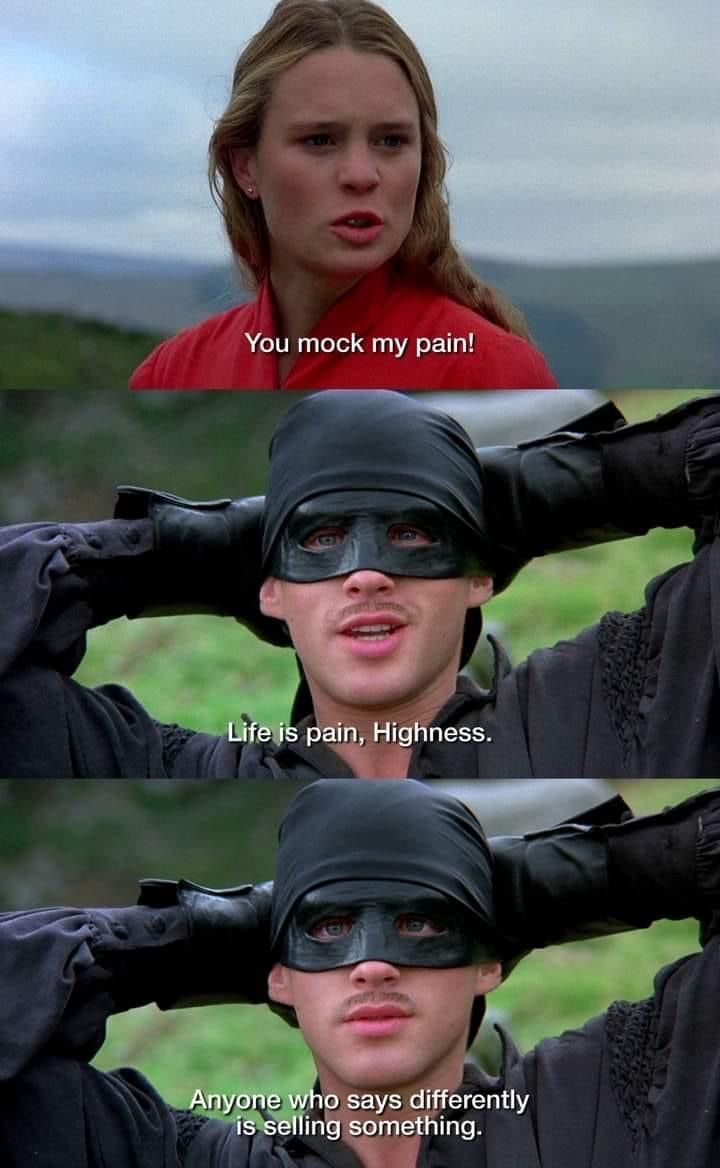
I was driving my elder daughter to school this morning when Marvel Girl made the unexpected announcement that she had watched The Princess Bride again last night. As someone who has watched that film approximately eleventy-six times, I was filled with a warmish sense of maternal pride. I say warm-ish because it was precisely eleven degrees and blustery outside (and that, as any self-respecting Sydneysider knows, is what we proclaim around here to be cold — along with any other celsius temperature reading that fails to begin with the number 2 and is followed by another digit).

I am still unsure what prompted Marvel Girl to take another look at one of the favourite films of my childhood, and as a result have been afflicted ever since I dropped her off by what I am now grandiosely (and ever so slightly theatrically) referring to as the Curse of Inigo Montoya.

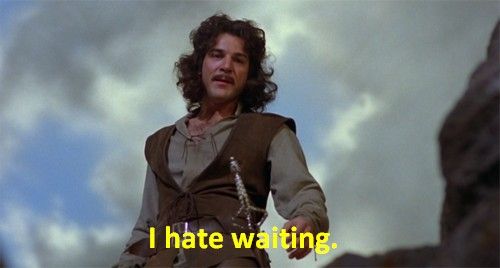
Although Inigo’s more famous and oft-quoted line in The Princess Bride features him introducing himself and then advising his foe that they should prepare to die (in what some have described as a masterclass in effective networking), I believe another of his classic statements is entirely more relatable and have thus co-opted it to form the basis of said Curse.

Even if you’ve only seen the movie once, you know the line:

I hate waiting.

See? TOTALLY RELATABLE. I defy you to present me with a single person on the planet who actually enjoys waiting. Even though waiting is something we all have to do — it could even be said to be a defining feature of the human condition — I genuinely believe the person who finds waiting pleasurable is about as rare as say…oh, I dunno, someone with six fingers on their right hand?

Waiting SUCKS.

Anyone who has held on for any kind of meaningful response (and I include this category everything from academic scores, job applications, marriage proposals and — probably worst of all — medical test results) knows how agonisingly dreadful waiting is. Samuel Beckett clearly knew all about it: Waiting for Godot goes exactly nowhere yet somehow keeps audiences riveted to their seats.

The slippery, torturous and endlessly annoying thing about waiting, you see, is that the tantalising promise of some kind of result or outcome forces us to endure the unbearable space between.

I wrote a while back about the liminal places in our lives when I was in the process of finishing my novel. But now, now that I have shepherded my words onto the page and guided them into the hands of a prospective publisher, I am back in that space between again. This is not nearly as simple as waiting for Marvel Girl to get home to ask her why she watched The Princess Bride again (and to apologise for forgetting to ask her how her English exam went yesterday — yet another maternal fail). The stakes feel so much higher and, depending on the day, they are tangled up with words like worthiness and success and the unthinkable opposites of those.

This, my friends, is the Curse of Inigo Montoya.

And yet, The Princess Bride gives me hope.

Inigo Montoya, though cursed to wait, never gives up. Buttercup never stops loving Westley. Miracle Max somehow finds a way to pull off a marvellous death-defying feat. The baddies (even the Rodents Of Unusual Size) get beaten, the goodies rescue the princess, true love prevails, and the world now knows the true meaning of the phrase, “As you wish”.

It’s all quite heartening, really.

Waiting is giving me the opportunity to tinker here, in my little patch of cyberspace, for the first time in months. It’s allowing me to read books occupying the same genre I write (which I tend to avoid when creating to avoid becoming at all derivative), to listen to podcasts I wouldn’t normally have time to (which led this morning to me snort laughing when I heard the enormously intelligent and wickedly funny Marina Hyde describing the long-feuding Cyrus family as “Tennessee Lannisters”), to plan extensively detailed holiday itineraries, to cook things I haven’t made for ages or haven’t ever made — the list goes on and on and on — and all because waiting, much as I find it utterly and completely maddening, waiting gives me the space and time to do all these things.

Turns out the Curse of Inigo Montoya may be a blessing in disguise.

And so, my friends, whatever you find yourself waiting for, may you find Inigo’s Blessing rather than his Curse.

Mind yourselves,

BJx

Unchartered Waters

I’ve been writing a lot lately, though not here.

Or, more accurately, I have been revising my novel — filling in plot holes, teasing out unnecessary words, working on phrases and sentences and paragraphs and pages and chapters until…now.

I am in unchartered waters.

I have revised and rewritten until I have caught myself up, and what lies ahead is unborn and unwritten.

It is a strange place to be, this liminal world in between the creation and the act. It is a shadowy space, where the voices in my head begin their whisperings, where I listen until one of them suggests something that sparks an idea that takes hold and forms itself into something on the page.

I have a rough outline in my head of how my novel will end, but I have listened to the whispers for long enough to know that they have minds of their own, and that they fashion what they will, when they want to. When I am quiet and still enough to let them, they tell me things I do not expect, take me places I did not know existed, and reveal truths I had not excavated.

Sometimes a single blank page appears to be infinitesimally small, adrift upon a great heaving ocean of unformed creations.

Other times words come slowly, drip by drip.

But when I allow myself to settle in that liminal space, sentences often come in streams — flowing out in descriptions and dialogue and drama — and I know I have sat long enough to be allowed the privilege of navigating that wild and watery world, hoping against hope that before too long, I will sight land.

The Professor’s Mind and Body Wander…

It’s been ages since I wrote, which usually means I need to get how I am feeling about whatever is happening to my dear old Dad out of my system. The Professor had a birthday last month, so is now heading towards his mid-eighties…not that Alzheimer’s Disease will let him remember that.

Or much else, for that matter.

Every now and then I feel weirdly guilty about the time when my brother and I gave Dad one of those birthday cards with a badge attached — the one we picked was one bright orange with navy blue writing, and said “Mentally Confused and Prone to Wandering”. Our then-teenaged selves never once suspected he might actually need such an accoutrement: to us, Dad was so incredibly whip smart and intellectually beyond us that such a thought was ludicrous, particularly as he was then working at the dizzying heights of academia. We made him wear it to the Ivory Tower he worked at, a university which later granted him a PhD after he completed all the course work, oral and written examinations in three languages, his dissertation and his thesis defence in just under two and a half years. All while financially supporting his family.

We thought making Dad wearing the badge to work was absolutely hilarious.

Mentally confused and prone to wandering? Pfft…

And now, several decades later, The Professor is exactly that.

Seven years ago, when he was first diagnosed with dementia, if you did not know The Professor you would have been hard pressed to recognise the signs and symptoms that had alerted us to the fact that all was not well. And now, after years of gradual decline, the past twelve months have produced an accelerating deterioration of his condition.

Even so, The Professor is trying to retain his dignity while his world is so utterly, heartbreakingly diminished.

The man who we would constantly have to ask to slow down when he strode briskly ahead of us now moves unsteadily, and at a glacial pace.

A year ago, crossword puzzles delighted him…but then they became more difficult. He started looking up answers in the back of the book and filling them in. Then those answers became confused, or mis-spelled, or entered into the wrong squares. Now the whole concept is beyond him.

Spoken words, which were once a source of great enjoyment for him — let’s be honest, The Professor was literally a lecturer, both at work and at home — have all but disappeared. He now prefers to use hand gestures and facial expressions to communicate what he wants (or, increasingly, what he doesn’t want). His verbal communication is limited at best, and we have to remind him to use his words.

Use your words.

I thought my days of saying that phrase ended around the time when my children started school.

Turns out I was wrong about that, too.

I haven’t heard him say my name in a long time, and many times when we meet up I can see he has no clear idea who I am. He seems to know, however, that I am someone who loves him, and who is not is going to threaten or harm him in any way.

And so, we take refuge in humour.

If I do end up having a phone conversation with The Professor, which is now almost exclusively one-sided, I try to make him laugh. If we’re on FaceTime, I’ll settle for a smile — or a hint of recognition that he has got whatever joke I’m attempting to make.

My mother, who would definitely win the Nobel Prize for Caregiving if there was such a thing, is still looking after The Professor in their home. I honestly don’t know how sustainable that arrangement will be if he continues to decline, but given it’s something she is currently committed to, I am attempting to support her however I can. We used to try to make light of The Professor letting the (indoor) cat out, but now we’ve been reduced to joking about not letting The Professor out.

The whole situation is unsettling and confusing and seemingly never-ending, but evidently The Professor is not yet ready to leave us.

I suspect I will be more than ready when he does.

That is one thing a diagnosis like The Professor’s gives you: an extended period of time in which to grieve.

And I can honestly say I do not write about this to garner sympathy or attention for myself. Writing enables me to make sense of what I am feeling about a complicated situation, one which I am resigned to and accepting of (even though it absolutely sucks). While these are my words, they are about and for my father, who genuinely deserves all the compassion and consideration in the world.

I choose to write publicly about my experiences to acknowledge and provide a window into The Professor’s ever-shrinking world. To remind my teenaged self that the badge my brother and I gave our Dad was intended, and taken, as a joke — and one we all laughed long and hard at. To give my mother something to refer people to if their questions or kindnesses make it too hard for her to respond. To use my words to tell The Professor’s story now he is unable to tell his own.

So, if you’re reading this, please remember — for as long as your brain allows you to remember — to LIVE!

Live freely, love fiercely, choose wisely and make every single day count.

BJx