The THREAD: May 2023

Another month has seemingly sped by. The days are getting shorter here in the Antipodes, the nights longer, colder and darker. Lately I have been watching the moon rise in the early evening, first a fingernail and now a more substantial crescent, glowing with its own beautiful reflected light. It is literally otherworldly, and I look forward to it each night.

May is drawing to a close. I associate May with emeralds (which is the birthstone associated with this month), with the randomly-acquired weird fact that babies born in May are on average heavier than those born in any other month, and with my much-loved and even more greatly missed aunt, Marita, whose birthday was in May. I’m not sure why these are all things that involve birth, but there you go. Freud would probably have something to say about it, but I honestly couldn’t care what it was?!

Anyway, without further ado, let’s get into the THREAD for this month.

THINK | HEAR | READ | EAT | ADMIRE | DO

I’ve been thinking about all sorts of things this month. Many of them have been prompted by what I have been listening to and reading, but others have been about work (because I recently started a new job and am starting to find my feet) and also about health (because my kids both went on school camps, and two-thirds of the students who went with them ended up sick with Covid or RSV or Influenza or really bad head colds). I also deal with children who are unwell when I’m working, so during the past month I have come to appreciate how good health can be a truly tenuous thing. Looking after yourself becomes far more important when the ill-health of others brings it into sharper focus, though I suspect my age also provides a useful lens to view health through.

For me and many of my friends, our parents are becoming elderly or unwell, and some have sadly already passed away. Our children are at an age where they can almost look after themselves, but they still require reminders to protect — or more accurately not to risk — their own wellbeing (and that, I suppose, will continue until I no longer have to submit online forms when I need to advise their school they will be absent). I’m far more aware than I used to be that my own wellbeing and that of my peers is often being worn down by all manner of things. Lengthy commutes and even lengthier working hours. The infamous mental load — particularly for women. Cramming all the extracurricular stuff in. “Stuff” generally. It’s all necessary, but it’s all…there. And it’s not about to go away any time soon. So, since I only have time for one personal training session a week at the moment, I’ve been trying to relish it, knowing that it’s an hour I have carved out for my own benefit: physical, mental, emotional. And since there is a meditative quality to the reps, I might as well throw spiritual in there, too. I value that time more than ever now, and recognise it for the precious thing it is. As Anne Wilson Schaef said, “Good health is not something we can buy. However, it can be an extremely valuable savings account”.

On a similar note, I fortuitously stumbled across Julia Louis Dreyfus’ new podcase Wiser Than Me this month, and have been listening as she interviews older women, mining the rich veins of their wisdom about the world and how to live in it. So far I’ve heard her speak with Jane Fonda, Isabelle Allende, Ruth Reichl, Fran Lebowitz and Darlene Love, and I’m midway through the episode with Diane von Furstenberg. Each conversation has been interesting, revealing, and — without fail — provides me with either a much needed kick in the pants to do something (or to attempt to do it differently), or with a ‘nugget’, which is the word I attach to a piece of advice that rings as true as pure gold to me.

The women Julia Louis Dreyfus interviews are all inspirational in their own way, and I have found it interesting to hear them talking about all manner of things. Keeping active. Staying healthy. Dealing with regrets and disappointments. Navigating marriages and friendships. And suggesting that it might be a good idea to rid of the word “ageing” and replace it with “living” — because that’s what we’re all doing: living (or in Paris Hilton’s case, sliving — but that’s a story for another time and place).
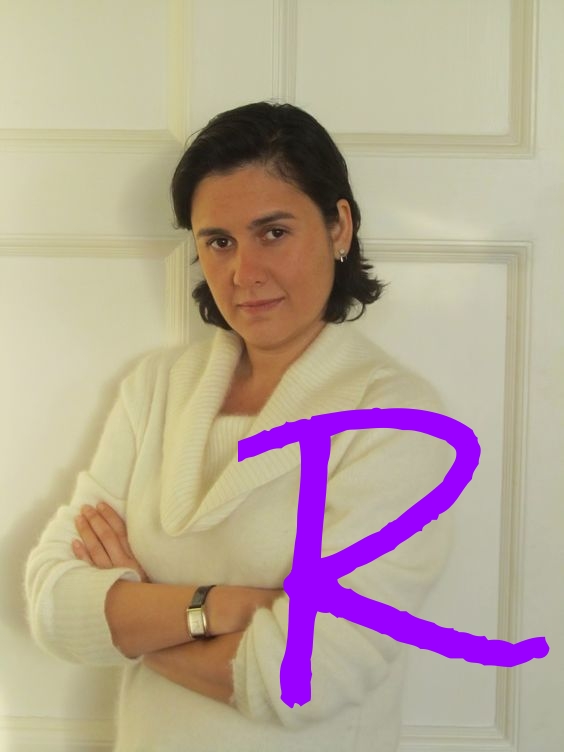
I’ve been reading about women and friendships, too. First I devoured Kamila Shamsie’s novel Best of Friends, which brings to life the world of Karachi, Pakistan on the eve of Benezir Bhutto coming to power in rich and atmospheric detail, before shifting to almost present day London. The main characters, Zahra and Maryam, have been friends since they were teenagers. I’m not going to say too much more about it, other than I admired Shamsie’s writing a great deal, and recognised the truth in some of her insights, like this one:

Perhaps that was the key to the longevity of childhood friends — all those shared subtexts that no one else could discern. And perhaps shared subtext felt even more necessary when you both lived far away from the city of your childhood that was itself the subtext to your lives. Childhood friendship really was the most mysterious of all relationships, Maryam thought…it was built around rules that didn’t extend to any other pairing in life. You weren’t tied by blood, or profession, or an enmeshed domesticity or even — as was the case with friendships made in adulthood — much by way of common interests.

If you enjoy the novels of Elana Ferrante (such as The Lying Life of Adults or, more particularly, the Neoplotian quartet that begins with My Brilliant Friend and features a similar pairing of friends in Lenu and Lila), this is definitely in the same wheelhouse and well worth your time.

I also read a fabulous book by Meg Bignell called The Angry Women’s Choir, and followed that blast of fresh air with Laura Imai Messina’s more subdued but still beautiful novel The Phonebox at the Edge of the World. Both are great and I recommend them.

In terms of what I’ve been eating, soup has featured prominently on the menu for me recently. I generally make a big pot each weekend and use whatever we have most of in the fridge, then take it to work for lunch. So far I’ve made a couple of pots of celery and zucchini soup (the zucchini adds much needed creaminess to the otherwise potentially stringy celery), and more recently have made a giant tureen of another favourite: pumpkin soup. I’m planning on doing another pot of something on Tuesday — I have some pearl barley so I might do good old fashioned vegetable soup and use up whatever odds and ends are in the fridge.

Last week I was also lucky enough to eat out a few nights, because both the kids were away on school camp. Having a couple of unexpected mid-week date nights with The Bloke was great. We hit up a couple of local favourites, first Teddy Larkins and then the Manly Skiff Club. Both were great — but the best bit, for me, was the company. Sometimes it take being away from the whole family for an extended period to remind me that The Bloke is still very much My Person, even after twenty years. It’s nice to know we still get along, too.

In terms of what I’ve been admiring, I finally finished watching The Americans. I know I’ve been late to the party on this one, but I was so happy when Disney+ released all six seasons I started watching it immediately and was just as quickly hooked. Keri Russell and Matthew Rhys are fine actors, and at the top of their games in this series (though Rhys was also fantastic as Lloyd Vogel in A Beautiful Day in the Neighbourhood, which starred Tom Hanks as Mr Rogers). Noah Emmerich also deserves a massive shout out for his role as FBI agent Stan Beeman, the unwitting neighbour of extremely active Russian KGB agents Philip and Elizabeth Jennings (played by Rhys and Russell). Emmerich has now gone from being “Oh, it’s that guy,” when he appears on screen to me actually knowing his name.

The Americans had it all for me, but really delivered in two areas: nostalgia and tension. The sets, props, costumes, language, everything took me straight back to my childhood, and made me realise just how much (even in Australia) the Cold War hung over our heads in the 1980s. The tension, on every level — international, suburban, intergenerational, marital — was brilliantly orchestrated and calibrated, and truly masterfully delivered in the series finale. For my money, the absence of dialogue and use entire musical tracks in the finale following the now-famous garage scene (let’s face it: it had to happen eventually) was a brave decision that — for my money — absolutely worked. Now I’ve finished watching it I feel slightly bereft, but also in need of television viewing that does not leave me realising I’ve been holding my breath.
And now, finally, onto doing. The Bloke and I unlocked an adulting achievement this month when (drumroll please) we managed to park our cars side by side in our new garage for the very first time. After decades — yes, decades — of tandem parking and having to do the old switcheroo when one of us needed to get one of our cars out, we can now simply press a button to raise the garage door and back out down the driveway. I realise tandem parking is the epitome of a First World Problem, but to say this achivement is momentous is underestimating how truly lifechanging this has been for us.

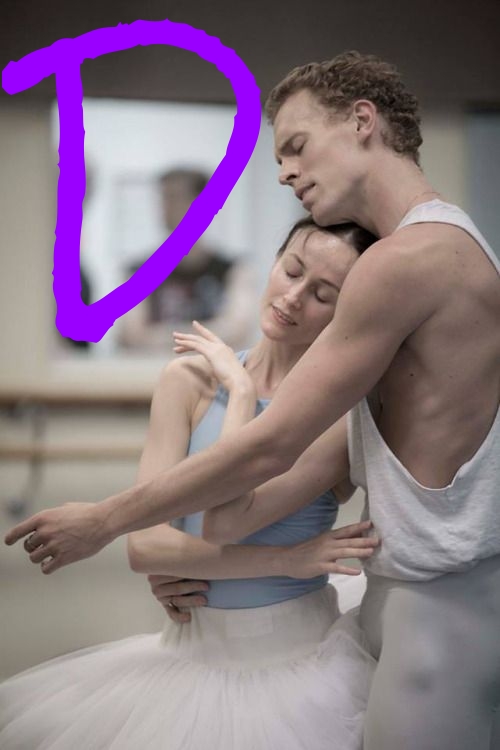
The other thing I did (another drumroll please!) was take my wonderful mother to see the Ballet! If you cast your mind back to the second edition of the THREAD, you might remember I was sad to think that I would never get to see Adam Bull dance again before he retired from the Australian Ballet. Well folks, I did get to see him perform — in one of his last shows at the iconic Sydney Opera House. Mum and I had a fantastic afternoon on a truly sparkling Sydney day (you gotta love this city)…
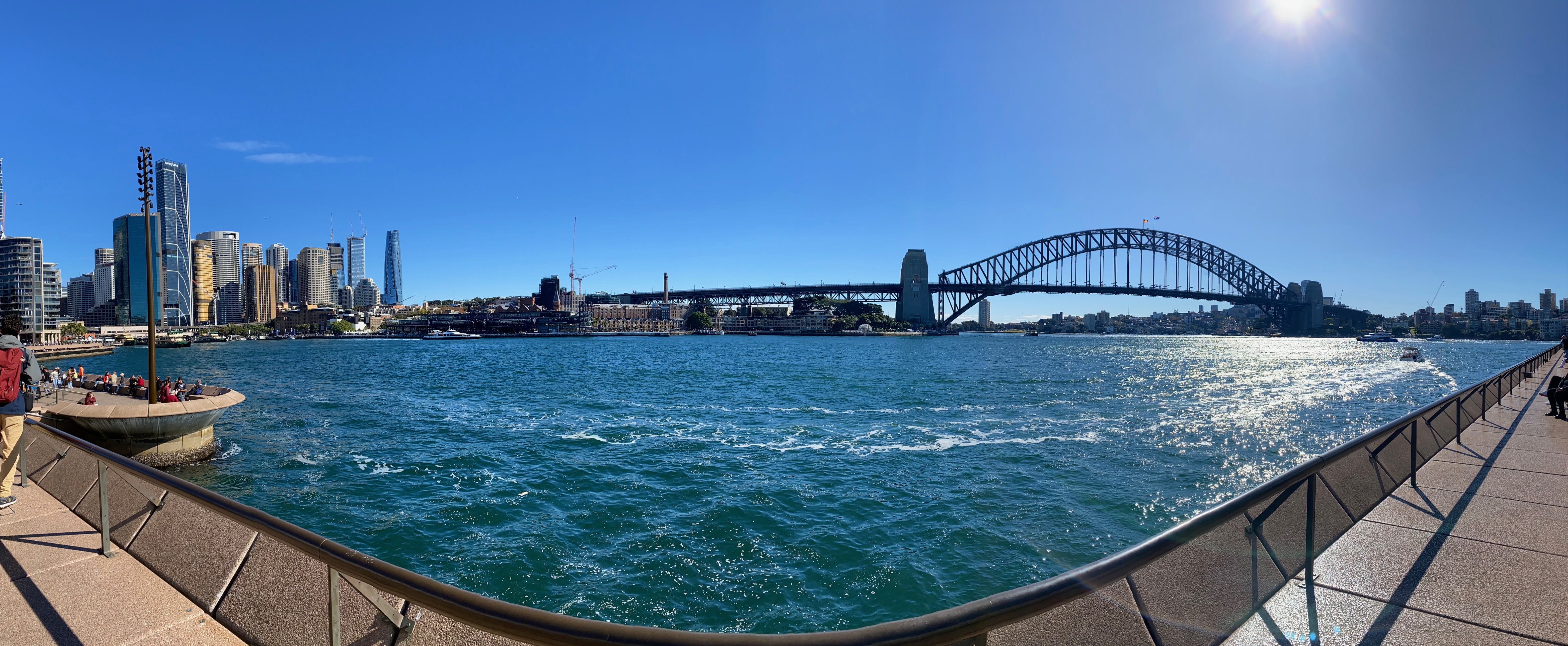
…and we absolutely loved the performance, which was called Identity and featured two works, The Hum by Daniel Riley and Paragon by Alice Topp. Spending the whole entire afternoon with my mother was such an incredible treat, and I was so grateful to The Bloke and our kids for looking after The Professor while mum and I quite literally sat back and enjoyed the show. In fact, we loved it so much we’ve booked to see another show together later in the year — not ballet, but something equally enthralling which I will no doubt get to write about in October.

Anyhoo, that’s all for now. As always, I’d love to know what you’ve been up to and enjoying, so feel free to leave a comment if you’d like to.

Mind yourselves, too!

BJx
We Need More Words

qualityThe Bloke and I don’t fight often. We’ve spent the better part of twenty years happily muddling along, quietly delighting in our continued coexistence.
But every now and then — because we’re real, normal human beings — we have a bit of a barney. Generally speaking these arguments are not over anything particularly controversial (such as just how many surfboards/boogie boards/random vessels of an inflatable variety a family of four might actually require on a weekend away), but last night…well, it was a different story.

We were watching Nanette, Hannah Gadsby’s hour-long stand up show, a vertiable tour de force explaining why she is choosing to leave comedy behind. Nanette is, simply, brilliant: it is a brutally honest and unbelievably courageous piece of story telling. It is also, in parts, uncomfortable viewing — particularly if you’re a straight, white male who has just been watching Season Two of Glow, complete with its depiction of a Harvey Weinsteinesque “meeting” involving a young and vulnerable actress, and if you had also happened to top that experience off by taking a look at Andrew Denton’s Interview with Tim Winton (the one who wrote my favourite book) speaking about toxic masculinity.

Straight, white male.

Now we all know that the straight, white male segment of the population is copping a bit of a caning at the moment. With good reason, of course — and let’s be clear: in my view, there’s nothing wrong with challenging a long-established framework of white, male privilege that has been propped up by centuries of patriarchy and misogyny. And I, as a straight, white female, last night felt the need to point out that those structures were the very things that silently condoned straight, white men heckling or wolf-whistling at me when I was a schoolgirl, walking past a construction site at the top of the street I lived in. That allowed a crowded platform of commuters to stand by and ignore the straight, white man who tried to look up my skirt, and who failed to assist me when he followed me onto the train. That normalised regular pay increases for the (overwhelmingly) straight, white male professionals in several firms in which I worked and did not even bother to schedule salary reviews for the (overwhelmingly) female support staff.  That continues to impose a tax on women’s sanitary products…but let me stop there. I could, as most women could, go on and on.

Straight, white male.

These were the words that sparked our disagreement, along with the onslaught being fairly and squarely directed at that particular segment of the population.

Because The Bloke identifies as a straight, white male — and, while I can’t dispute his logic, last night I also felt the need to point out that I don’t view him through that prism at all. I felt the need to explain that if he had been the sort of straight, white male who is currently — and with good reason — being called to account, I would never even have considered dated him, let alone marrying him. That I don’t believe him to be a misogynist. That I certainly don’t perceive him to be anything like Donald Trump.

I explained to The Bloke that when I look at him, I see a successful business owner who pays his male and female staff equally. I see a husband who consistently treats me as an equal in our life partnership. I see a father who is helping to raise two daughters to be the best human beings they can be. I see a person who frequently helps with housework and does not delineate duties on the basis of gender. I see a man who is willing to draw attention to language, attitudes and behaviours towards women that are unacceptable. I see a…feminist.

Feminist?!

Initially, The Bloke wasn’t quite sure what to make of that word, either, being aware of the many and varied connotations and convictions attached to it. But — because of the man he is — The Bloke listened to me and not only heard, but also made sure he understood my point of view.

unityAnd that’s where Hannah Gadsby is absolutely right — we need more words, people.

We need a multitude of words.

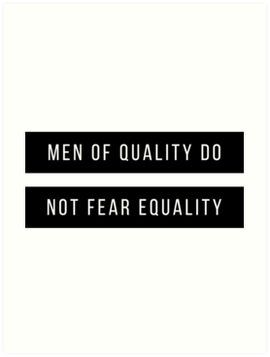
We need more words to describe the men who might, quite literally, be straight, white males, but who are also men whose own language, attitudes and behaviours are helping to dismantle the architecture of straight, white, male privilege. Men who support and empower women and girls not because they are female, but because they are human beings, and who encourage other men and raise their sons to do just the same. Men who, in my life, I feel fortunate to call father, brother, mentor, friend.

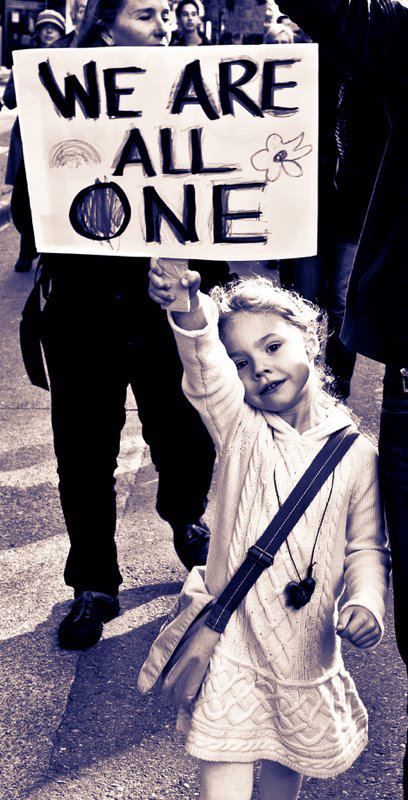
We need more words to define the things that unite us and celebrate all the things we hold in common — not more labels, or pigeonholes, or tiny little compartmentalised boxes.

We need more words.

Night Moves

NIGHT -Cahill_expressway_loop

Upwards to the The Bridge…

Saturday, 10:08pm

I’m driving home through the city at night.  One of my dearest friends is riding in the car beside me, and we’re basking in the afterglow of an evening of revellery: good food, even better wine, a classical music concert with a brilliant soloist.  Crossing over Circular Quay, we get the giggles, cracking each other up with increasingly ridiculous remarks about the man we’ve just seen perform.

He’s a violin virtuoso, he sings like an veritable angel, he has such shiny hair he should be in a L’Oreal commercial…no doubt he is the world’s greatest lover, too…

We make the long loop up onto the Harbour Bridge, our laughter sprialling skywards through the arching steel and up into the night.

Monday, 5:45pm

There’s a dance off happening in the kitchen.

In this house we celebrate good news by busting out moves, and today we’ve had plenty. Ugg-booted and stocking-footed we rollick around the room, each of us attempting to outdo the others with displays of increasingly questionable choreography, while outside in the gathering darkness the real stars appear.

Tuesday, 6:13pm

Tonight I’m dealing with Arsenic hour — the fraught and fractious time of day when you’re wondering whether you might poison your kids or yourself — when mid-meltdown from Miss Malaprop I get a text from The Bloke asking whether he can catch up with the Other Blokes for a beer or three.  I flick back a quick, “If you want”, resisting the urge to scream obscentities or engage in a vicious game of compare and contrast.

There is no point in declaring marital war over the differences between our Tuesday evenings.

Wednesday, 3:36am

The Bloke and I are at the top of a ruined high rise, and he is about to be hauled through a dilapidated door behind him to face a firing squad.  I can hear bullets spraying, drilling into the the other side of the wall, and he’s pleading with me to leave, telling me everything will be OK (which it clearly won’t be) as I get progressively more agitated and distraught.

In desperation I wake up, wrenching myself from the drama of the dream into the quiet of the night, and draw enormous comfort from the sound of the The Bloke’s breathing, deep and even, beside me in the dark.

Thursday, 5:40am

The flying foxes are at it again.

Those manic marsupials were squawking and carrying on as I drifted off to sleep, and now their raucous predawn party in the top of the tree next door has me wide awake.

I get up and stalk down the long hallway of my house, surefooted and keeneyed as a cat. They say the darkest part of night is just before the dawn, but this is my territory and I have no need for light in the place I call home.

A large part of me is nocturnal, too.

Scenes from Suburbia

I stand in the supermarket, staring at the shelves in front of me, searching for a single pen. Beneath the bright lights are rows of gaudy plastic packages — pencils, pens, permanent markers — but none of them are what I seek.  How is it, I wonder, that an entire brand of felt-tipped pens, the pens of choice in my childhood, could have disappeared, replaced by the apparently ubiquitously popular Sharpie? How is it that my decisions, as a consumer, are being dictated by a duopoly of chain stores that stock only what is trendy or what is cheap?

Fuelled by a combination of nostalgia and disgust, I stalk out of the store to a newsagency around the corner that carries the brand I am looking for. I survey the shelves once again, shelves in desperate need of re-stocking, and select a pen. It costs $4.80 — nearly double the price of a ten-pack of pens at the supermarket — but I buy it anyway.

It’s not even the colour I want.

*****

I sit in a cafe, lured in by the breakfast special (a toastie, a coffee), somewhat dejected by my newsagency experience until I take out my new pen and begin to write. The smooth slip of the felt tip across the paper is soothing, satisfying, and I stop only when a woman sits down beside me and I have to heave my shopping out of her way. “Don’t worry,” she says, “I’m sitting by myself at a table for four.” We smile, complicitly, staring out into the cafe, silently sipping our coffee, savouring moments of stolen time.

A woman at another table is speaking — clearly, distinctly — to an older man sitting opposite her.  Not her father — an uncle, perhaps, or an old family friend.  She tells him that her mother has remarried, has moved away, has moved on. She does not know the people of whom her mother now speaks; new in-laws, new neighbours. She glances around frantically, speaks more loudly, but her words do not reach her companion. He is burdened by his own flailing, failing romance: his lover wants a ring, but not marriage. He says he will buy the ring anyway.

Outside the cafe, a grandfather rides up and down the escalators with his granddaughter. The child squeals and kicks joyfully as he tips her stroller back so she can see the blue sky above, secure in the knowledge that he will never let her fall. Inside, the woman falls suddenly silent as she recognises the table before her is a chasm.

And then a small bird, a starling, alights on the back of the chair in the space between us, bringing with it nature’s blessing in the midst of this consumerist temple of concrete, steel and glass.

*****

I drive home in my husband’s car.  My car is with the mechanic, being serviced. This car, an old blue station wagon strewn with tubes of sunscreen, CDs and smears of surfboard wax, feels so different from mine. The steering wheel is broader, yet the grip is thinner than what I am used to. The accelerator feels twitchy beneath my foot.  Unfamiliar plasticky rattles fill my ears.

Stopped at a traffic light, I turn towards the back seat, trying to see what could be making so much noise, and catch a glimpse of a fine, golden hair — my younger daughter’s — snagged on the upholstery, and feel the comforting rush of the familiar in that single strand.

Always hope

Bittersweet Symphony

BSS

Still one of the greatest songs ever written…

Winter arrived this week.

We woke one morning — I think it was Thursday — and discovered that Sydney’s seemingly endless summer had disappeared overnight. The world was suddenly a cold and windy place, rain-soaked and grey-stained, where clouds had settled themselves just above the rooftops.

‘Cause it’s a bittersweet symphony, this life…

The change of season often happens suddenly here, though perhaps I have been more aware of it this year because I managed to come down with the dreaded lurgy about ten days ago, when the days were still sunsoaked, and tried (unsuccessfully, as it turns out) to keep working and to soldier on. The day winter arrived was the morning I awoke with the dawning realisation that the wretched thing has grabbed me in its claws again — this time, by the throat.

…try to make ends meet, you’re a slave to money then you die…

Well, maybe not die. Not quite.

BSS 2

Well, maybe not a million — but, like I said, being ill makes me slightly prone to exaggeration.

I will admit, albeit reluctantly, that illness does tend to make me slightly prone to exaggeration. I suspect that the main reason for this is that I, like many mothers, feel as though my family requires a great deal of convincing that when I say I feel unwell, I actually mean it. For example, one night last week, when I had finally stopped coughing long enough to fall asleep in the spare room (to which I had banished myself so as not to inflict the lurgy on The Bloke), I was woken at 2am by the light of a torch being shone directly into my eyes by my younger child, who proceeded to announce that she had a sore ankle.

Seriously?! 

Like the creator of aforementioned the dreaded lurgy, Spike Milligan, I sometimes wonder whether my headstone will end up reading I told you I was sick.

Since the cold snap hit, however, I have stopped trying to convert the non-believers in my house and have simply, and quite uncharacteristically, given into being ill. I have wrapped myself in blankets, drunk endless cups of hot tea, and surrounded myself with fresh lemons, a rather alarming variety of pharmaceuticals, a welcome selection of books, and The Verve’s Urban Hymns album.

The Bloke despairs of my love for what he refers to as “whingey Britpop”, but since I am as steadfast as I am eclectic in my musical affections, there are certain things in the life we share that he is forced to roll his eyes and endure. It’s not just that he doesn’t like what he refers to as “that awful music”. The bigger problem, I suspect, is that I have — as some wag once put it — three moods: skip every song on my iPod, let the music play without interruption, or play the same song on repeat for days.

In my defence, I tend to put entire albums on repeat instead of single songs: last week, for example, it was twentyone pilot’s Blurryface — because let’s face it, you need a little dubstep when you’re struggling to put one foot in front of the other. And this week, it was Urban Hymns, which is still think is one of the finest albums ever recorded (even if its moody atmospherics drive my dear and long-suffering husband demented).

…I let the melody shine, let it cleanse my mind, I feel free now…

BSS 3

It’s amazing how other people respond when you start looking after yourself…

But here’s the thing, the (in my view) really weird thing: regardless of what I’ve been playing on the stereo, since I started treating myself like a person who wasn’t in the best of health, my family started behaving the same way.

To my utter disbelief, Marvel Girl and Miss Malaprop bounced out of bed each morning (while I dragged myself, coughing and spluttering, into the shower) and made their own lunches. And packed their snacks. For recess and for fruit break.

Three days in a row.

Who knew they could do that?!

And then this morning, after I had rewarded them for their helpful behaviour by ordering them both a hot lunch from the school canteen, they offered to make me breakfast.

Who are you, I was tempted to ask, and what have you done with my children?

Upon reflection, though, it’s not all that surprising that my kids stepped up when I needed them to. I am forever telling them to ask for what they want, say what they mean, and throw in a please or thank you and they can’t go too far wrong. What I had forgotten, in my desire to impress upon them just how awfully unwell I was feeling, was that I needed to do the same thing. So when I actually started taking care of myself, they started taking care of me too.

Yeah, it’s a bittersweet symphony, this life. And it’s going by faster and faster with every passing year. But today, I heard that symphony in my kids’ asking me if I wanted them to make me some toast, in my GP taking the time to listen to my symptoms sympathetically instead of treating me as yet another flu case, in a wonderful friend’s text offering to drop my girls at school this morning so I could rest.

It’s bittersweet, but it’s beautiful too.

And as well as being grateful, I’m on the mend.

Because it matters…

Audra McDonald: Build a Bridge

Audra McDonald: Build a Bridge

Last weekend I had the inestimable privilege of hearing Audra McDonald sing with the Sydney Symphony Orchestra. Performing the final concert of a lengthy tour, she lit up the Sydney Opera House stage, singing celebrated Broadway tunes and other, lesser-known numbers: everything from George Gershwin’s Summertime to Kate Miller-Heidke’s Facebook Song.

At the end of the show, the vast majority of audience members rose to their feet and gave McDonald the standing ovation she richly deserved. And she rewarded us with not one, but two encores, the second being Somewhere Over The Rainbow, which she prefaced by explaining that she is a passionate advocate of equality — and particularly of Marriage Equality.

And that’s when it hit me: that Sydney, the city I live in and the city I love, is one of the few places Audra McDonald would have visited on her extensive tour where Marriage Equality does not exist.

And it bugged me. It rankled.

Now, as anyone who follows the Blue Jai Blog with any regularity will tell you, when something bothers me this is where I come to make sense of it. And they would also tell you that I’m not usually one to use this blog to talk about anything particularly controversial (like politics or religion, for example), and there’s a good reason for that: what you believe is your business, and what I believe is mine. It’s that simple — really.

To be clear, the lack of Marriage Equality in Australia is not something I am directly affected by: I’m a heterosexual female who is married to a heterosexual male. We had lived together for years before we tied the knot, we owned real property together, we even had joint custody of a cat (a British Blue; thanks for asking, catlovers). For various reasons — most of which revolve around me being far too stubborn and sassy for my own good — it took The Bloke and me the better part of a decade to set up a joint bank account (you know, a regular transaction account that allows you both to see exactly where the money is being spent, right down to the last bookshop and cafe dollar), but we got there in the end.

But here’s the thing: in days past — probably more recently than we’d like to admit — cohabitation prior to marriage was frowned upon. Female ownership of property was unlawful. With the exception of caring for a small furry domestic animal, pretty much all that The Bloke and I did prior to getting married was, at one point or another, either socially unacceptable or legally prohibited. And while my inner cynic may suspect that Ann Patchett was onto something when she observed that opening a joint bank account is “a moment of trust and commitment the likes of which most wedding vows couldn’t touch”, the fact remains that nearly ten years ago, The Bloke and I were able to stand up in front of our family and friends and make a public promise to love each other and to try to do the right thing by each other for the rest of our lives.

We got married. And it mattered.

Discriminating on the basis of sexual orientation or gender identification? To me, it just doesn't add up...

Discriminating on the basis of sexual orientation or gender identification? To me, it just doesn’t add up…

Now, I’m not about to wade into the troubled waters that swirl around the various arguments for or against Marriage Equality, because I don’t find political wrangling or religious rhetoric particularly appealing. (Ever.)

But what I will share are my musings about why I suspect achieving Marriage Equality in Australia would be a good thing — not specifically for me (an already married mother of two), but for our society.

First of all, I want to live in a society that does not discriminate on the basis of sex, gender, race, religion, political persuasion, eye colour or even the length of your armpit hair (let alone whether you choose to wax it, shave it, or dye it green). I believe we all have a right to live in such a society, and to participate in the democratic processes that protect that right.

Thinking

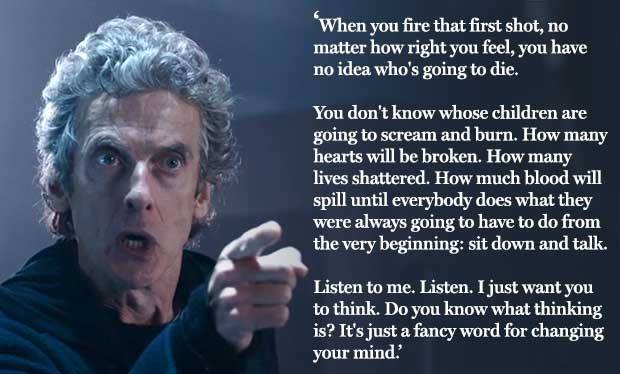
Yes, yes — I know we’re not discussing war or the end of the world, but in my opinion the Twelfth Doctor makes a powerful argument for social evolution: “Thinking…it’s just a fancy word for changing your mind”.

I want to live in a society that is evolutionary, that adapts and responds to change instead of saying, “but we’ve always done it this way”. Social evolution has enabled me, a woman, to own property. To vote. To receive (supposedly) equal pay for equal work. As Charles Darwin said, “It’s not the strongest of the species that survives, nor the most intelligent, but the one that is most responsive to change.” And, to my mind, Marriage Equality is not the only issue challenging our society to adapt — combating global warming, closing the wealth gap, ending family violence would all go on that list too. But our responses need to reflect our society as it is today. Why? Well, as Canadian Prime Minister Justin Trudeau said recently: “Because it’s 2015”.

I want to live in a society where, if either one of my children comes home one day and says, “I’ve met the most incredible human being, and I love them and want to spend the rest of my life with them — I want to marry them,” they can do so. Legally. No matter who the other person is.

Love is precious. Love is valuable. Love is magnificent, it is mighty, it is miraculous. Love transcends sex and gender, politics and religion, culture and race, and it’s definitely got it all over joint bank accounts.

So if two people — any two people — love each other so much that they are prepared to stand up, publicly, and make a lifelong commitment to each other? Well, after all these musings, I know I’d like to live in a society where they can get married.

Not just because it’s 2015.

Because it matters.