Filing Happy

BJB Filing Mess

…that pile of household filing that makes you shudder like you’ve just seen a cockroach.

Have you ever had one of those days when you looked around a room in your house — I’m guessing it’s your kitchen — and discovered that the few important notices you had carefully collated (on the bench, perhaps?!) had suddenly turned into a gigantic pile of paper?

Thought so.

Now, I don’t know about you, but when I am surprised by a massive stack of paperwork, I tend to shudder inadvertently — you know, the way you do when you see an unexpected cockroach in your otherwise impeccably clean home — before averting my gaze, and then I try to ignore the slightly nauseated feeling building in my stomach by actively turning my attention to something else.

Like cleaning the oven, for example. Because even that chore is more enjoyable than tackling a huge mess of household filing, isn’t it?

Well, it doesn’t have to be.

And that’s where Filing Happy comes in.

Now, as you can probably tell from what I’ve written so far, there are occasions when I’m as guilty as the next person of neglecting my household filing. I know how overwhelming it can feel to see a stack of papers that need sorting, and how difficult it can be to motivate yourself to tackle that stack. I also know how not being able to find something in the midst of all that…stuff…can make you feel panicked, or ever so slightly out of control. And, finally, I completely understand that there are times when little things — like life, for example — get in the way of our best-organised selves.

One of the reasons I started Blue Jai Creative is that, despite the fact that I’m far from perfect, I happen to be really good at sorting things out. I love developing systems. Logical, user-friendly systems, even. And I’m awesome at organising stuff. Any kind of stuff, really.

So here are my three top tips for beating the paperwork blues, and for getting yourself well on the way to Filing Happy:

1. Know where to look. 

Everyone has places in their homes where stuff accumulates. You might know them as hot spots, or drop zones, or dumping grounds. These are the spots where things pile up: school newsletters, product warranties, utility bills, unclaimed medical receipts, the page you tore out of the toy catalogue because there’s a super special on the Lego your six year old desperately wants for their birthday (and no, I have not been snooping through your windows when you’re not at home).

Step One of Filing Happy is to identify the places where things accumulate in your home, to develop an awareness of where things pile up, and what’s most likely to end up there.

2. Separate the Active from the Passive.

Once you know where your papers accumulate, the next step is to sort them out. Don’t freak out — I’m not talking about finding every last gas bill, car registration certificate and school report and paper-clipping them into neat and tidy piles. All we’re doing here is separating the papers that need attention from those that don’t.

So, Step Two of Filing Happy is simply to separate the papers into two piles: an Active pile of papers that require some sort of action (such as unpaid bills, school permission slips, even that Lego special), and a Passive pile of papers that you’ve already dealt with (and don’t forget to give yourself a pat on the back for doing that — good for you).

3. Find something —anything — positive to get you going.

Now that you have your Active and Passive piles, the logical next step is to deal with the (hopefully much smaller) Active pile. In the time it takes to boil the kettle, you’ve hopefully managed to sort the Active pile by prioritising it — and in my experience, this tends to be by due date. If you’re still going by the time the kettle has boiled, make yourself a cup of tea or coffee and keep working away while you drink it.

If caffeine isn’t your thing, maybe put on some music you like. Maybe you can aim to sort the pile before your favourite song finishes playing. The point of Step Three of Filing Happy is simply to build in something enjoyable to the experience so you stick with the task until it’s done.

Now, I’m not going to get into what to do with the Passive Pile today — that’s a whole other post entirely, though the principles are fairly similar.
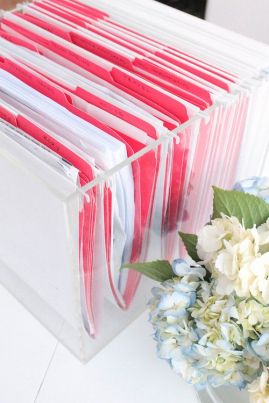
BJB Filed

Find something positive to kickstart the action – even if it’s making it pretty!

Needless to say, if you feel like you need more help, or some tailor-made tips, or just a simple kickstart, please get in contact with Blue Jai Creative. It doesn’t matter to me whether it’s your home or business that needs sorting, I’m here to help. But it might help if you know this:

I’m not emotionally invested in your stuff, whatever it is, so I can deal with it far more easily than you can.

I don’t judge. We’ve all been there at some point — believe me. And, it goes without saying, I treat your stuff (whatever it is) with respect, discretion and absolute confidentiality.

At Blue Jai Creative, I’m all for finding solutions that work for you, whether they be paperless, or colour-coded, or list-based, or whatever it is that makes you feel comfortable and in control.

Because that’s what Filing Happy is all about.
The Thrifty Fictionista Strikes Again!


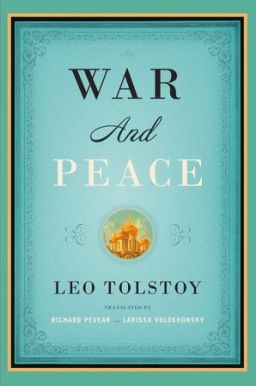
WP Cover

Tolstoy’s great tale, beautifully translated by Richard Pevear and Larissa Volkhonsky.

I was heading out the door to collect Marvel Girl and Miss Malaprop from school this afternoon when I casually slung my handbag over my shoulder and nearly put my back out. Now, I will admit that this particular accessory is known in our household as “The Bottomless Bag”, not only because it holds a great deal of stuff, but also because it seems to possess an uncanny propensity to cause said stuff (most commonly keys) to evade my grasp whenever I am scrabbling around the bottom of said bag.

Today, however, I already had those elusive keys in my hand — my handbag was just heavy, and perplexingly so. What on earth could I possibly have stowed in my tote?

It was at this point that I remembered that I, quite literally, had a copy of War and Peace in The Bottomless Bag.

Having a book in my handbag is not an uncommon state of affairs for me — in fact, I suspect that not having a book in my handbag, not to mention a notepad and several pens, would be much more unusual. But today, I had completely forgotten that sometime this morning I had waltzed happily (though perhaps a little lopsidedly) out of the local bookstore with a copy of Tolstoy’s classic tale in my bag. Yes, the Thrifty Fictionista had struck again…

For those of you as yet unacquainted with my alter-ego, the Thrifty Fictionista is prone to prowling through bookstores, aiming to get as much book for her buck as possible. At one point last year, the Thrifty Fictionista staked out Haruki Murakami’s 1Q84 trilogy.  Earlier this year, she successfully ensnared Hilary Mantel’s A Place of Greater Safety. And today, obviously, she tracked down War and Peace, which being out of copyright and running to well over 1,200 pages definitely meets the Thrifty Fictionista’s usual criteria for her prey: lots of book for not so many bucks.

WP Cover 2

War and Peace: the Laughing Squid edit.

To be completely honest, I — having given up referring to myself in the third person a lá Jaqen H’ghar in the last paragraph — did not actually track the book down all by myself this morning. I engaged the assistance of an obliging young bookshop employee who was all too happy to point me in the direction of the hallowed shelves where the classics reside and then, to my delight, knew exactly which translation I was referring to — the Richard Pevear and Larissa Volkhonsky one, of course — when I asked specifically for War and Peace. Could it be that the Thrifty Fictionista had found a kindred spirit, a fellow hunter of bargain-priced quality books? A simple flip of the volume to check the price tag (watch your wrist, there, it’s a hefty tome) and I was rewarded with a knowing smile. Yes. A kindred spirit, indeed.

As it turned out, my new best friend was also in the process of reading War and Peace. I didn’t ask him where he was up to — the book took Tolstoy six years to write (and, some would say, takes just about as long to read), but his slightly bleary eyes revealed that he had been at it for some time, while the determined jut of his jaw indicated his intention to finish. It was my turn, it seemed, for a knowing smile.

The first time I read War and Peace I borrowed my father’s copy, which was conveniently housed in three battered blue volumes he had bought as a boy. I’ve always enjoyed Tolstoy’s work, particularly after studying Russian history at university, and still count Anna Karenina among my favourite novels of all time. But having just watched the sparkling new BBC adaptation of War and Peace, which was written by Andrew Davies (who was also responsible for that TV version of Pride and Prejudice, not to mention House of Cards and Vanity Fair, among many others), I wanted to read the book again — particularly now that the screen production has provided me with faces to associate with the many (hard to remember and harder to pronounce) names in the book.

WP Dolokhov

Tom Burke stealing every scene he’s in as Fedya Dolokhov, the soldier who takes exactly what he wants…

Davies’ adaptation shrinks Tolstoy’s story down to just over six hours of television, but I don’t believe that the end result to be at all reductive. The screen is filled with the broad sweep of the novel and of Russia itself, and is populated by an impeccably costumed cast. Paul Dano is admirable as Count Pierre Bezukov, James Norton suitably haughty as Prince Andrei Bolkonsky, and Lily James utterly exquisite as the young Countess, Natalya Rostova.

For my money, however, it is in the supporting cast that the stars really begin to shine. Brian Cox is superb as gruff old General Kutuzov, who has seen it all before (with his one remaining eye) and knows his best ally against Napoleon is Russia’s winter rather than her troops. But the stand out, in my view, is Tom Burke’s brilliant take on the career soldier, Fedya Dolokhov, a man who makes his own luck and takes exactly what he wants — this man’s wife, that man’s money, even the food off his friend’s plate. He’s a troublemaker (to put it mildly), a dangerous and destructive force played with impulsive energy, passion and panache by Burke.

I’ve already started re-reading Tolstoy’s epic tale of love and loss, of War and Peace — I couldn’t stop myself — and I am thoroughly enjoying placing the characters in the sets and contexts so beautifully supplied by the BBC adaptation. I love that the book itself is as big as a house brick, and that I might well have put my back out had I not taken it out of The Bottomless Bag before school pick up, but that within its pages and in between the battles and bombardments there are subtleties and nuances and snippets of conversation conveying the overriding delicacy of thought that is so characteristic of Tolstoy. There is an insistence that we look at ourselves, and at our choices throughout life, and that we recognise within ourselves the power to forgive, to love, and to be happy.

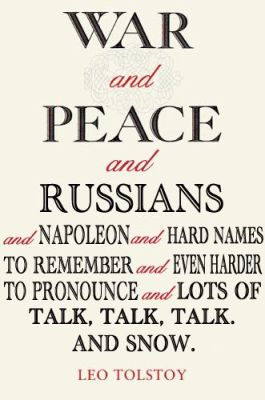
WP Tolstoy quote

Well, that’s the one thing we are interested in here — until the Thrifty Fictionista strikes again…

Muggling Along

HP Harry Potter

Harry Potter: the Boy Who Lived

Nearly twenty years ago, something magical happened that changed the world — and I do mean, quite literally, magical. Back in 1997, we encountered an eleven year old boy with green eyes, untidy black hair, and a lightning bolt shaped scar on his forehead for the very first time.

We met Harry Potter, the Boy Who Lived.

I’ve always loved reading the Harry Potter books, despite the fact that I had just graduated from university when the first volume was published. And whenever the movies are on TV I find it ridiculously difficult to change the channel and watch something else, let alone turn them off.

The scene in Harry Potter and the Philosopher’s Stone when Harry, Ron and Hermione and their friends (and occasional foes, if you count Malfoy, Crabbe and Goyle and the rest of Slytherin house in that number) arrive at Hogwarts remains one of my all-time favourite sequences in any film — ever.

Perhaps it’s the recollection of the awe and excitement I felt when I first saw the lamplit boats, bobbing on the black waters of the lake with the castle looming above. Or maybe it was the welcoming golden light shining from the windows of the school, promising goodness and safety, knowledge and wisdom within those ancient walls and towers.

HP Hogwarts

Hogwarts School of Witchcraft and Wizardry

Regardless of what so captured my imagination, the world of Hogwarts and Harry Potter has been one that I have been happy — no, make that overjoyed — to return to with my children. Marvel Girl and Miss Malaprop have fallen in love with the characters and the wizarding realm just as quickly as I did, and while Marvel Girl knows that the books are works of fiction, Miss Malaprop (being two years younger) is having a hard time understanding that it isn’t real. Not surprisingly, Miss Malaprop is a firm fan of Harry himself — “because he’s brave” — while Marvel Girl favours Hermione Granger — “because she’s clever and she likes to read a lot”. But they both absolutely adore Dumbledore, the Headmaster of Hogwarts, and his fabulous phoenix, Fawkes.

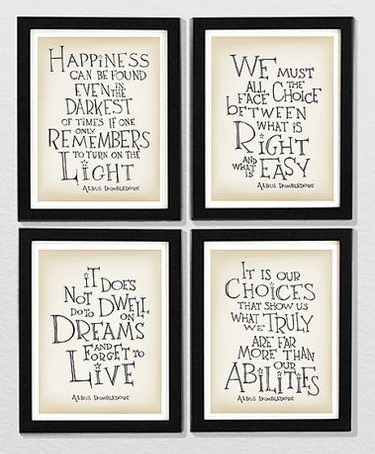
So much could be written about the wonders of these books and the wisdom they impart to their readers, particularly via Albus Dumbledore himself, who conveys many simple — yet powerful — truths.  “It matters not what someone is born, but what they grow to be,” he reminds us, along with other pearls like these:

HP Dumbledore quotes

The quotable Dumbledore — you can get these on Etsy here.

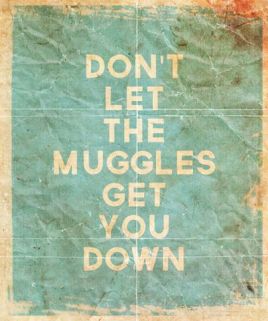
Surviving life in the Muggle world (the non-wizarding realm, for the small handful of uninitiated still among you) is ever so much easier when you have the guidance of the greatest sorcerer of the age to fall back on — Order of Merlin, First Class no less. And the fact that J K Rowling created such an incredibly detailed world, complete with its own rich history, myths and legends, customs and values remains a great and daily inspiration to me whenever I don my fiction-writing hat (not to be confused with the Hogwarts Sorting Hat, of course), and sometimes even when I don’t. (That, in itself, could be the subject of a whole series of blog posts in which it would become even clearer that J K Rowling is one of my literary heroes, not to mention that I believe her to be the undisputed Queen of the Twittersphere.)

HP Muggles“I do believe,” as J K Rowling herself said, “that something very magical can happen when you read a good book.” I’m ever so grateful that there are seven volumes of Harry Potter for me to share with Marvel Girl and Miss Malaprop. And when we’ve read each one, and watched the movie afterwards (our latest ritual), I’ll be thanking the Old Gods and the New that there are so many more fantastic lands we have yet to explore. I am looking forward to climbing with my girls through the wardrobe into Narnia, to wandering through The Shire towards Rivendell in Middle Earth, to sailing among the farflung reaches of the Earthsea Archipelago, and — perhaps when they’re a bit (a lot?!) older — to visiting Winterfell, and Kings Landing, and the rest of Westeros.
Even more importantly, I am grateful that I can give my children the gift of knowing that there is always another adventure to be had between the pages of a book.

Wherever I am, if I’ve got a book with me, I have a place I can go and be happy.

J K Rowling

Swashbuckling Swag

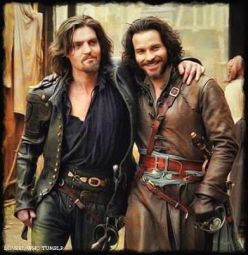
Athos & Aramis

Tom Burke & Santiago Cabrera as Athos and Aramis in The Muskeeters.

For some peculiar reason, I had a recollection this morning of the day, some years ago now, when Marvel Girl (repeatedly) singing a Wiggles song about Captain Feathersword prompted Miss Malaprop to stomp into the kitchen and announce: “Pirates aren’t human — that’s why they can’t swim.”

I remember suggesting at the time that this proclamation was, perhaps, not entirely accurate, only to be fixed with a mutinous greeny-blue eyed gaze and told even more emphatically, “Well, pirates do swashbuckle, you know — that means they don’t wash.”*

That was the point, I suspect, when I changed the topic of conversation, swiftly applying Blue Jai’s First Rule of Parenting (Distraction), and no doubt reminding myself of the corollary to said Rule (which is, of course, Pick Your Battles).

But the memory of that encounter made me realise that my girls, like many other children the world over, have always been fascinated by that wonderful figure of daring and romance: The Swashbuckler.  And — let’s face it — there are plenty of adults out there who still enjoy a tale or two of heroic derring do too.

Athos & Honour

No glory, no money, no love, none of the things that make life bearable — except honour.

What’s not to like about a hero who has plenty of good, old-fashioned adventures, tackling all manner of dangers with bravado and — more often than not — with a sword? And I’m not just referring to The Princess Bride here folks, or Johnny Depp’s hilarious take on Captain Jack Sparrow in the Pirates of the Caribbean movies. Seriously — does anyone really think that Game of Thrones would be half as successful as it is were it not for its dashing ensemble cast of heroes and idealists, all brandishing weapons of warfare from centuries past?

Nothing beats the flamboyance of a decent sword fight, full of flashing steel and sophisticated steps, not to mention swirling capes (and don’t think for a minute that the capes are not important: every proper superhero has one). And, in this day and age, I suspect our fascination with the Swashbuckler isn’t simply an escape or a diversion, it’s something more important.

Take the recent BBC production of The Musketeers, for example. Admittedly, the Musketeers are by definition the original Swashbucklers, and have been ever since Alexandre Dumas brought Athos, Porthos, Aramis, D’Artagnan and Captain Treville to life on the pages of his novels in the 1840s. But I don’t think it is any accident that The Musketeers has proved to be so popular, or that the show’s loyal fans around the globe are eagerly awaiting the premiere of Season Three.

Athos & D'Artagnan

Taking the easy way out? Or taking responsibility…

My suspicion is that in this self-obsessed day and age of the quick fix we want to remember the ideals of a bygone era, and not necessarily for rose-coloured or romantic reasons. We want to be reminded of the concepts of chivalry, of honour, of duty. We want to believe that the famous rallying cry of “All for one!” can drown out the far more commonly heard call of “every man for himself”.

And the Musketeers — consistently — deliver. In every episode, we see them strive to set aside their own aspirations and take responsibility for doing things because they right and just — not because they will bring them personal gain. Time and again they are required to rise above their individual flaws, their respective personal circumstances, and the ever-present temptation to take the easy way out against a parade of brilliantly cast villains — not least of whom is Milady de Winter (Maimie McCoy), Athos’ evil estranged wife.

To date, the Musketeers have confronted the scheming Cardinal Richlieu in Season One (played with class and sass and a whole lot of cape swirling by the inimitable Peter Capaldi), followed by the increasingly unhinged Spanish agent Rochefort (Marc Warren) in Season Two, and are set to tackle King Louis XIII’s illegitimate half-brother (Rupert Everett) in Season Three.

It doesn’t hurt — obviously — that the Musketeers are a bunch of good-looking leather-clad blokes who ride around on horseback saving the day in brilliantly choreographed fight scenes, and that the women they love are often as as brave as they are beautiful. But the Musketeers do help to remind us that chivalry does not have to be a forgotten ideal of days gone by, and that doing what is honourable or dutiful can be something worth aspiring to.

So let’s celebrate the Swashbucklers and their stories, too.  Let’s live like daring adventurers, and revisit the romance of a bygone age. And if, along the way, we are reminded of the (somehow higher?) standard of those times — of the ideals of chivalry, honour, duty, loyalty and sacrifice — is that such a bad thing?

My thought is that the Musketeers generally, and Aramis especially, would suggest that applying yourself to such ideals tends to produce positive results — particularly if you do so with a robust sense of humour and a serious amount of swag.

Musketeers

Celebrate the Swashbucklers! Aramis, Porthos, Captain Treville, Athos and D’Artagnan…the Musketeers.

* For the record, I should probably acknowledge that Miss Malaprop’s assertion that “swashbuckling” means “not bathing” is probably historically accurate, even if it is, as a definition, far from complete.

Swings and Roundabouts

It always surprises me that there are certain things in my life that I return to, over and over again.  I suppose I really shouldn’t find it so astonishing — given that I do come back to them, repeatedly, and without fail.  But when I do revisit something from the past, usually from my childhood, I feel like I have stumbled into some kind of magical world.

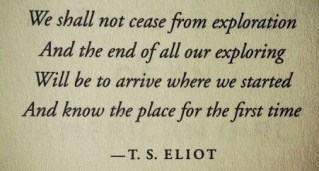
There is a subtle sense of homecoming in such moments, something that always calls to mind T S Eliot’s lines from Little Gidding:


Exploration

Eliot’s poetry is one thing that I periodically return to. Ursula Le Guin’s Earthsea books are another. And lately, I have come back, once again, to classical music.

ViolinI have mentioned before that I grew up in a household where classical music reigned supreme, with a small smattering of jazz thrown in every now and then (most often on the weekends). My parents always supported me musically, and as a child I learned to play the violin, piano, and flute reasonably well. I even got pretty good at the recorder — a bit beyond your average dribble-stick Hot Cross Buns playing primary school student repertoire — and played either descant or treble in a recorder quartet.

FluteLater, with the encouragement of a wonderful teacher who let me take home various school instruments over the holidays, I taught myself clarinet. That teacher was always challenging me, inviting me to audition for an all city concert band I never thought I would get into, then pushing me further by naming me Principal Flute player of that ensemble — never doubting that I was capable of leading my section — and handing me a piccolo, which I’d never played before, with an offhand remark along the lines of, “Don’t worry, you’ll pick it up in no time; just get yourself a book of Irish folk tunes and you’ll be fine.”
Perhaps this is why classical music feels like home to me, and that I come back to it time and again: for me, it is associated with people who have supported me, had my back, and treated me with the assumption that I would succeed.

As I write this, I am listening to Nigel Kennedy’s recording of Ralph Vaughan Williams’ The Lark Ascending. It is familiar, it is comforting.  And, to me, it is not merely beautiful — it is sublime.

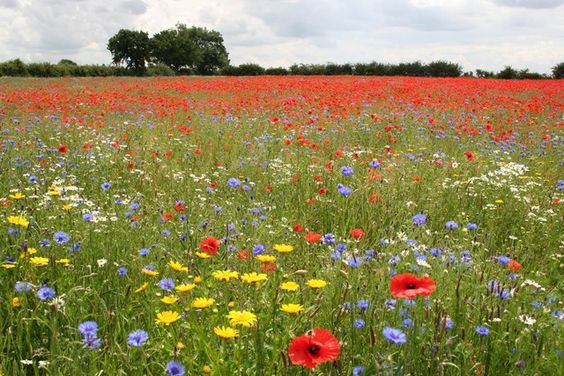
It is also solace, and an entry into an ethereal world: a place of soaring, sprialling birdsong, of tangled hedgerows and verdant meadows, of arching blue skies and gentle summer breezes.

If you’d like to hear it yourself, you can listen to it here, and fly away.

meadow


Rise

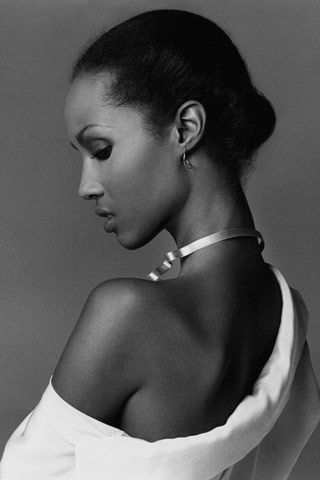
Iman B&W

Iman…supermodel, entrepreneur, wife, mother, photographed here in 1977 by Francesco Scavullo.

About eighteen months ago I started following someone on Facebook — a celebrity, no less. I am not usually one to click the Follow button simply because someone is famous, but there was something about what this person was posting — consistently — that often made me stop and consider. Or smile. Or laugh out loud.

That person was Iman Abdulmajid.

Of course, in the light of her (monumentally) famous husband’s death a month ago, the quotes and thoughts that Iman posted over the past year or so no longer surprise me: she knew, even though the world did not, that her husband of more than two decades was dying of cancer.

Looking back, the posts now have an added poignancy that I don’t think the passage of time will take away. In the week before her husband’s death, for example, she shared quotes like, “Life isn’t about avoiding the bruises. It’s about collecting the scars to prove we showed up for it”, and a thought from the poet Rumi: “Do not worry that your life is turning upside down. How do you know that the side you are used to is better than the one to come?”

But during the past year, in between sharing incredibly beautiful fashion photographs and promotional material for her husband’s Blackstar album, there were also thoughts that made me chuckle, such as “Sometimes you have to burn a few bridges to keep the crazies from following you”.

Overwhelmingly, however, there were messages of hope, of faith, of gratitude, and of determination to overcome. And the majority of the thoughts she shared she tagged with a single word: Rise.

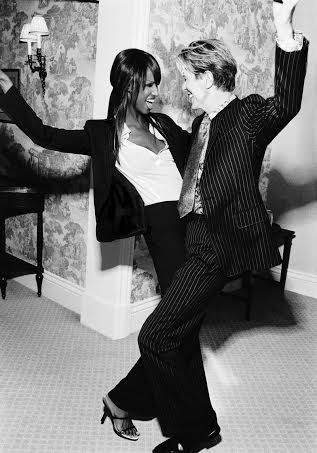
Iman & DB

Iman and the inimitable Mr Jones in 2003, from a Tommy Hilfiger campaign styled by Edward Enninful.

It’s a powerful concept.

Rise, every day. Rise, above adversity. Rise, to the challenge — whatever it is.

Rise.

And, just as her husband appears to have made very conscious decisions about his approach to death, Iman seems to be approaching the transition to life after his passing with the same hope, faith, gratitude and determination to overcome that she has displayed over the past year.  Today, she posted a quote from Rune Lazuli: “Each tear is a poet, a healer, a teacher.”

Despite her grief, which must be as raw as it is real, there is true graciousness in the way Iman has responded to her husband’s passing. There is also humility, intelligence, and — like her husband — a considerable amount of style.

There is, I suspect, a lot I could still learn from Iman Abdulmajid — not least of which is to rise.


My Little Friend

First World Problems.

It’s a catchy phrase, one that is probably as annoying as it is overused. But it doesn’t change the fact that, positioned as we are in our lives of relative privilege, we all have them.

Anyone who has dipped into the small, sometimes straggling stream of consciousness that is this blog with any regularity will know that I am prone to referring to inanimate objects as my friends, particularly if those objects are books. It’s even more likely if the books in question are about food or music (or more even more books).

Yesterday, however, I came to realise that there is one inanimate object in my life that falls into a category far beyond casual acquaintance. And while I will try to stop myself (in my moments of pseudo-grief and virtual mourning) from waxing lyrical like Anne of Green Gables about kindred spirits, it is with deep sadness that I have to report that my humble laptop — my cherished companion of several years, with whom I have shared many quiet and productive hours — is seriously ill.

I know, right? First World Problem — and yes, with Capitals for Extra Emphasis to acknowledge just how ridiculous this is.

But really, there’s a lot to like about my laptop. Until yesterday, and unlike my children, it did exactly what I asked it to, it didn’t answer back or throw tantrums, and it always stayed exactly where I left it. It didn’t mind when I used it to make up stories, or pour my heart out, or spend hours staring at its screen (sometimes blankly, other times distractedly if I happened to be looking at pictures of Tom Hiddleston or Tom Wlaschiha). As a freelancer, I can safely say it was my most reliable work colleague (with whom I may or may not have had various one-sided conversations), that it made an excellent travel buddy, and that it never, ever complained. Not even when I asked it to work stupid hours or make an impossible deadline.

It was with a heavy heart that I made the trek to The Bloke’s office yesterday, with my little friend tucked up in its favourite travelling case, to visit The IT Guy. Honestly, it felt a lot like the time I took my cat to the vet the week before the vet was kind enough to return the visit with a fateful (fatal) house call. I did, I’ll admit, phone The Bloke for several updates during the course of the day, but eventually The IT Guy admitted he was stumped, and began muttering darkly (or not — I wasn’t actually there, after all) about diagnostics and various other things.

And so, my little friend has been taken away.

I remain hopeful that we will be reunited, preferably in this world (I’m not certain they have blogs in the next one).

But please know that you are cordially invited to my First World Problems Pity Party, when we can all raise a glass wherever we might be in this world, whatever our particular petty predicaments may be.

Who knows, by then I might even have figured out how to add pictures to my blog posts while using the iPad…


Two Score

I turned 40 today.

Not surprisingly, the world didn’t end or spin off its axis, and the four horsemen of the apocalypse didn’t turn up either.

Instead, I spent yesterday and today surrounded by people I love, doing things I enjoy — and for that I am ever so grateful.

And now, feeling reflective and perhaps a little nostalgic at the end of a weekend well spent, I thought I might share something with you that means something to me. The footage is not mine, and like me it’s not perfect. But sharing it is my way of thanking you for being part of this crazy ride: a clip of U2 playing their beautiful song Bad in Berlin late last year, followed by the usual song they finish their concerts with.

Appropriately, that song is called 40.


Beyond the Bends


Pittwater

Pittwater and the Peninsula

This afternoon I took a lazy drive with my girls, wending our way up the Northern Beaches, heading beyond the Bends.

The sun is finally shining in Sydneytown after a week of relentless rain, and the temperature is on the rise too. Today we had no plans — just a vague idea about hopping in the car and driving north. And with The Bloke back at work and several more weeks of glorious summer ahead of us, that’s just what we did.

We cruised up the road, reveling in the beauty of the blue of the skies and the sea, taking it easy. One of the best things about summer holidays is not having to rush…

We stopped for lunch — burgers, because another great thing about the long summer break is getting to eat your main meal in the middle of the day if you feel like it — and then poked our heads into various shops before getting back into the car.

This time we headed briefly west, making the short trip across the peninsula from the beaches to Pittwater.  For me, it’s like taking a trip down Memory Lane…particularly when we drove past the holiday house that had once belonged to family friends when I was growing up. I found myself telling the kids that the first place I ever saw a koala in the wild was in their front yard, and then lost myself in a reverie of recollections as the road meandered down towards Clareville.

Christmas 2015 & Jan 2016 062

Summer skies…

The water was welcoming when we arrived, and the shade beneath the huge eucalpyts at the sand’s edge was deep.  We sat for a while, listening to the lapping water, watching the clustering cumulonimbus clouds on the horizon, searching for giant seed pods beneath the ancient trees. Time slows down during those moments…those lazy summer afternoons that new memories are made of…

Miss Malaprop fell asleep as we made our steady southbound journey home, while Marvel Girl stared dreamily out the window. And even now, as the first raindrops of that summer storm begin to fall, I still have a smile on my face.

Today, we had no plans…and it was wonderful…

On Solitude

Solitude 1Solitude.

To sit, in silence — sometimes to think, or to read, or to listen. And other times just to simply sit.

Today the skies are grey and the room around me is filled with the soft sounds of rain on the windowpane and the gusting of wind through the trees. My cabin-fevered children have finally chosen to occupy themselves with a quiet activity, and are painting ceramic plates together at their tiny table in the kitchen. The music of Ludovico Einaudi is providing a beautifully contemplative soundtrack from the stereo.

And yet I still crave that greatest and most elusive of gifts, solitude.

The American poet, novelist and memoirist May Sarton once wrote that “Loneliness is the poverty of self; solitude is the richness of self.”

I agree.

C7kf3I1451964902Not just because in a life filled with the raucous laughs and hot-throated shouts of children I seek silence. And not because I fail to delight in my girls’ crazy, imaginative games, their freewheeling play, their lightsaber battles, their inevitably chaotic interactions.
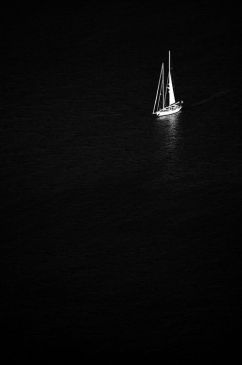
I crave solitude because it is in that sublime and oft-missed state that I have time to listen to the universe and right the troubles of my soul.

Without the opportunity “to walk inside yourself and meet no one for hours”, as Rainer Maria Rilke put it, my life and my head can feel far too full.

But after time spent cultivating that inner vastness: then…then I can breathe again. It is as though I need to separate myself out from all that engages and entwines me to feel that I belong to it again — but on my own terms.

We live lives today characterised by an interconnectedness and immediacy that would have utterly baffled our ancestors, attuned as they were to far more organic, seasonal rhythms. The information age has provided us with a profusion of knowledge that can be accessed at speeds we once never dreamt possible. But what of true connection with the steady stillness within ourselves?

For me, some of the most powerful words written about solitude I have ever encountered were not found online, but between the worn and time-stained pages of a book I first picked up in Galway, Ireland during my first solo adventure around the world: a Blessing of Solitude written by John O’Donohue in his beautiful volume entitled Anam Cara.

Perhaps they will resonate for you, too…

Solitude 2May you recognise in your life the presence, power and light of your soul.

May you realise that you are never alone and that your soul in its brightness and belonging connects you intimately with the rhythm of the universe.

May you have respect for your own individuality and difference.

May you realise that the shape of your soul is unique,

that you have a special destiny here

that behind the facade of your life there is something beautiful, good and eternal happening.

May you learn to see yourself with the same delight, pride and expectation with which God sees you in every moment.