
And They’re Off!

No, this is not a post about a race.

Or strip poker.

Or a bucket of prawns in the sun.

It’s about Marvel Girl’s braces — which came off last week. (Please feel free to do a happy dance at this juncture, even though they’re not your braces.)

Except it’s not exactly about Marvel Girl getting her braces off, but about the fact that even though it has been more than seven and a half years since I wrote this post about her losing her very first tooth, my sense of saudade remains.

Back then, when she was ever so much smaller (and definitely not taller than me, which she is now), I expressed it like this:

I feel saudade most acutely in those moments when part of me recognises, at some deep and otherwise undetected level, that after this, things will never be the same. These are the occasions when I feel that I am bearing witness to life — most frequently, for me, to the lives of my daughters. These are the moments that are captured by my heart’s camera, imprinted between heartbeats, indelible impressions of life most raw and pure.

That same feeling hit me all over again when Marvel Girl’s braces were removed, except this time I was also ready with my phone camera, to photograph the first glimpse of her beautiful new smile — a smile that reached all the way to her eyes and truly made them twinkle.

The smile that had never been seen before, hidden as it had been behind carefully positioned chunks and bands of metal for so long.

The smile that had not been gained without more than a year’s worth of careful teeth cleaning, diligent application of tiny rubber bands multiple times a day, and — let’s be honest — a decent amount of pain.

The smile that somehow made my Marvel Girl look three years older than she did when she sat down in the orthodontist’s chair less than an hour earlier.

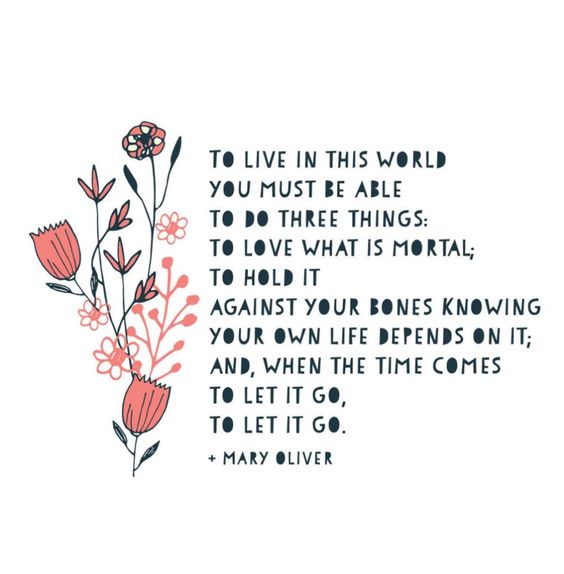
The smile that made me think of the wise words of the American poet, Mary Oliver, who was so good at capturing in scant, succinct lines the sentiments that came rushing through my brain and body that afternoon.

Of how ridiculously precious — and short — life is.

Of how clinging to the past is pointless, and possibly perverse.

Of how pining for the future always denies us the present.

Of how important it is to pay attention to the here and now, since it is all we truly have.

Of saudade, all over again.
My Country in Monochrome

384 (4)Australia is a harsh country.

I was reminded of this on a recent road trip from Sydney out into the western plains of New South Wales. No one is exactly sure why Captain James Cook named this State as he did — though many suspect it was because it reminded him of South Wales — but anyone who has ventured west of the Great Dividing Range will know that the country there is very different from the verdant fields and hedgerows of Cymru.

The Australian landscape is fierce, and often flat. It’s relentless. It’s unforgiving.

And yet, for those of us who have grown up here, that same landscape, in its inhospitable and almost hostile glory, is always — absolutely and instantly — recognisable as home.

The person who perhaps discerned the differences between Australia and…well, just about everywhere else, was a woman named Dorothea Mackellar (1 July 1885 – 14 January 1968), who spent part of her life living on a property not far from Gunnedah, where she witnessed the overnight transformation of a desperate and drought-stricken country into a green haven. Later, as a nineteen year old travelling through Europe with her father, Mackellar wrote a poem originally (and romantically) entitled Core of My Heart that summed up Australians’ relationship with the land.

Quite obviously, the original inhabitants of our country, as members of the oldest continuous culture in the world, have had a much longer and far deeper relationship with the land than those of us who have been here since the end of the 18th century. Equally obviously, as a white woman who is only third-generation Australian, I cannot speak for them (nor for anyone else, for that matter). But I do think that Mackellar’s poem, which is now better known as My Country, captures a sense of Australia that most of us recognise and understand.

It’s dry again, out west —  in Kamilaroi Country and Wiradjuri Country, too.

But the rains will come eventually, as they always seem to do.

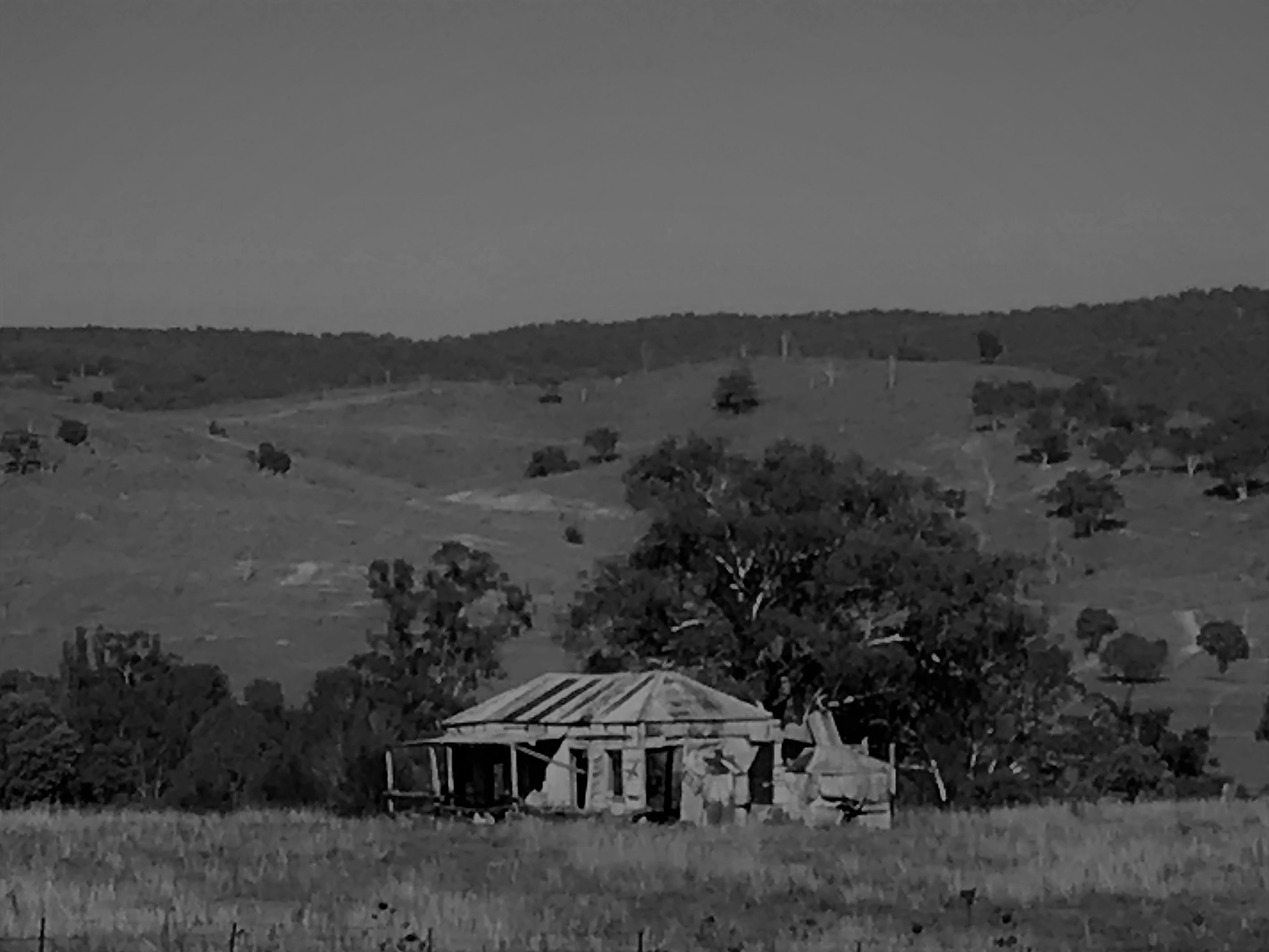
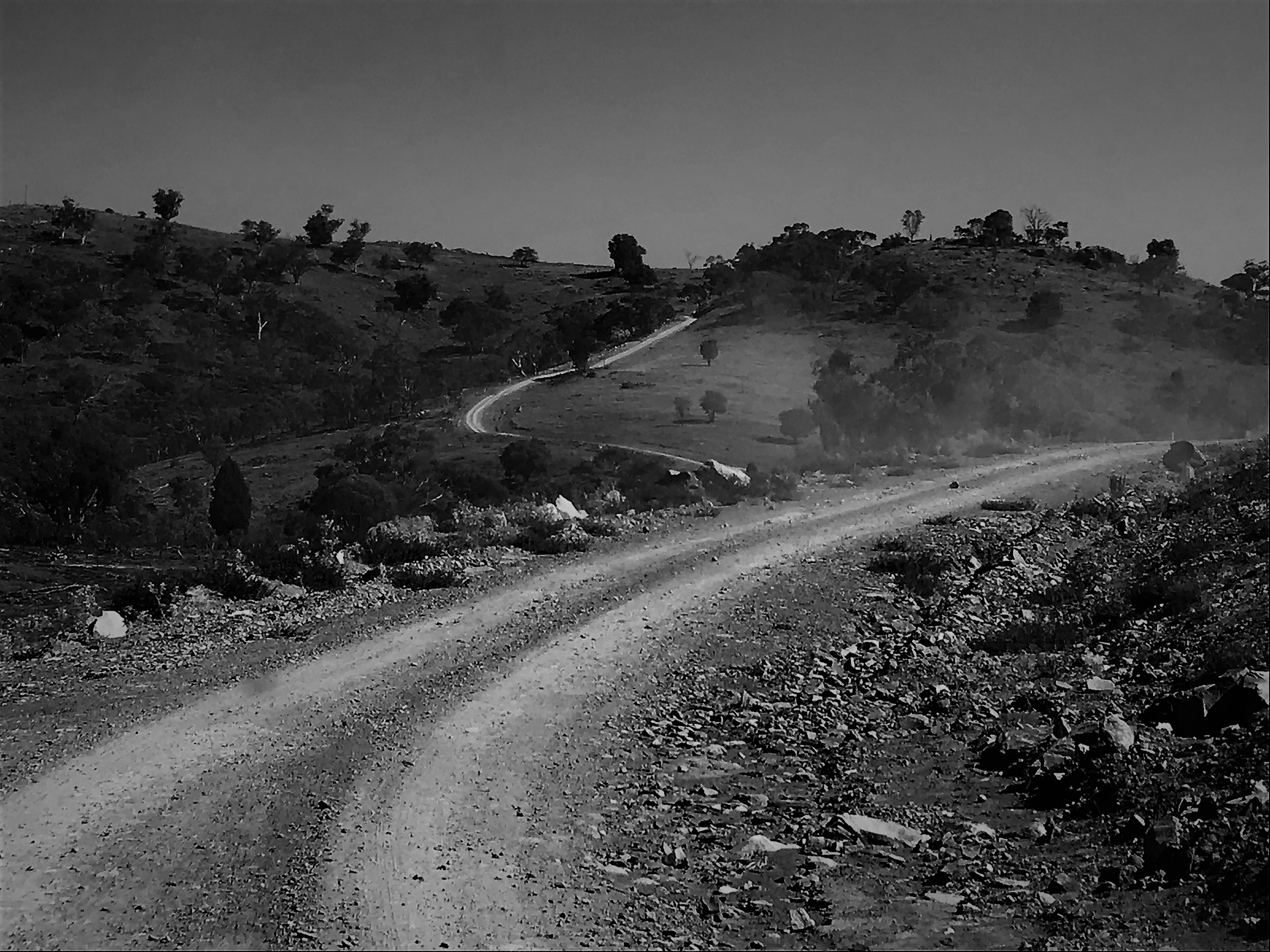
And in the meantime, I thought I’d share some images from that recent road trip, interspersed with the words of Dorothea Mackellar.

395 (2)This is my country, in monochrome.

The love of field and coppice 
Of green and shaded lanes, 
Of ordered woods and gardens 
Is running in your veins. 
Strong love of grey-blue distance, 
Brown streams and soft, dim skies 
I know, but cannot share it, 
My love is otherwise. 

415 (2)I love a sunburnt country, 
A land of sweeping plains, 
Of ragged mountain ranges, 
Of droughts and flooding rains. 
I love her far horizons, 
I love her jewel-sea, 
Her beauty and her terror 
The wide brown land for me! 

356 (3)The stark white ring-barked forests, 
All tragic to the moon, 
The sapphire-misted mountains, 
The hot gold hush of noon, 
Green tangle of the brushes 
Where lithe lianas coil, 
And orchids deck the tree-tops, 
And ferns the warm dark soil. 

409 (2)Core of my heart, my country! 
Her pitiless blue sky, 
When, sick at heart, around us 
We see the cattle die 
But then the grey clouds gather, 
And we can bless again 
The drumming of an army, 
The steady soaking rain. 

343 (3)Core of my heart, my country! 
Land of the rainbow gold, 
For flood and fire and famine 
She pays us back threefold. 
Over the thirsty paddocks, 
Watch, after many days, 
The filmy veil of greenness 
That thickens as we gaze … 

360 (3)An opal-hearted country, 
A wilful, lavish land 
All you who have not loved her, 
You will not understand 
though Earth holds many splendours, 
Wherever I may die, 
I know to what brown country 
My homing thoughts will fly. 

Dorothea Mackellar, 1908