
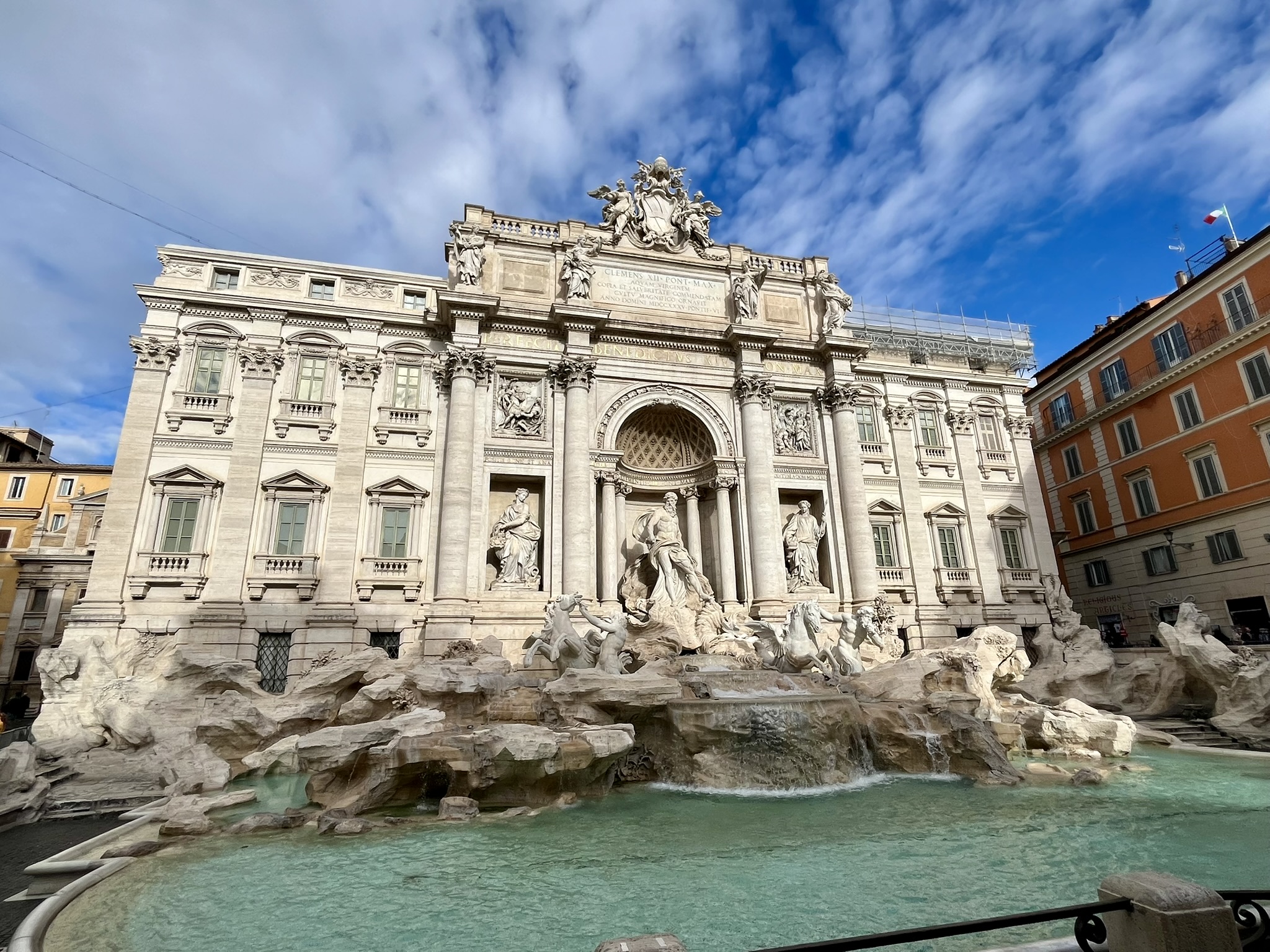
There is an old pagan ritual designed to appease local water deities which thrives to this day in the beating heart of Rome. People stand with their backs to the glorious splendour of the Trevi Fountain and toss a coin with their right hand over their left shoulder into the water. One coin, they say, guarantees your return to Rome. Two coins are meant to increase your chance of finding true love in the near future. And three coins offer a combination of the first two: that you will return to Rome, find love in Rome, and get married in the Eternal City.
I first tossed a coin into the Trevi Fountain 28 years ago, not long after I had finished an Arts Degree which allowed me to complete a double major in English and History. I spent three years sailing through seas of literature from many different lands and time periods, discovering all manner of other cultures, but learning about the history of Rome was something I returned to each and every year I spent at the University of Sydney. I felt like I was worlds away from Europe — and in many ways, I was. But the Eternal City was a source of fascination for me, and so it remains.
A couple of months ago, The Bloke and I embarked with Marvel Girl and Miss Malaprop on a European adventure, one I had spent many years wishing for and many months planning. Our first stop, not surprisingly, was Rome. Australians are resigned to the fact that when we travel, it takes ages to get any where. Let’s face it — it takes less time for a Sydneysider like myself to fly to New Zealand or even Fiji than it does to Perth. But after the better part of an entire day spent in airports and on planes, I was beyond excited to head out the first night we arrived in Rome to show The Bloke just what I had been raving on about for all these years.
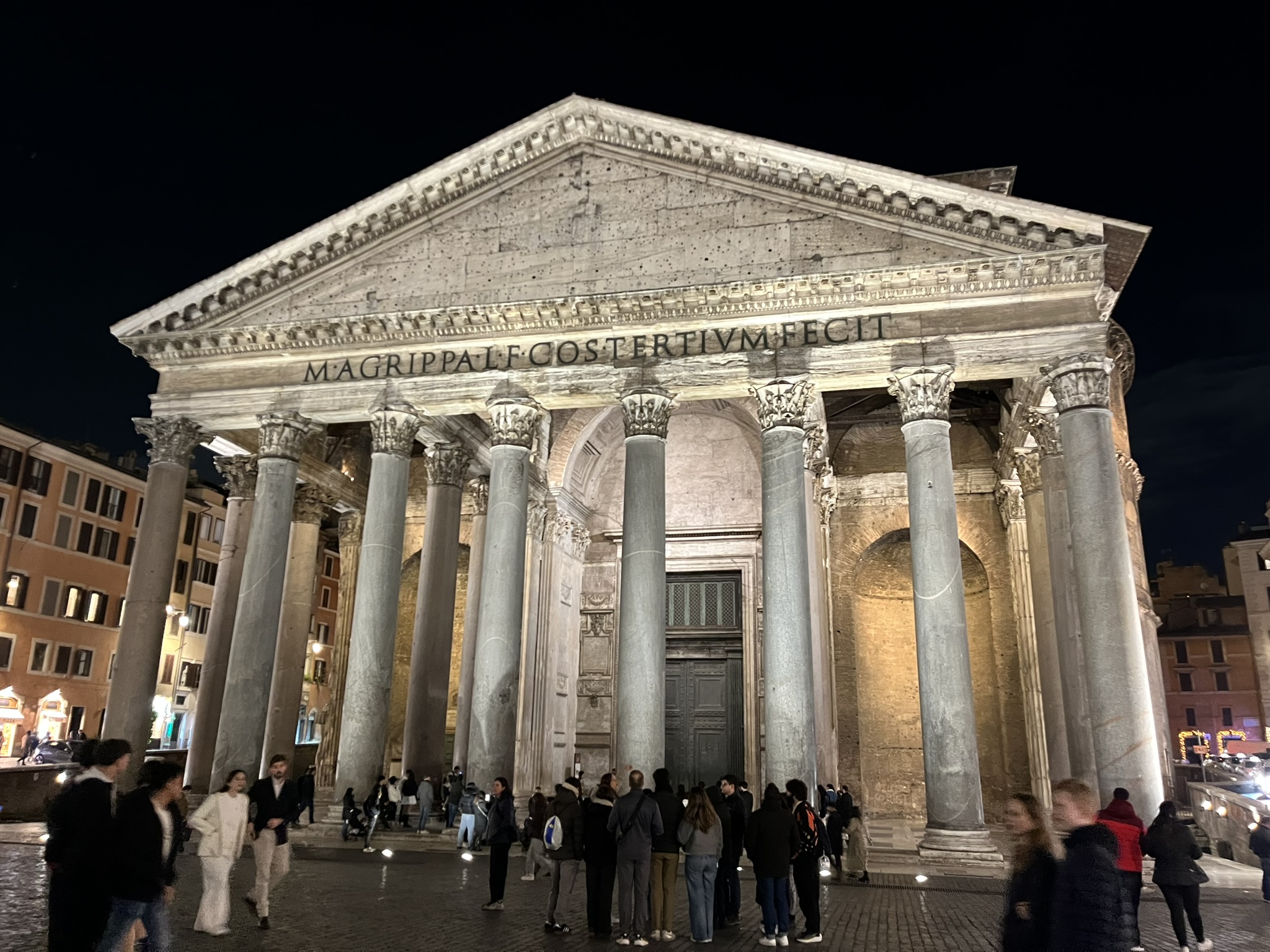
It was chilly, that November evening, with winter well on the way. But I love Rome, and Rome — I suspect — loves me. Without looking at a map or my phone, I led The Bloke first to the vast expanse of the Piazza Navona, with fountains by Bernini and Boromini and others, and its obelisk pointing high into the night sky. I explained the piazza got its shape from the Stadium of Domitian beneath it, where chariot races were run, then took The Bloke onwards through winding cobbled streets until we came to another, smaller piazza and came face to face with the Pantheon. It was the first time he had seen a building from the second century with his own eyes and, despite the jet lag and fatigue, I saw the moment when the penny dropped: that we get to walk around these places, and see inside them, and know that other people have lived and breathed and talked and laughed here — exactly, precisely here — for thousands of years. We can stand in their footsteps, however invisible, and feel the same sense of awe.
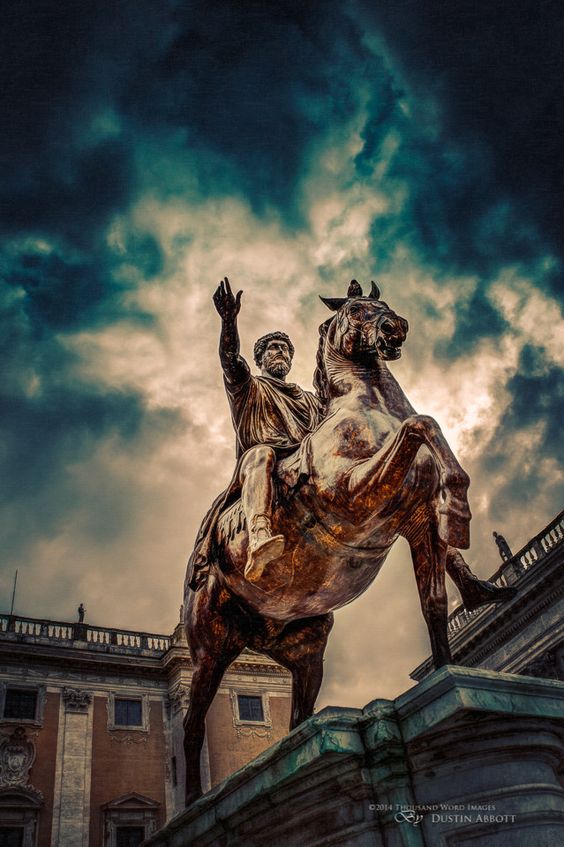
The Bloke was deep in thought as we made our way back to the hotel and our children, safe and snug indoors. And beneath the hubbub of Roman traffic and chattering tourists, I felt like I could almost hear Richard Harris speaking his beautiful words as Emperor Marcus Aurelius from Gladiator:
There was once a dream that was Rome. You could only whisper it. Anything more than a whisper and it would vanish…
But it didn’t vanish, and I was there again — in Rome.
And the Eternal City felt strangely like home.
 I find it hard to believe that it is almost March, and that this year I’ve only managed to get fingers to keys here in my small patch of cyberspace twice. I thought, when I began this post, that it was going to be about Virginia Woolf — but as you will see, it didn’t turn out that way at all.
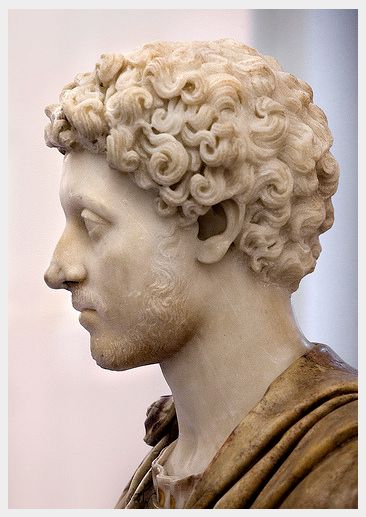 So, having unfettered myself from all sorts of strictures, I gave myself permission to meander down some old Roman roads, following the trail of the Philosopher Emperor and his wayward son. Commodus, according to Cassius Dio (who witnessed his actions and antics firsthand), was “not naturally wicked but, on the contrary, as guileless as any man that ever lived. His great simplicity, however, together with his cowardice, made him the slave of his companions, and it was through them that he at first, out of ignorance, missed the better life and then was led on into lustful and cruel habits, which soon became second nature.” Ouch.
 So that’s what I think I’ll be getting up to this year: delving into the thoughts of people who I happen to find interesting, diving into the depths and exploring topics and stories and ideas I find intriguing. I suspect that Virginia Woolf might get a look in somewhere — I know she tried to today, but Commodus must have had other ideas — and maybe Frida Kahlo, and Ursula Le Guin and goodness knows who else I happen to encounter.
 Blue Jai: